Former student turns ethics teacher
Alexa-Stuart-feature

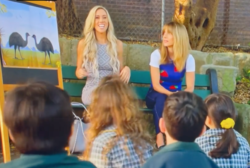
Alexa Stuart loved her ethics lessons when she was in primary school. A decade on, the 18-year-old is back at her former school teaching a new generation of ethics students.

In April, I taught my first ever ethics lesson! I had a gorgeous bunch of Year 2 kids at Lambton Public School, and – despite my nerves – it went really well. But actually it wasn’t my first ever ethics lesson. My first was in that very same school, in 2012 when I was just eight years old.
Our school was one of the earliest schools in Newcastle to start teaching ethics so for the latter part of my primary school years I was able to attend ethics classes. I remember loving it so much, I think I used to annoy my friends because after class I would just want to keep talking about the ethical dilemmas. I had so much to say and there was never enough time in ethics, so I just kept talking as we went out into the playground. And then when I got home, sometimes I would keep talking about it to my family over dinner.

One of my most vivid memories of ethics was in Year 5 or 6 when our ethics teacher stepped out of the circle and allowed us to moderate the discussion ourselves. She watched us as we tried to navigate how to take it in turns without putting up our hands. We were forced to talk to each other rather than just the teacher. I remember feeling so mature and that our teacher really respected us and trusted us.

Ethics lessons were a highlight of primary school for me. Last year I graduated from high school, and this year I’m taking a gap year, so I thought it would be a great opportunity for me to volunteer and become an ethics teacher!

When I started doing my ethics teacher training, I started remembering a lot of the topics and scenarios that we did when I was younger. I remembered talking about palm oil and the orangutans, about performance-enhancing drugs and whether it’s OK to hunt sharks after they have hurt humans. Back then, I thought that if I just thought about it hard enough, I could figure out the “correct” answer to all these tricky questions. Now I realise that the whole purpose of ethics is to learn the skills of
critical thinking and ethical problem-solving that help you to come to your answer, not the answer itself. It’s about the journey not the destination.

When I went back to my old school for my first lesson, I spoke to some of my old teachers. It was lovely to see them again and chat to them about what I’d been doing over the past few years. It felt so strange and nostalgic to be back at my primary school and I was very nervous, but once in the classroom I was surprised at how well the students listened to me. I was a bit worried that because I’m so young I would lack some authority and I was worried that the kids wouldn’t be fully engaged. But I needn’t have worried because they all seemed to have a great time. A lot of hands went up whenever I asked a question and despite them being a bit wriggly at times, they gave some very thoughtful (and cute!) answers.

It’s been strange to experience the other side of ethics classes, this time as the teacher. Having to remain neutral and lead the discussion rather than contributing my own thoughts can be a challenge. I feel very lucky to have experienced ethics as both the student and the teacher, and now I’m trying to convince some of my friends to volunteer, it’s such a great experience for young people!

Next year I’ll probably go to university, I think I will do development studies as I’m interested in social justice, development and inequality. Hopefully I’ll still have enough time to keep teaching ethics!

Teaching my first ethics class
ZoeWright-feature

New Primary Ethics volunteer Zoe Wright’s first lesson went swimmingly.

I walked out of my first class already in love with ‘my’ kids and excited about the rest of the year. Although I was nervous beforehand, everything went swimmingly. I was very lucky to have a great classroom teacher present, who unobtrusively lifted an eyebrow at the right kids at the right moment to support me. Before the class I had an opportunity to speak to the teacher and made sure I asked about the classroom rules and behaviour management and how he normally got the kids’ attention. During the think-pair-share activity I used the same signal and it worked a treat – the class was already very used to it so I didn’t have to reinvent the wheel. Now that the introduction is done, I’m looking forward to getting stuck in to the topics!

My first lessons as an ethics teacher
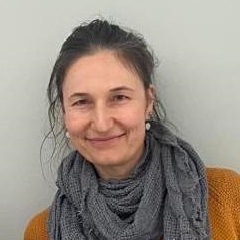
Jan Mottram Ethics Teacher

New Primary Ethics volunteer Jan Mottram found teaching her first lesson a rocky experience – but by the second week she was able to go with the flow and enjoy herself.

My first day of ethics teaching was quite overwhelming for me.  I had learnt so much during the training, but once faced with a class of 22 eager kids from years 1 and 2, that all seemed to go out the window. I was a bit anxious, very hot and the mask didn’t help. [NB From 7 March, mask-wearing is no longer mandatory, though you will be supported to wear one if you choose to.

Watch our video for the top 5 tips on teach Ethics in a mask.

Lesson 1: The first session had an estimated 10-minute time frame. I think I did it in two. The questions that weren’t supposed to take much time seemed to go on for a while. The discussion about how many bones are in a hand took on a life of its own and I suggested they research it and let me know next week.  Pairing the children just seemed to be an excuse for some of the kids to talk about anything but the topic.  I was so keen to stay on script that I spent too much time reading my notes rather than watching what the class was doing.  When the general consensus of the class was that it is okay to break rules because they are usually stupid, I found it hard to get them to listen to the kids who had a different view.

Leaving the Primary Ethics rules till the end of the lesson was not a good move for this class, but by the time I realised that I had run out of time. I left the lesson feeling disappointed in myself and as the afternoon wore on I found myself thinking of so many things I could have done better.

Lesson 2: I was determined to do better next time and my second lesson was a lot less stressful for me.  I took it slower and went with the flow. I started by asking them if they had found out how many bones are in a hand. Unfortunately there were various answers even though they had all googled it or counted them. We went through the class rules again and I was able to refer to them when needed. Some of the children were very engaged in the lesson but some were obviously not interested at all. I later found out that they had not been outside at all during the day due to the rain. Being the last class of the day, I was lucky I had any interest at all. I had intended to have a break at some time to play a quick game of ‘Simon Says’ but when I checked my watch, we only had five minutes to go.

Despite my rocky start, I find I’m already enjoying the experience and am confident that lessons will continue to improve. Next week I plan to start the lesson with a game. I can only try.

Thanks to Dana for her encouraging words and the advice, ‘Don’t be too hard on yourself’.  Very wise words.

‘My small way to make a big difference’

Thousands of volunteers teach Ethics every week – they get as much out of it as the children do.
Hear from six of them about why they do it and how you can become an volunteer ethics teacher too.

Watch it with captions:

Watch it without captions:

New year, new school, new class
Rob-Forsyth

Rob Forsyth is an experienced ethics teacher who this year moved to a new school. His thoughts on starting afresh will be helpful to completely new teachers and those starting the year with a new class.

We all know that the first day at school can be a stressful experience for children, but of course, it can also be stressful for new Ethics teachers.  The items I’ve found that disturb my sleep the night before include, but are not limited to:

  • Can I be sure that I have all the appropriate material after extracting it from Evie [the Primary Ethics volunteer portal]?
  • What will the classroom set-up be like?
  • What will professionally trained teachers think of my amateur delivery of the lesson?
  • Even simple things like, if I need to use a bathroom, which bathroom should I use?
  • Will the children enjoy Ethics?

I’m sure we all have these butterflies.

Sign-in at schools always takes time, so be early. I have always found teachers (and principals) very helpful and keen to offer assistance in set-up and disruptive class behaviour. The teachers know the children well and are familiar with specific ‘enthusiastic’ individuals and will be there to assist if required. A semicircle of chairs works best for me, with sufficient space but not too far away, as children speak softly and we want everyone to be heard.

Before you start, perhaps engage in a conversation with a few students and that will assist in breaking the ice, this will allow you to start a roll call in a casual manner.

Remember to breathe, the children will be keen to listen, so speak slowly. As you get into the substance of the lesson, check the time as you will discover that the period will fly by.

At the conclusion, I find it good to ask the class teacher if they wish to say anything and this will allow the lesson to be completed in a way that is familiar to the students.  In some classes, you may be asked to nominate a student who has been a good contributor, I generally congratulate the whole class in the first lesson – so everyone’s a winner, including you!

Giving back: Lessons in living an ethical life

Published in GOALL magazine (Growing Older and Loving Life) by Central Coast Council, December 2021

By Coral Sturgess

I exchanged the shores of Botany Bay for those of Tuggerah Lakes back in the sixties and have lived in various parts of the Central Coast ever since – always near the water. I enjoy a cooling swim at the beach, a leisurely boat trip on the river, water-skiing with the grandkids or throwing sticks into the lake for the dog to retrieve… The water is a constant and will always be an important counter-balance to our work lives.

Coral-and-Grace

Another big part of my life on the Central Coast has been giving back to my local community. I volunteer as an ethics teacher at my local primary school, for a not-for-profit organisation called Primary Ethics. How can I express in mere words what this means to me?  I’ve been teaching ethics for six years now and cannot imagine life without it.

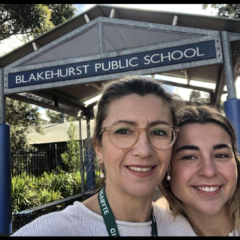
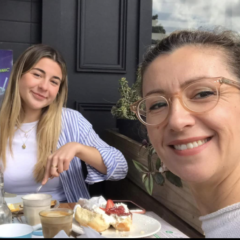
When I retired from full time work, I had the chance to include volunteering in my life. I think the coming together of me and Primary Ethics was simply a ‘right time right place’ event that I took full advantage of – my granddaughter [seen in the photo with Coral] starting at her local school where ethics classes were offered and the need for people like me to step up and take on an ethics teacher role.

Volunteering as an ethics teacher connects me to my community – the place, the people and, in particular, the children, along with their teachers and the school community. Being able to engage with children is a privilege. It’s fun – I get to use my story-telling voice, to witness their reactions and observe their development over time. And yes, it comes with responsibilities – like keeping the lesson on track and making sure they’re safe in their learning. Some lessons definitely go better than others! We discuss topics like how to be a good friend, how we should treat other living things and how to disagree respectfully.

Volunteering with Primary Ethics also connects me with others I share common interests with – the other Primary Ethics volunteers who, like me, enjoy thinking and learning, care about children and care about the future. Volunteering as an ethics teacher provides the opportunity to support children to think deeply and well about ethical issues. Down the track, these very same children will be making decisions that will shape their world and ours. Do I think that’s important? Hell yes!

Will I continue with my mid-week 30-minute ethics lesson with a class of 11-year-olds? You bet! It’s my time in the week to slow down, listen well, think deeply and leave more hopeful about the world.

Food for thought

New bite-sized ethical dilemmas for children at home

April 2020: The not-for-profit organisation that runs ethics classes in NSW schools has developed a selection of ethics exercises, called Bites, for children to participate in at home. Each week in term 2 Primary Ethics will upload two new Bites for children; one designed for students from kindergarten to year 2, and another for those in years 3–6.

Primary Ethics CEO Evan Hannah says the lessons will help provide continuity for students who take ethics classes.

“Around 45,000 students in NSW have to miss out on their usual ethics classes for some weeks yet, so we’ve put together these lessons to help children to keep exercising their questioning skills until their usual volunteer teacher can join them in classes at school,” he said.

“These activities to help children with their thinking and reasoning have a role to play in helping them to process the current changes that we are all experiencing due to the impact of COVID 19,” Evan added.

They will also introduce a number of new students to the practical study of philosophical ethics.

“Primary Ethics Bites will be available for every child and their family, and like our school-based program, it will be free of charge. We hope the Bites provoke some deep thinking around the dinner table.”

Each Bite provides an ethical dilemma presented in audio or audio visual format along with a written version. Children are encouraged to read, watch or listen to the stories which provide a context for the dilemma, and ponder the questions provided. Siblings and others in the household are encouraged to participate, too.

“These fun Bites use engaging stories to encourage the use of questions and considering alternative views to help build skills in critical thinking and ethical reasoning. At schools we use a ‘community of inquiry’ approach and Bites are written to extend that into home-based lessons.”

“We’re grateful for the assistance of Primary Ethics Volunteers who, along with their children, have offered to voice the various parts in our stories and provide a range of diverse views for the discussion aspect of the recordings,” Evan said.