Putting your ethics facilitation skills to work at work

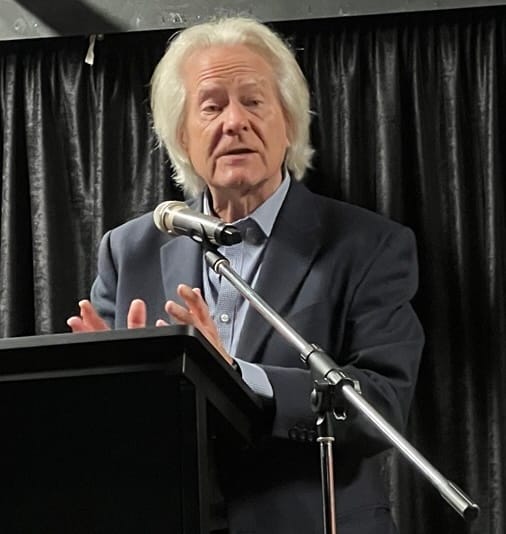
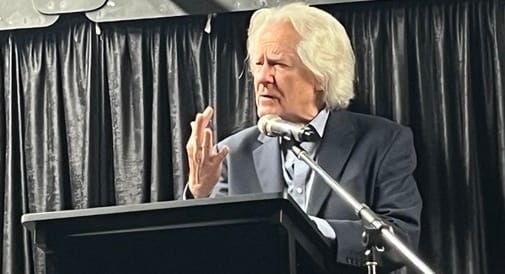
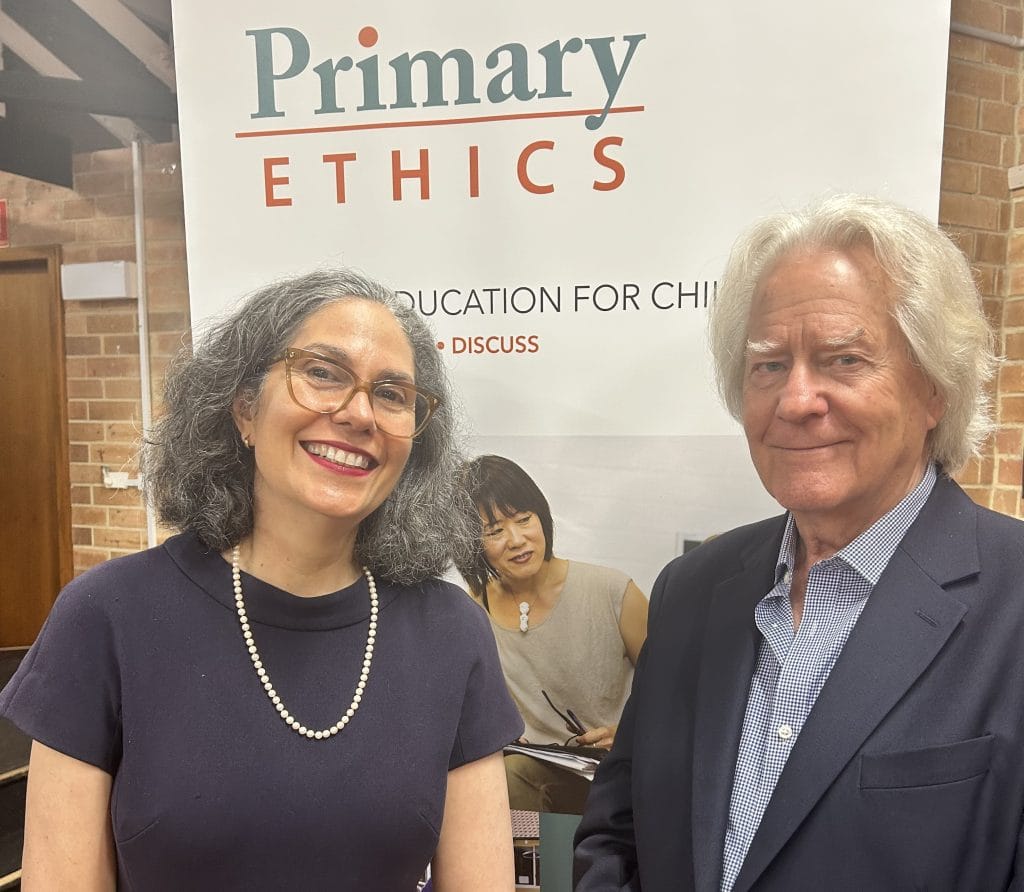
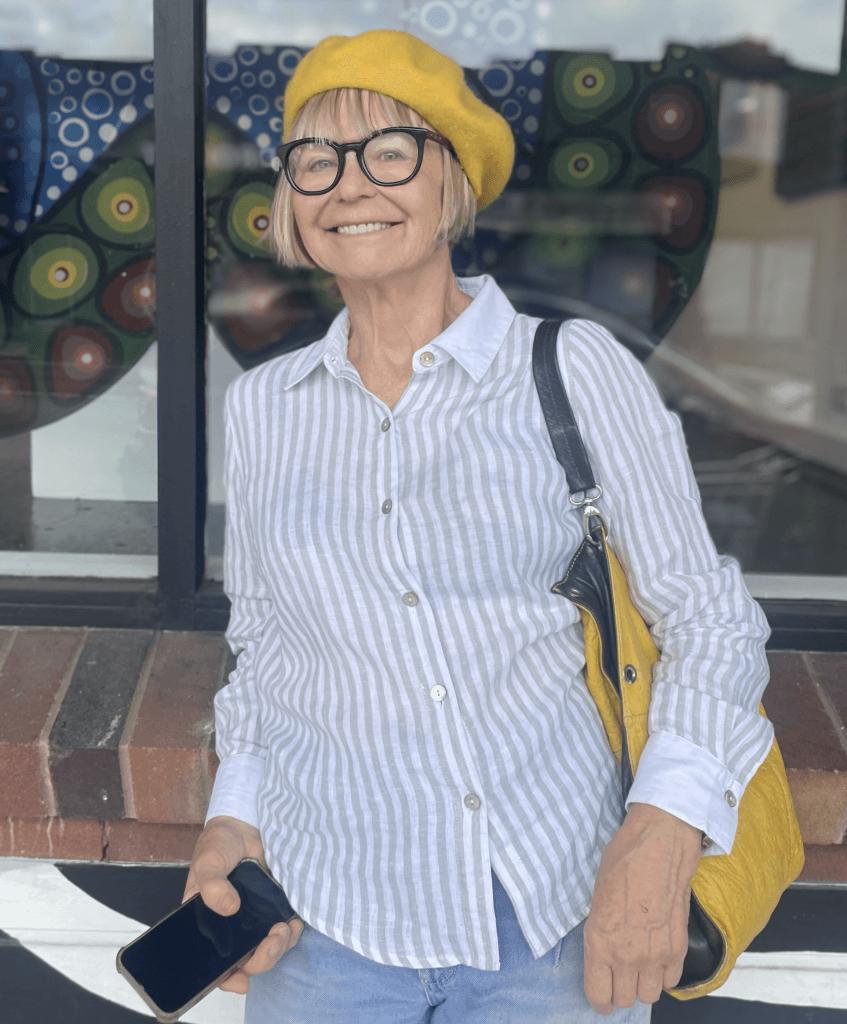
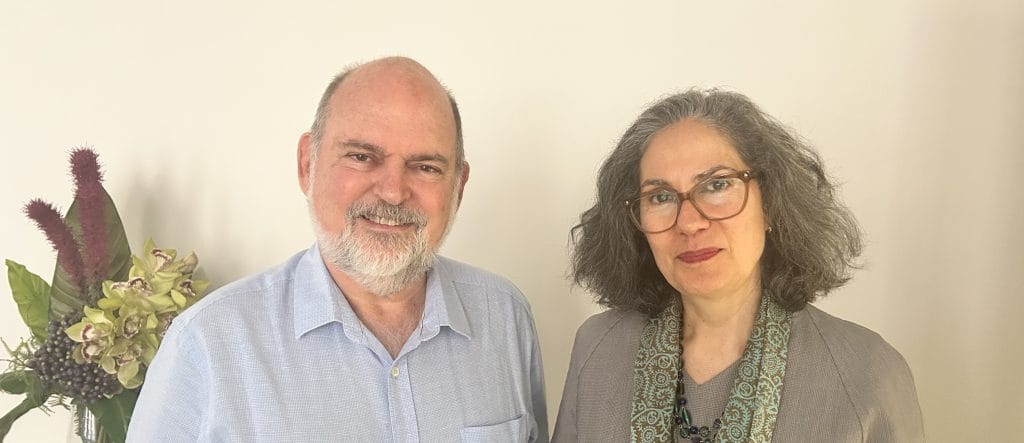
In the latest We Are Actuaries podcast, Bianka Grange discusses how she puts her ethics facilitation skills to work in her position as an actuary. Bianka is interviewed by another actuary, Martin Mulcare, who is also a Primary Ethics volunteer! You can listen to the podcast or watch the two of them on YouTube below.

In this discussion, Bianka shares:

  • How practising neutrality as a facilitator creates safe spaces for diverse perspectives
  • how creating space between reaction and response improves workplace communication, and
  • how low-stakes presentation practice builds confidence for high-pressure moments.

“Not only does Bianka highlight the importance of self-reflection, she also provides some practical guidance on how to more regularly implement it.”, says guest host Martin Mulcare. These are certainly skills that can be usefully applied in many types of jobs.

Read more about Bianka and Martin here and listen and watch below.

Podcast

Listen to the conversation as a podcast here:

A letter from 1965 about ‘religious instruction’

Gordon Stenning recently sent us a copy of a very interesting old letter from 1965. The letter was sent to Gordon’s father and concerns his wish for his children not to receive ‘religious instruction’ at school. It was another 45 years until Primary Ethics came into being to provide an alternative to religious instruction in NSW public schools. Prior to that, some schools made Religion mandatory for all children or the children whose families did not opt for Religion were placed in ‘non-religion’, which could consist of doing nothing or colouring in, etc.

Gordon writes: I received your annual report recently and was pleased to see that Vaucluse Public School [in Sydney’s east] has a Primary Ethics program. I have attached a letter written to my father, who was interested in alternatives to religious indoctrination when I was at primary school. He would be delighted to have been aware of your success. Please feel free to pass this on to your volunteers to emphasise the timeless relevance of their invaluable volunteer work. My thanks and  congratulations to you and your colleagues for the advancement of public education in Australia.

Gordon continues: By way of background, my father had a lifelong interest in secular education and  ethics and was a member of a group I recall to be the Secular Educational Society, as well as the Australian Council for the Defence of Government Schools. He was a lifelong member of the NSW Humanist Society and at one time President of the Australian Humanist Society.

He was opposed to the idea of publicly supported religious indoctrination of primary school children and wanted my brother and I  to be excused from scripture classes on that basis. I recall that he was successful in that endeavour and we were allowed to sit in a  classroom with other children for the duration of the religious classes.

I have attached a photo of our year 1 class provided by one of my school friends, Stephen Gonski, who went on to become a primary school teacher.

Vaucluse Public School 1965 - Gordon is possibly the boy on far right front row.
Critical Thinking and Empathy in the Age of AI – panel discussion

In May 2025, Primary Ethics hosted a panel discussion on Critical Thinking and Empathy in the Age of AI. An appreciative audience saw host Sarah MacDonald (centre below), radio journalist, discuss the ethical thinking skills needed to address the AI challenge with panellists Kelby Mason (Primary Ethics curriculum author, left), Microsoft strategist and ethics volunteer Sinéad Fitzgerald (far right), digital education specialist Tim Powers (second from left) and coordinator of ethics at Pembroke School in South Australia, Gabrielle Corbett (second from right).


Northmead – volunteer team of the year

Northmead Public School ethics team were co-winners of the 2024 Kinghorn Volunteers of the Year award – in their school’s centenary year. At a recent school assembly they were presented with their $1000 winning cheque to go to their school library, as well as a hardback copy of Unstoppable Us by Yuval Noah Harari.

Evan Hannah, Primary Ethics, Mallika Ramaswamy, Veronica Roelink and the school librarian.

Northmead is a large, diverse school in western Sydney. The team have worked really hard at building a very strong, steady and committed presence to ensure that ethics is now offered across all years, having started with only two classes a decade ago. The reputation and popularity of the program has grown significantly and now almost one third of the school population is engaged in ethics lessons. The program is seen as an important part of school life and the team is well known and respected. With a diverse, committed and community-minded team, they’re not only teaching ethics — they’re building a lasting legacy

Our volunteers love the conversations and lessons we get to share with the kids and we especially love catching up each term to chat all things ethics and learning from each other's experiences. We all feel that we get as much from the experience of teaching ethics as we give to our students each week.

Former ethics coordinator Tania

The 2024 Northmead ethics team, from left: Veronica, Christina, Mallika, Susannah, Myat, coordinator Tania, Elaine. Missing: Abha.

Volunteer Elaine

One of the team, Elaine Lee, told her story:

I have always wanted to volunteer in a program that has an impact for others. Taking a career break, I saw this opportunity  advertised at our school and jumped at the offer after reading up on the Primary Ethics program. My background is in Learning & Development and the program aligned with my values of instilling morale and critical reasoning, even more cause to volunteer with Primary Ethics.

What makes it great is that you don’t have to have facilitator experience! The training program is very well constructed, mine was led by Kelby Mason. 

Knowing that I can make an impact for my child and the children of tomorrow makes it very rewarding and fulfilling. The curriculum is current with today’s scenarios and it’s such a pleasure to work with a cohort of like-minded volunteers who  want to make a difference. 

I encourage anyone who has the opportunity to participate in this program. I hope this becomes the norm as part of a child's learning in primary and high school. Thank you, Primary Ethics!

Elaine Lee. volunteer at Northmead Public School

Integrating space exploration ethics into early-stage education

Inspired by our ethics curriculum, Winnie Tang, an aeronautical engineer and volunteer ethics teacher, has written a paper for the International Astronautical Congress, taking place in Sydney in October, on integrating the ethics of space exploration into science education for primary children. 

Winnie is a systems engineer working at Thales, with a degree in Aerospace Engineering (Hons) and Physics from UNSW. These pictures of Winnie were taken at the Houston Space Centre and Frontiers of Flight Museum, USA.

How Winnie became an ethics volunteer
I have done volunteering and fundraising my whole life, I love giving back to the community and meeting people from all walks of life.

I was volunteering at a soup kitchen in Bondi and, in a particularly memorable moment, a group of young primary school girls came in to collect the cupcakes we’d baked for a single mother who was unable to cook for herself or her family while she was fighting cancer. They were such bright little kids, so full of energy, kindness and compassion. I was struck by how remarkable they were, showing such understanding and empathy about the situation at such a young age. That’s when I realised how I wanted to be part of children’s lives in a more meaningful way. Their ability to think, understand and empathise inspired me to be part of the process to support and nurture children as they grow.

When I started looking for more local opportunities (since Bondi was too far from my place), I came across Primary Ethics on Seek. I decided to volunteer at my local primary school in Hurstville, where I had also gone as a little girl, so it was nostalgic and exciting to return as a teacher! I had (and still have) an amazing experience teaching children. They’re cheeky, smart, creative and their answers often surprise me in the best way possible. I feel like I learn from them just as much as they learn from me.

Ethics in space
Ethics is integrated into my job every single day. Ethics establishes the principles for engineers and guides us in our professional conduct, prioritising the safety, health and welfare of the public, along with honesty, integrity and competence in our professional lives. Over the past few years, we’ve seen how fast space activity is accelerating. Commercial launches, lunar missions and talk of settlements in space are no longer science fiction. This raises major ethical questions that our community is currently talking about.

Winnie gives a lightning talk about her paper.

Young people are ready!
Teaching in primary classrooms convinced me that young people are ready to grapple with the ethical questions these developments raise, if we give them the right tools. Additionally, the IAC (International Astronautical Congress) will be held in Australia soon! This was an opportunity I didn’t want to miss and I decided to put together something on a subject I am passionate about. So I wrote Inspiring Ethical Minds: Integrating Space Exploration Ethics into Early-Stage Education. [The full paper was published after 3 October in the IAC 2025 conference proceedings. See below.]

What does my paper argue?
My paper proposes a practical case for introducing space ethics into Stage 3 (Years 5–6) classrooms. It focuses on three themes that are already shaping international policy and industry practice: planetary protection, resource allocation and human settlement (space colonisation). No one knows what the right answer is! We are currently still debating what kind of laws should exist in that domain. The growth of the industry opens up many ethical dilemmas that we are yet to catch up on. 

So rather than telling students the 'right answer', the aim is to build reasoning, dialogue and civic awareness … skills they’ll need as future voters, scientists, engineers, leaders and aware citizens in general.

Why space ethics, why now?
Global frameworks like the Outer Space Treaty, ongoing UN COPUOS discussions and the Artemis Accords show that questions of contamination, resource equity and governance are being debated today. These aren’t just technical issues; they’re deeply ethical. Topics surrounding sustainability and AI are no longer just applicable to what we have on Earth, these concepts surround space too. Bringing space ethics into primary classrooms connects science learning with real-world decision-making and helps students see themselves as participants in those conversations.

How does it fit the curriculum?
The approach aligns with the NSW Stage 3 Science and Technology syllabus. They start learning about Earth and Space at this stage and it supports ACARA’s general capabilities (ethical understanding, critical and creative thinking, literacy, personal and social capability and intercultural understanding). In other words, I don’t want to add content on top, but rather use ethical inquiry as a lens while students study the solar system and technologies and design solutions.

What does it look like in class?
I have proposed classroom implementation following the proven Primary Ethics pedagogy. Each theme comes with a short, concrete scenario and structured questions. (This is further elaborated in the paper.) These activities are deliberately open-ended. Students learn how to think by giving reasons, listening respectfully, changing their minds when a better argument appears, rather than being led to a predetermined conclusion.

What have I found?
Embedding ethics in science units is feasible without cognitive overload; it naturally assesses syllabus outcomes (eg. comparing planetary features, applying design thinking, communicating conclusions) while developing ethical literacy. The approach is grounded in scientific content and age-appropriate dialogue, making it suitable for Stage 3 and adaptable to other stages.

What next?
Because both the research base and the ethical themes are international, the framework can be adapted beyond NSW and Australia. The next step is collaboration with curriculum specialists (Primary Ethics) and teachers to refine lessons, pilot them and share resources.

The goal is simple and ambitious: equip young people to reason well about the choices humanity faces as we become a spacefaring species.

Winnie Tang

Stories from National Student Volunteer Week

It’s National Student Volunteer Week, a great opportunity to showcase stories from our many student ethics volunteers.

Volunteering does look good on your resume, which is especially valuable for people starting out on their career, but ethics volunteering offers so much more than that. Top of the list from many of our students is what they learn themselves, which can be productively applied in their future work lives – knowing how to maintain neutrality, listen carefully, develop empathy and learn that it’s okay to change their mind about something, just as the school students learn to.

Reports from student ethics volunteers

Khanh is a student of Nursing at Sydney University.

“I grew up in a culture where young children weren’t encouraged to speak up. With Primary Ethics, I get to help children feel heard and think for themselves – something I wish I’d had growing up.

Volunteering in ethics hasn’t just been meaningful, it’s helped me become more curious, thoughtful and connected to people. I ask ‘why’ a lot more now (maybe to an annoying degree!), but it helps me understand the people around me better, even those I already know well.

I am thrilled to be a part of Primary Ethics and would love to have more student volunteers as my colleagues. I truly appreciate what ethics brings to the community and to me personally. Being able to volunteer here feels like a once-in-a-lifetime experience.

Primary Ethics really helps me grow just as much as my students do.”

Mia is a recent graduate in the Bachelor of Medical Science from the University of Sydney.

“I started volunteering in ethics when I was 18, during the first year of my degree. I decided to begin my ethics journey to develop my critical thinking, reasoning, problem solving and communication skills, all of which are incredibly important in the medical field. My mother was (and still is) an ethics volunteer and together we became the first mother-daughter ethics teaching duo for Primary Ethics!

Volunteering for Primary Ethics is incredibly enriching for tertiary students. There is a common belief that ethics volunteering is especially good for students in education, psychology, health or social sciences, but I believe that teaching ethics builds communication skills, empathy, confidence, listening skills and facilitation of critical thinking no matter what your field of study or interest is.For students out there considering becoming an ethics teacher, seeking meaningful volunteering experience or even wishing to develop their interpersonal skills, I would highly recommend pursuing a volunteering role at Primary Ethics!”

Bharathi is studying Philosophy and Sociology at the University of Wollongong.

“At a time when young people are feeling powerless, helping children to think critically and have respectful discussions makes me feel empowered – that I can help create a world where young people feel better able to speak and be listened to on issues that impact them. If you’re a student and would like to be a part of that too, I’d highly recommend volunteering with Primary Ethics.”

Tara is currently pursuing a Masters in Medicine at the University of Queensland.

“Volunteering with Primary Ethics has shaped how I communicate—with patients, colleagues, and children alike. It’s taught me to listen without rushing to judgment and to approach each conversation with curiosity and care.
I’m currently completing a Master of Medicine in Skin Cancer through the University of Queensland and working as a Dermatology Research Fellow at The Skin Hospital. Amidst the science and clinical work, ethics has helped me stay grounded in values like empathy, fairness, and open-minded dialogue. Being a Primary Ethics coordinator is one of the most rewarding things I do—it reminds me that respectful listening is a skill we can all keep building. I’d absolutely encourage other students to get involved. You don’t need to be an expert—just willing to ask questions and think deeply.”

@Home bulletin for parents Term 3 2025

Welcome to @Home bulletin for Term 3 2025, where we let families know what your children, from kindergarten into secondary school, could be exploring in their ethics lessons this term.

Subscribe here to receive our @Home email bulletin once a term.

The topics we show below are based on classes which begin at the beginning of the year. Schools start at different times of the year, some lessons go faster or slower than others, some schools skip ethics for the first and last weeks of the term while others teach every single week – and so on. 

We hope the students talk about ethics with you at home – ask them questions about it!

If your child tells you they are discussing a topic you don’t see in this bulletin, you can also look at the Curriculum section of our website.

Kindergarten: Changing your mind
Sometimes we change our minds – and sometimes we don’t want to. This term, young students will explore what it means to change our mind and why we sometimes hold onto ideas even when new reasons are offered. Is changing your mind a sign of weakness or strength? They’ll practise recognising when it’s time to rethink and when it’s okay to stand firm – and why good reasons for having an opinion matter.

Stage 1 – Years 1 & 2: Stereotyping
This term, Stage 1 students will explore the idea of stereotypes. They’ll start with playful examples – like assuming all wombats are grumpy – before turning to more serious ones, such as assumptions about people based on how they look. They’ll consider whether it’s fair to judge someone before getting to know them and discuss why generalisations can be both helpful and harmful.

Stage 2 – Years 3 & 4: Intentions
When someone causes harm but didn’t mean to – is it still wrong? And what if someone tries to do something wrong but ends up helping? Stage 2 students will explore how much our intentions matter and whether we should judge actions based on what people meant to do or what actually happened. They’ll reflect on praise, blame and the difference between accidents and choices.

Stage 3 – Years 5 & 6: Stealing
Most kids know that stealing is wrong – but what counts as stealing and why is it wrong? Is it stealing to use someone else’s Netflix account? What about watching a fireworks display you didn’t pay for? Stage 3 students will examine different types of stealing and think about whether something can be morally wrong even if it’s not illegal – and whether stealing is always wrong in every situation.

Stage 4 – Years 7 & 8: Does it matter if everyone disagrees with you?
Teenagers are often encouraged to ‘think for yourself’ – but what happens when everyone else disagrees? Does that mean you’re wrong? This term, students will explore disagreement and confidence in our own views. They’ll discuss examples from food, art and ethics and consider whether some opinions are just a matter of taste – or whether it’s possible to be mistaken, even about your own point of view.

Each term brings new ideas and questions and we hope these topics spark interesting conversations at home as well!

Ethics teaching – a family affair

This year a third member of the Scott family has become an ethics volunteer. Peter Scott describes their journey to being an ethics family.

As ethics teachers, we often reflect on the benefits the Primary Ethics program has for our students. I have been an ethics teacher at Glenmore Rd Public Sschool in Paddington for 13 years now. Not only have I seen it benefit my many students over that time, but ethics volunteering has given my family a sense of common purpose and brought us closer together as we grow older.

In my second year I taught our younger son Lachlan, who was in Year 6. He was a little embarrassed to have his dad in front of his mates, although he got used to it as I brought my soccer coaching skills to bear. Our older son Alasdair had already left for high school when I started ethics teaching and felt a little left out of the conversations we were having at the family table.

Eight years later their mother Sarah became an ethics teacher too, partly to better inform her architectural work designing early childhood education facilities. She could see how much value I was getting from teaching the curriculum. Now she is part of our group of eight teachers at the school and absolutely loves it.

Sarah tells this story about witnessing the impact of ethics thinking skills in her class:

``One of my favourite ethics moments occurred with the lesson about the intent and structure of an ethics class. I followed the script, starting the class with random questions about unrelated topics which they could not possibly have answers for. They were all initially very puzzled and confused, but then one girl had a lightbulb moment and put her hand up with much animation. 'I know what this is!' she exclaimed excitedly, then in a conspiratorial voice she added, 'It’s an ethics class about ethics classes!' They all went 'Ahhhh'.``

Sarah Scott

After all these years the wheel has now turned full circle. Alasdair, who just missed out on being a student in the primary school ethics program, finally had some time to contribute after completing six years of university. We did the teacher training together in January 2025 – it was my second time and after 13 years it was completely different. Not only had the curriculum evolved, so had the teaching techniques.

So now Alasdair too has become part of our group of teachers and also loves it.

So we are an ethics teaching family! We sit down at the dinner table, speak one at a time, there are no putdowns and we build upon each other’s ideas … Okay, no, that doesn’t quite happen – we are a normal family and all talk at once. However, we  all recognise that the ethics program offers a really positive way of engaging with younger generations and listening to each other in order to build a future together.

Peter, Lachlan, Sarah and Alasdair Scott
Primary Ethics to merge with The Ethics Centre

Primary Ethics, the not-for-profit organisation delivering Special Ethics Education in NSW public primary schools, will merge with its founding body, The Ethics Centre, in a strategic move to enhance ethics education opportunities.

Established by The Ethics Centre in 2010, Primary Ethics has equipped more than 250,000 students in over 650 NSW public schools with vital skills in critical thinking, ethical reasoning and respectful discussion, thanks to the dedication of thousands of trained volunteers.

For over three decades, The Ethics Centre has been a leader in developing innovative and impactful ethics education initiatives in Australian primary and high schools, including initiatives such as Moral Courage and Common Ground. The Centre is committed to developing programs that help young people navigate the ethical challenges they face now and in the future, guided by a Youth Advisory Council.

“This merger brings together two organisations that share a deep commitment to building ethical literacy in Australia,” said Dr Simon Longstaff AO, Chair of the Primary Ethics Board and Executive Director of The Ethics Centre. “We’re immensely proud of the impact Primary Ethics has made in NSW schools and this step allows us to explore future possibilities to build on that legacy.”

While the merger will bring opportunities for collaboration and growth, the day-to-day delivery of Primary Ethics classes in NSW public schools will remain unchanged. The quality of the curriculum, the role of volunteers and the integrity of donations to Primary Ethics will all be preserved.

Dr Longstaff said: “The ethics education program that our volunteers, supporters and families know and value will continue to operate as it does today. What’s changing is the opportunity to do more – to innovate, to reach new communities and to bring ethics education to a broader audience. This is about broadening horizons while staying true to our roots.”

Detailed planning for the merger is underway, with full implementation to follow stakeholder consultation.

MEDIA CONTACTS

Primary Ethics: Susan Ardill – communications@primaryethics.com.au M: 0478356969

The Ethics Centre: Kathleen Evesson – communications@ethics.org.au M: 0414171945