Archives

Primary Ethics moves to The Ethics Centre Sydney office

Primary Ethics has moved and is now co-located within The Ethics Centre at its offices in Sydney. The move enables the two organisations to share office space and office resources, as well as to continue to collaborate on ethics education projects.

Evan Hannah, CEO of Primary Ethics, said: “We’re delighted to join The Ethics Centre in their Sydney CBD office, where we will continue our work to help students develop essential skills in critical thinking, ethical reasoning and respectful discussion.”

“We also thank our generous donor Rob Keldoulis for paying our rent for the past decade at our previous home in Potts Point.”

ethics-centre

Dr Simon Longstaff AO, Executive Director of The Ethics Centre, said: “Since the establishment of Primary Ethics, 13 years ago, The Ethics Centre has continued to develop innovative ethics programs for school students, including the Moral Courage and Common Ground programs for high schoolers. This success, when coupled with Primary Ethics’ achievements, provides an excellent platform for an approach that combines our distinctive strengths when developing and executing impactful programs that strengthen ethical understanding in generations of Australian students.”

MEDIA CONTACTS

Primary Ethics: Susan Ardill, communications@primaryethics.com.au

The Ethics Centre: Kathleen Evesson, communications@ethics.org.au

Reflecting on my seventh ethics year

How to better regulate playground and global tensions? Have children take ethics, says experienced volunteer Katie Rockliff.

It’s the last week of Primary Ethics in my seventh year of volunteer teaching. I’m headed to class and reflecting on the year that’s been.

While walking and enjoying the embrace of early summer, ruminating on the value of school ethics as a program, I’m also listening to a neuroscience podcast (as you do). Today’s is with guest speaker Dr Ethan Kross, Professor of Psychology at the University of Michigan, USA, and director of the Emotion and Self-Control Laboratory. In closing, Dr Kross references how in his Lab they often define wisdom as: “the concept of how well you are able to deal with social situations involving uncertainty”. He goes on to discuss the art/ science of entering conversations not to try to change others’ minds, but rather with a state of humility and curiosity and genuine interest – and first and foremost (I’m paraphrasing) trying to understand the other person or group’s point of view.

katie-rockliff-smiling
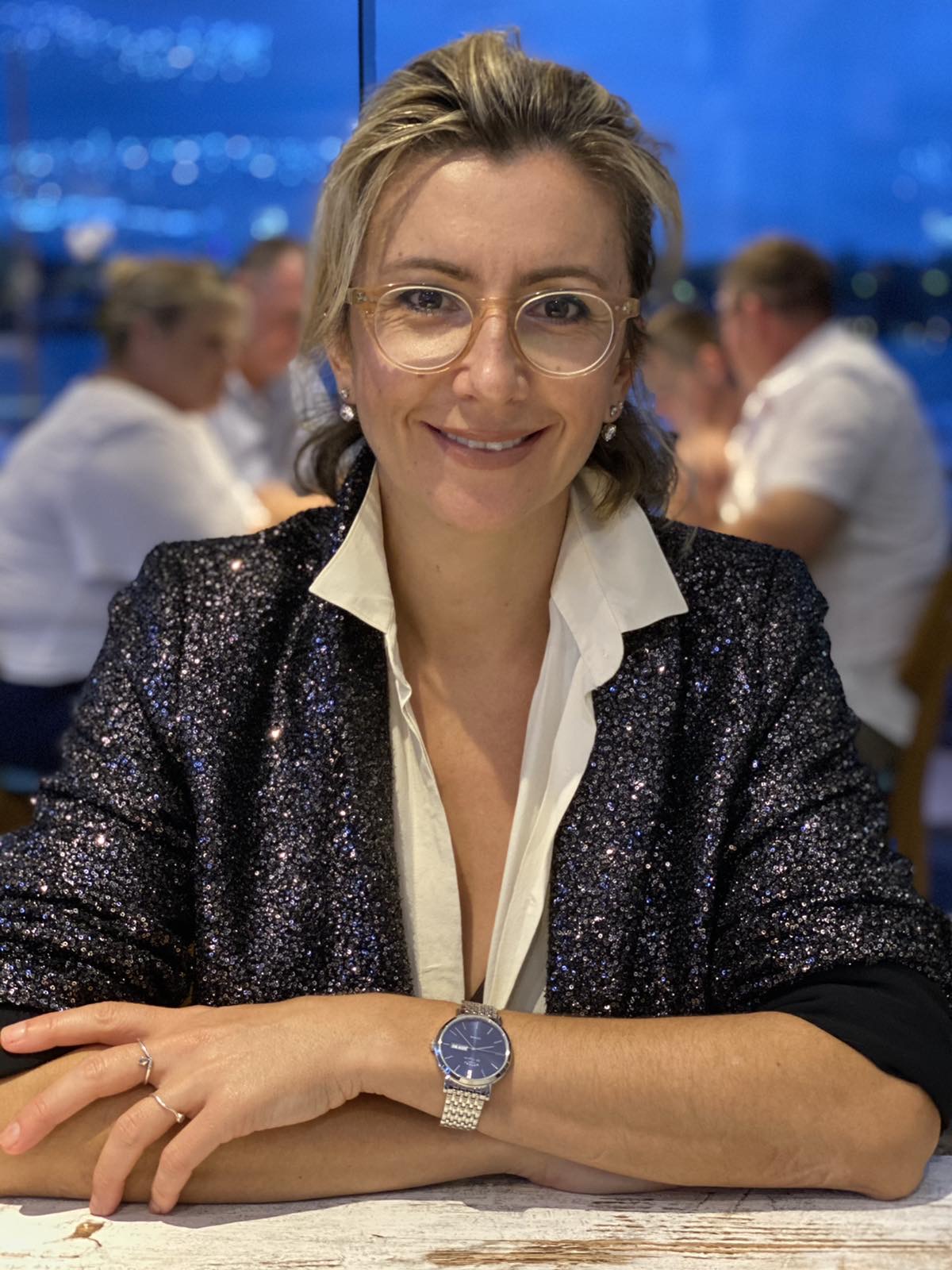
Katie Rockliff

And it occurs to me, on this walk to class on a sunny morning, that in an era of much socio-political divide, economic and climate turbulence, fake news and the rise of AI, that honing these skills is exceedingly useful – perhaps more so than ever before. This is where listening to Dr Kross and my ruminations on the value of school ethics collide…

Of all the subjects at school, ethics is perhaps the only one where no rights or wrongs, no dogma or rules apply.

One is simply encouraged to think. To think deeply.

To be open enough to both articulate, consider and review or reconfirm one’s own thoughts.

To truly listen to others. And to constructively build on their thinking.

And to collectively seek, if not consensus, a place of common ground and positive way forward for all.

It’s a skill many school playgrounds, corporate boardrooms and politicians would benefit from! And an empowering skill for parents to know their child can possess. To know that their child can, as Dr Kross defined it, “navigate social situations involving uncertainty” (let’s just call that life shall we?) – to navigate it well.

As a volunteer teacher from Kindergarten through to Y6, there is one question the curriculum has asked me to ask the students on repeat … and that question is “why?

“Thank you for sharing your thoughts. I’d like you to please share with us why you think this?”

This, I see now, is my why. This is why I teach ethics. And why I see value in all students taking ethics.

Not to be told what to think but how to think for themselves.

Not to learn how to follow but to learn the value of respect.

Not to learn only one right answer but the ability to adapt to find new answers.

Not to own the conversation but to share in the conversation.

And to learn that there is always more learning to be done and absolutely always someone that knows something you don’t.

katie-rockliff
Katie Rockliff

And lastly but by no means not least, the awareness and desire to work with others, in some way, for the greater good.

It’s a sunny view of what the next gen, through the power of their own thinking and listening, can achieve.

And as an answer to my ‘why’ and what I’m glad to be a part of – that’s the greater good of ethics education that I’m thrilled exists.

****

Katie Rockliff is a communications consultant, small business owner and volunteer ethics teacher at Darlinghurst Public School 2018-2024.

Kinghorn Volunteers of the Year 2024

Primary Ethics is delighted to announce the winners of the Kinghorn Volunteers of the Year 2024.

Yes, that’s winners, plural. This was the first year in which nominations could be made for a team as well as an individual.

[Read more about the Award here.]

So the 2024 winners are Jim Neely, Regional Manager, ethics teacher and coordinator in the Queanbeyan region near Canberra, and the Northmead Public School ethics team from western Sydney. Jim, who coordinates three schools in Queanbeyan, receives $$3000 in prize money to distribute to the library services in his schools, while the Northmead team receives $1000.

The judging panel was Jill Kinghorn, Bruce Hogan (Primary Ethics Chair), Barb La Ganza (winner 2023), Kaye Remington (community volunteer), Martin Bregozzo (parent volunteer) and Evan Hannah (CEO).

jim-neely
Jim Neely

Jim Neely is currently regional manager for five ethics programs in the Queanbeyan region, which deliver lessons to thousands of students every week. Currently, he is keeping 15 ethics teachers engaged and himself teaches four classes every week in three different schools.

Jim is dedicated to growing ethics education and works diligently to recruit via local events and media. Besides his five schools, he explores every option to launch new programs in other schools in the region.

From one of his team: “Jim strongly supports teachers at Queanbeyan schools and graciously relieves us when we can’t take our class or seeks out another teacher who can. Behind the scenes, I know he works with the Queanbeyan schools to encourage their participation and active support for ethics classes. My own class had only six students in Term 1 this year. Through his efforts with the school, I now have about 13. And a happy class it is!”

“I nominate Jim because I believe he epitomises the qualities and ethos that are so necessary in an organisation that relies on volunteers in order to be effective and respected. Any organisation would be lucky to have Jim. Primary Ethics is fortunate that we are where he chooses to commit his time and effort. I feel fortunate to volunteer in his area.”

northmead-team-2024
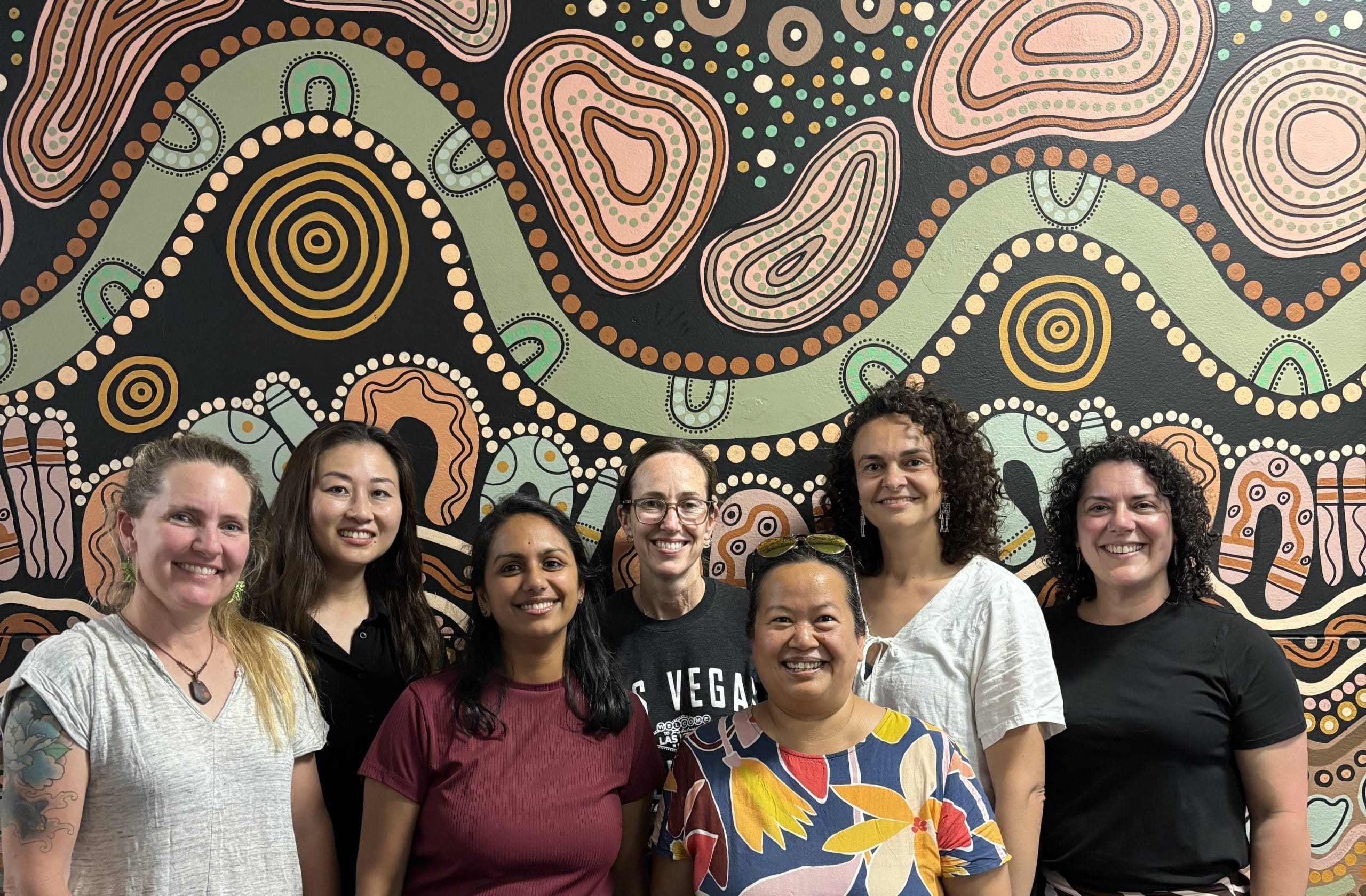
The Northmead team 2024, f rom left: Veronica, Mallika, Susannah, coordinator Tania, Christina (back), Myat (front), Elaine. Missing: Abha.

Northmead Public School ethics team: This team volunteers in a large, diverse school in western Sydney and this nomination is particularly special this year – it is the school’s centenary year!

The team have worked really hard at building a very strong, steady and committed presence to ensure that ethics is now offered across all the school years, having started 10 years ago with only two classes. The reputation and popularity of the program has grown significantly and there are now over 200 students engaged in weekly lessons. This represents almost one third of the school population. The program is seen as an important part of school life and the team is well known and respected as very community-minded.

As well as the two winners, the judging panel gave a special commendation to Faith Weisbrot, who has been on every shortlist since the award commenced in 2022. Faith is a coordinator, teacher and relief teacher at schools in the eastern suburbs of Sydney.

Most weeks Faith teaches from three to five lessons, making sure no children are missing out. Faith has proven year on year what a great team leader she is. She is always available to her teams, mentoring the newer volunteers, making sure to catch up once a term, fostering a sense of team bonding. She organises Classroom Support workshops and observations where feasible.

Faith embodies the true spirit of a Primary Ethics volunteer, humble and hardworking.

faith-weisbrot
Faith Weisbrot
Arpana: ‘So much more than I ever expected’

“I started as an ethics volunteer when my eldest daughter was in Stage 2 and now she’s at university! Teaching ethics has given me so much more than I ever expected.”

Arpana writes about her journey as an ethics teacher.

“When my daughter started school, I was looking to get involved in the school community. I became an active member of the P&C but wanted to find other ways to apply my interests in children’s learning for life skills. Then, one day, I saw a callout in her school newsletter for ethics volunteers. The idea of contributing to children’s learning in this way was incredibly exciting, even though I had no prior experience in the teacher role. Thankfully, the process of signing up was extremely simple. I submitted my resume, attended a weekend training workshop and learned how to deliver the scripted lessons. The training made it clear I didn’t need to be an expert. Everything I needed was provided and we even practised running discussions. I couldn’t wait to try it with real students!

“I still remember the day I taught my first ethics lesson. I was nervous about meeting the students and running an interactive lesson, but the kids were so engaged. They jumped into the discussions straightaway and it was wonderful to see how much they enjoyed it.

arpana-schofields-public-school
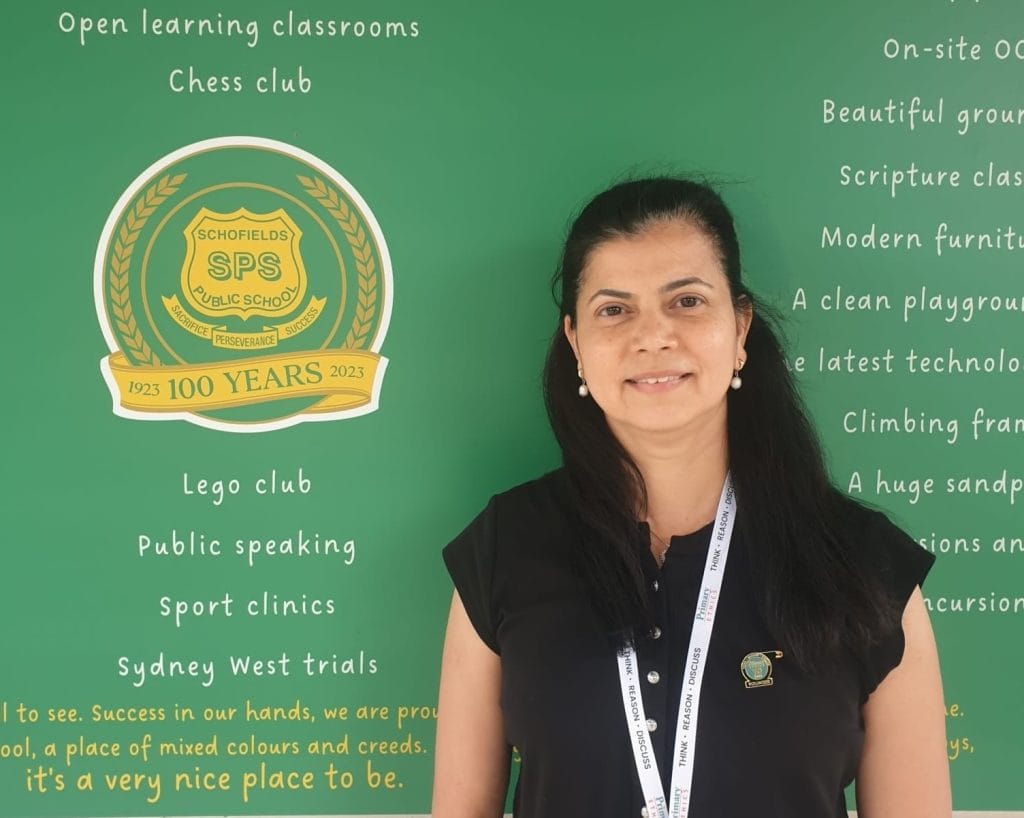
Arpana at the school where she teaches in Sydney's west.

The principal asked a group of students what the best part of their day was and there was an overwhelming response of 'today’s ethics lesson'!

Arpana

“Later that day, the school’s Twitter page shared an update. The principal had asked a group of students what the best part of their day was and there was an overwhelming response of “today’s ethics lesson!” This served as a major confidence boost for me and from then on ethics became a highlight of my week.

“Currently, I dedicate just 30 minutes a week teaching ethics, although this has varied over the 10+ years I have been a volunteer. One thing that has stayed constant is how valuable each lesson is — not just for the students, but for also for me. I’ve been pleasantly surprised on multiple occasions by how thoughtful and mature the student discussions are. They’re learning to be open-minded, to listen to others’ perspectives, to share their own in a way that’s respectful. It’s inspiring to see them build on each other’s ideas and sometimes even change their minds after hearing someone else’s point of view.

“There have also been moments that really stayed with me. Once, I missed a class because I wasn’t feeling well. When I came back the next week, the children were all asking, “Where were you? Why didn’t you come?” I explained I’d been unwell and one of them piped up, “That’s not good — why didn’t you send your husband?” It made me laugh, but it also hit me how much they valued ethics lessons. They don’t see it as being about me; it’s about the lessons and the conversations we share.

“Over the years, I’ve also received more formal recognition for my efforts. I was honoured as a nominee for the NSW Volunteer of the Year Awards in 2018. Such credits really make me feel like I’m part of a larger team, with the shared vision of bringing these ethics lessons to many students.

“Watching my daughter grow up has been a reminder of how quickly time passes, but ethics has stayed a constant part of my life. It’s such an inclusive program, not tied to any religion or culture, which is what makes schools the perfect place for it. I hope these lessons can reach as many kids as possible because they’re learning skills that will stay with them for life.

“Teaching ethics has taught me to see things differently, to listen better and to appreciate the diversity of thoughts that young minds bring. It’s been an incredible journey and I’m so grateful to have had the chance to be part of something so meaningful.”

Find out more about volunteering >>

‘This is for me!’ Ramya’s journey as an ethics teacher

Ramya is a volunteer ethics teacher in western Sydney. This is the story of her journey.

I still remember the day I saw a Primary Ethics leaflet in my child’s school bag. As I took it in my hands and read it all through, I felt straightaway, ‘this is for me!’

I like helping people and was already volunteering at our school P&C. When I heard about ethics and read about the topics, I was curious. My favourite activity is spending time listening to my children, so this opportunity to teach ethics to children looked perfect to me.

ramya
Ramya

I immediately called the number and spoke to the Primary Ethics coordinator, who then gave me all the information about applying and training. It took me a long time, however, to take the next step and start my journey with ethics – but I did it in the end.

To begin with, I did my training, which at that time was available only on Zoom due to Covid. At first I was very anxious, as I don’t have any experience in teaching and, in the interview, I’d understood that I need to manage the classroom too. The training was a bit challenging at first but I suppose anything can be challenging at the beginning.

My main issue was my accent, as I was new to Australia. I was nervous about my accent and also not sure whether I would understand the students from different backgrounds.

Yet the trainers were so good and made me feel comfortable and confident even though I’d never had any experience of teaching. I had many doubts, but once I finished the training I was confident and clearly understood my ethics teacher role. And once I started my first class, I felt relieved with no doubts at all and began to enjoy each ethics day as my day. I completely fell in love with ethics!

I now volunteer at my children’s school every Wednesday morning. As an ethics teacher, I basically follow the script, which makes it easy and gives us clarity on what we have to do and where we are going in the lesson. Usually a class takes half an hour. That’s all! Thirty minutes to actually volunteer. I prepare ahead of my class by spending an hour reading, to understand the topic and the lesson.

Following the scripts and being neutral is very important. In the classroom I start the topic and read a scenario, using modulation of tone to make it interesting. Then ask the substantive questions and encourage the children to participate.

anuya-ramya
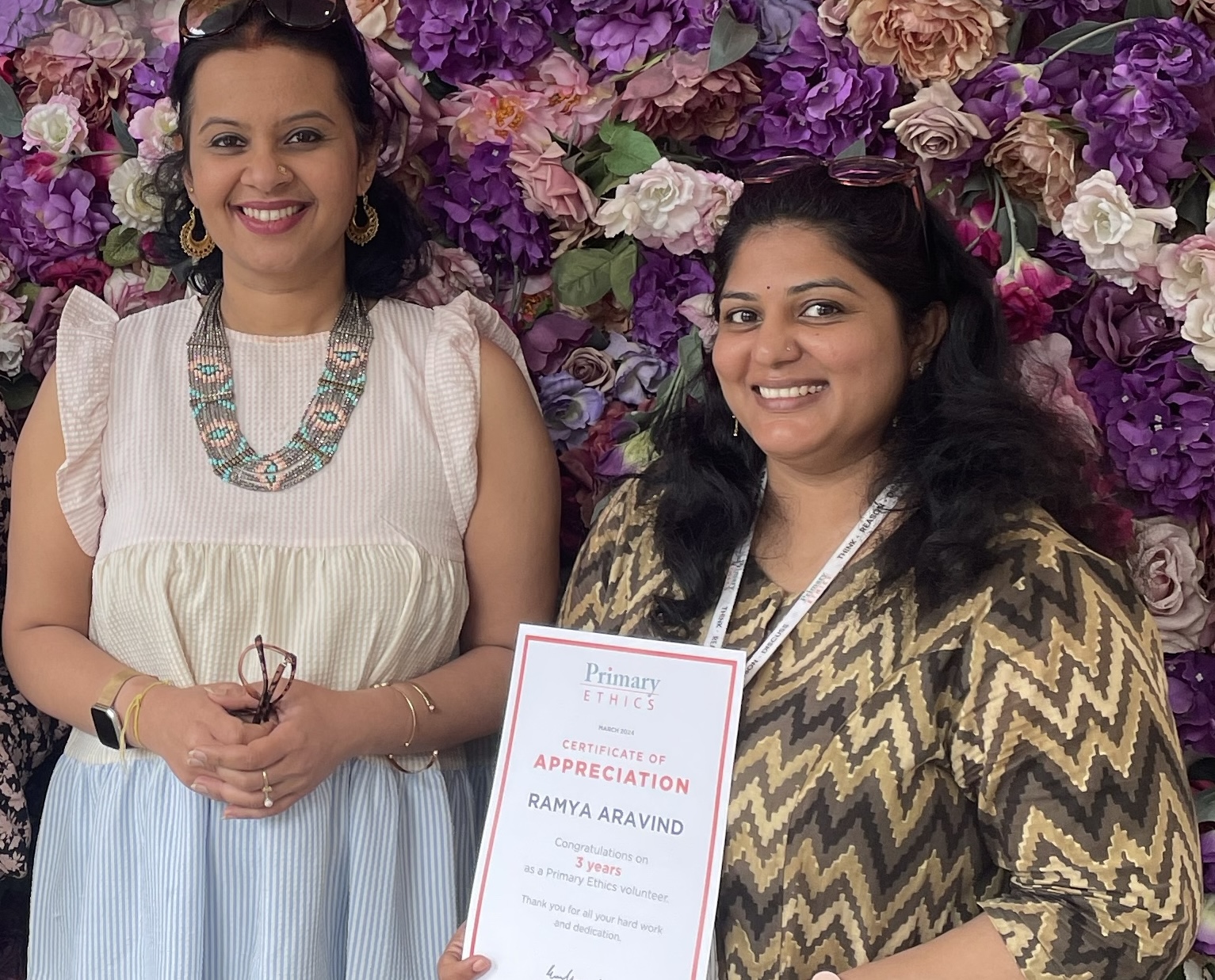
Area manager Anuya Velpanur with Ramya as she received her 3-year volunteering certificate.

I’m just a facilitator in the class, listening and engaging with them to open up and share their ideas, plus reminding them about the rules. Managing the class was a bit challenging at first but once you know the class and the students, you get to know how to manage them. Or we can ask for the school teacher’s help if required (often there’s a teacher in the classroom during my ethics lesson, quietly doing their own work).

I teach my own kids, which for me is a good experience.  I discussed it with my kids before my first class and gave clear instructions to them how to behave. So far, my kids like me to see me as a teacher in their school. Watching them participate in the discussions has been an added perk.

From being an ethics volunteer, I’ve built confidence in myself that I can do something valuable while being a stay-at-home mum. Teaching ethics helped me get over some of the fears I had and I started to see the world from all aspects, not just with 'Mum-eyes'.

Ramya

The best thing about volunteering as an ethics teacher is the opportunity to be in the class with kids – and also growing to understand the topics. To listen and encourage them to participate. I enjoy seeing the way young children think and make decisions. When I saw them changing their opinions and giving reasons for that, that was my moment!

I also want to say I was nominated as a volunteer of the year 2023 NSW from Primary Ethics which was unexpected and felt good. And I enjoy the great support I get from all the team of Primary Ethics.

At the beginning I started volunteering for my kids as I was keen on sending them to ethics. Now after my almost four years of experience,  I can surely say that it has opened up many benefits in my own life such as confidence, peace, understanding different perspectives and giving clarity to my thinking.

Choosing to volunteer for ethics has changed my life for the best, cleared all the doubts I had before about myself and given me clarity about what I can do. At the end of the day, the very best thing is to hear the children say, “she is my ethics teacher”.

An ethics student speaks out

“Ethics classes have been a huge help to me, both in primary and now in secondary school,” writes 16-year-old Keean from southwest Sydney.

“In ethics classes, I have seen so many shy students gain confidence and we have had so many interesting discussions. I learnt how to critically think about problems and delve deeper into my opinions and why I thought certain things.

Instead of just stating my opinion, I was able to understand how to reason and how to convey my opinions in a thought out manner instead of blankly stating them.

I also learnt how to have a functional group discussion with people with different opinions in a respectful manner.

Ethics classes have helped me in high school as well. They taught me not just to trust any information I come across, but rather check other sources and gather more information before coming to a final decision or answering a question.

Keean

Overall, ethics classes were so enjoyable, rewarding and so helpful for me, I highly recommend participating.”

Volunteering: The way to a more fulfilling and healthier life

The popular science on health, wellbeing and longevity is beginning to look beyond diet and exercise to volunteering as a contributing factor to a healthy, more fulfilling and longer life. Ethics volunteer Ima Strkljevic, a clinical physiotherapist, is doing her PhD in this field and shares her insights and knowledge with us in this blog post.

Ima points out that the evidence shows that volunteering positively affects the overall health of both volunteers and the recipients of their giving through social interaction, support and physical activity. Volunteering featured in the late Michael Moseley’s podcast Just One Thing (BBC) and Dan Buettner’s Live to 100: Secret of the Blue Zones (Netflix).

Ima Strkljevic has volunteered for Primary Ethics for more than seven years as an ethics teacher, coordinator and regional manager. Ima is passionate about volunteering! She is a clinical physiotherapist and a PhD candidate in public health, researching innovative interventions for promotion of physical activity in middle-aged and older adults, with particular focus on volunteering among health professionals.

Since she arrived in Australia as a refugee, Ima has volunteered with newly arrived refugees, migrants, torture and trauma survivors and culturally and linguistically diverse communities. Apart from dedicating her time to providing ethics education in NSW public schools, she has professionally volunteered as a NSW Australian Physiotherapy Association branch councillor and initiated and contributed to health programs to promote physical activity, social/ intergenerational interaction and general health in her community.

Ima writes: Volunteers are an invaluable asset to their communities, an enormous, growing, informal workforce providing their knowledge, skills, resources and time. Many volunteers remain engaged in their cause for an extended period due to their prosocial behaviour. Australia’s estimated six million volunteers (roughly 30% of the adult population) have proven extremely valuable during times of national crises from destructive bushfires, drought, floods, cyclones and the unprecedented pandemic of COVID-19. Apart from crises, volunteers regularly dedicate their time to regular activities related to sport, health, education, community and social welfare, all of which support social inclusion, education, help for marginalised and underrepresented groups, social connectivity and delivery of public services.

Ima Strkljevic

There is plenty of evidence supporting the multiple positive effects of volunteering for both the objective and subjective health of recipients and the volunteers themselves. Studies show that volunteering is associated with decreased mortality and improved physical health, mental health, social support and interaction, healthy behaviours and coping ability. In recipients, volunteering can improve self-esteem, disease management, mental health, cognitive function, self-efficacy and life expectancy. Engaging middle-aged or older adults as volunteers promotes their social interaction, which reduces loneliness. Loneliness is acknowledged as a modern-age epidemic associated with cardiovascular disease, obesity, dementia, depression, anxiety, a multitude of physiological disorders and even premature death.

I’d like to add that there is a volunteering threshold to derive health benefits and it is one to two hours a week or 40-100 hours a year. This is the perfect number for a Primary Ethics volunteer.

Ima Strkljevic

The global aging population and increasing numbers of people with chronic disease puts strain on individuals, families and healthcare systems. Promotion of healthy aging should thus be a global priority. Encouraging volunteering as a way of fostering physical activity and social interaction in later life may prevent or at least delay the onset of age-related functional impairment. Low rates of physical activity among older adults remains a major public health concern (only one in five adults in Australia meet the physical activity guidelines and physical inactivity is one of the leading preventable causes of all ill health and premature death). Consequently, it is important to identify new, low-cost, sustainable strategies to support middle-aged and older adults to enjoy active, independent and happy lives for as long as possible.

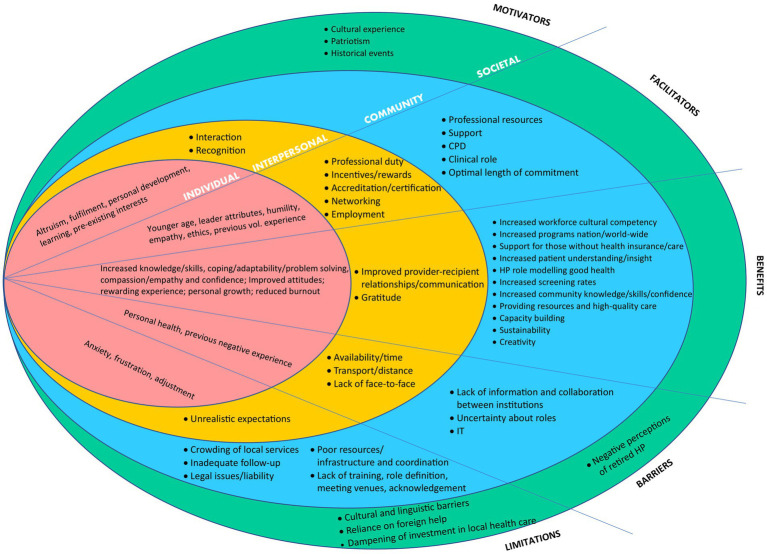
Socio-ecological map of health professional volunteering

A recently published study that I co-authored recommended that volunteering organisations provide both social interaction and appropriate professional development opportunities as incentives. In addition, it is essential that organisations ensure that volunteering opportunities also involve older or retired professionals, emeritus and student groups, who have significant potential as volunteers. One group that has significant potential to be recruited as volunteers is health professionals, as they are highly motivated by altruism, empathy, ethics, learning, professional development, recognition and personal growth. Retired professionals in particular could reap the health benefits of volunteering by continuing to be physically and socially active and engaged as they progress through older age.

I’d like to add that there is a volunteering threshold to derive health benefits and it is one to two hours a week or 40-100 hours a year. This is the perfect number for a Primary Ethics volunteer.

Brilliant Bangalow

Claire McLisky has been the ethics program coordinator at Bangalow Public School in the far north of the state since 2019. Claire recently to the local Bangalow Herald about the value of ethics education.

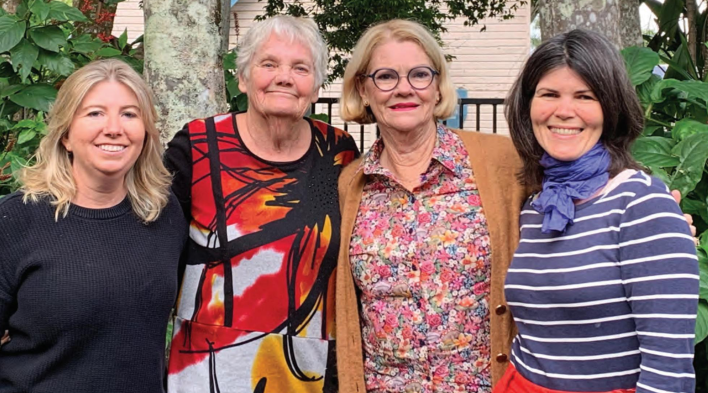
Some of the Bangalow team: Angela Saurine, Jane Barker, Deborah Green and Claire McLisky.

“I started teaching ethics in 2017, when I signed up in anticipation of my daughter starting kindy. Since then I have taught all four stages and have loved getting to know the school and all the smart, cheeky, funny and thoughtful children who have been in my classes. I’ve been the Bangalow coordinator since 2020 (a difficult year!) and am enjoying building and supporting my team of teachers as they discover the delights and challenges of ethics teaching.

Ethics at primary school level is important for two reasons. Firstly, it gives students an opportunity to develop skills that are essential in our complex world – such as critical thinking, giving evidence-based reasons for their opinions, being able to discuss and disagree with others respectfully and how to make well-considered ethical decisions.

Secondly, without the Primary Ethics program, the students who opt out of Religious Education would have to spend a half hour of their school time doing ‘meaningful activities’ in non-scripture, which mostly seems to just mean colouring in or chatting to their friends.

“Of course, some parents prefer for their students to do non-scripture, which is their right, but many more choose to enrol their children in the ethics program.

Ethics at Bangalow Public School is very popular! Around 60 percent of all students opt for ethics.

Claire McLisky

In early stages (Kindy and Years 1 and 2), the classes focus on being curious and asking questions, with our trained facilitators employing storytelling and games to get the students engaged. Topics include the difference between knowing and guessing something, changing your mind, telling the truth. In later stages (Years 3 and above), students explore more complex ethical questions, with stories, contemporary issues and real-life scenarios forming the basis of their discussions on issues such as how we should treat living things, voting and fairness in our society.

“Primary Ethics has done a lot of research which shows that our teaching method – using a ‘community of inquiry’ approach where students sit in a circle and share their ideas with each other – improves children’s general reasoning skills as well as their ethical reasoning capabilities.

“We would love to welcome some new volunteers to our team. There are so many benefits that come from teaching ethics – from the chance to engage with young people in a meaningful way and feel connected to the local community, to the opportunity to give back, to the glow that comes from having a really good discussion and having our own assumptions challenged.

“We think our ethics education program is brilliant!”

Elizabeth: ‘I look forward to every one of my ethics lessons!’

Elizabeth Tosti looks forward to teaching her ethics lessons so much that she is going even deeper in her third year of ethics volunteering. She has just taken on the role of ethics coordinator at one of the three local schools she teaches at.

Elizabeth writes: “I first heard about Primary Ethics from a friend who teaches ethics at his child’s school. I had taken early retirement from a busy professional career and was discussing my search for meaningful volunteer work. He suggested that being an ethics teacher could be the perfect role for me.

After investigating further via the Primary Ethics website, I immediately felt that the ethics education program was a wonderful, important initiative to help children develop critical thinking skills and the ability to hold respectful discussions. So I signed up for the training. I really enjoyed that, finding it very helpful in preparing me to be an ethics teacher, since I’ve had no formal teacher training.

I started teaching Kindergarten at Ultimo Primary School in 2022 and immediately just loved it! I’m now teaching three classes at three different schools – kindergarten, Stage 2 and Stage 4 at schools in Ultimo, Glebe and Rozelle.

Elizabeth Tosti on right with Anuya Velpanur, area manager, and Anna, another ethics volunteer.

I’ve found it doesn’t take long to prepare for a lesson – about half an hour – and they are cleverly scripted, with the right balance of storytelling, discussion questions, roleplays and fun games for the younger students, all based on interesting topics that are relevant for each age group.

Elizabeth Tosti

Elizabeth second from right with some of the ethics team at the Ultimo kindy orientation day.

I thoroughly enjoy getting to know my students and am constantly surprised and delighted by their insights and opinions. It’s also extremely rewarding when you observe improvements in the way they listen to each other and articulate their thoughts.

Teaching ethics also hones your facilitation and multi-tasking skills – very often everyone in the class wants to voice their opinion at the same time!

I have learned over the past two and a half years that ensuring I have the support I need with class management from the supervising schoolteacher is essential. I’ve found that a brief discussion with the teacher at the start of term to let them know how they can best help me is all that’s needed and allows the lessons to go more smoothly.

I would highly recommend ethics teaching to anyone who wants to contribute towards helping children become thoughtful, critical thinkers, able to identify and evaluate different opinions – and for anyone who enjoys seeing children grow and learn from one another. I look forward to every one of my lessons and find teaching ethics great fun, challenging and extremely rewarding!”