Category: Events

All about ethics lessons: webinars

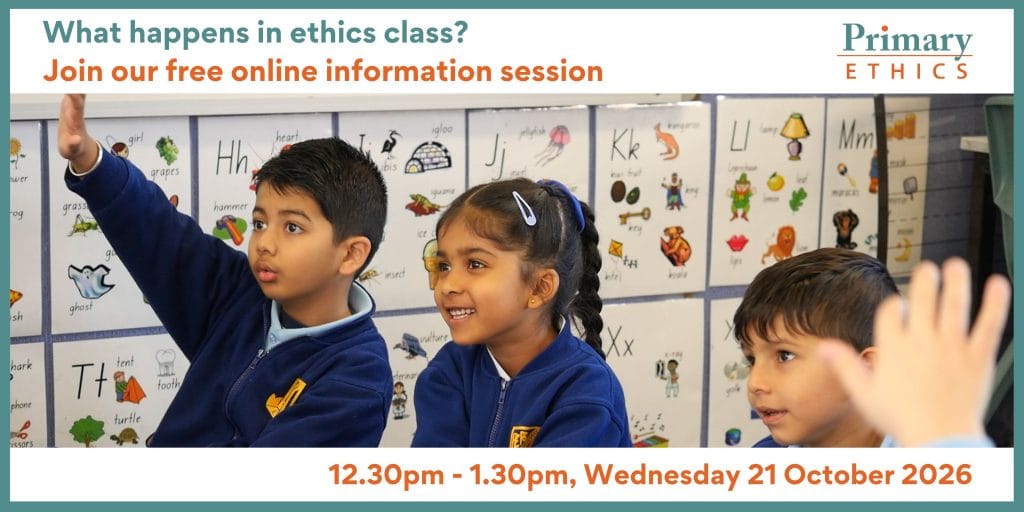
We run regular one-hour webinars for anyone interested to find out more about what happens in ethics lessons or about volunteering with us.

In the webinar, you’ll be able to participate in a demo lesson to see our teaching style in action, hear first-hand from current ethics volunteers, hear about what impact ethics lessons have on children, plus all about our comprehensive free training and what’s involved in volunteering with us.

Click on an image for any session below to register.
Philosopher AC Grayling: Critical thinking for kids

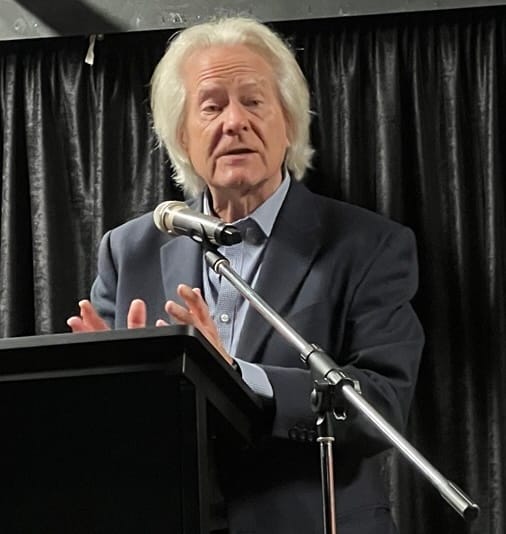
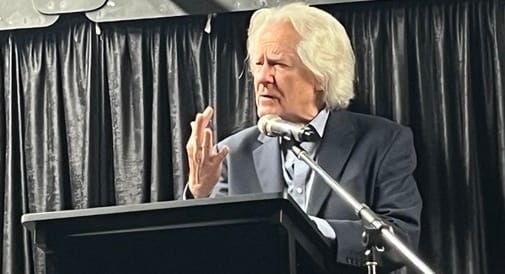
Prominent British philosopher Professor AC Grayling is in Australia to talk about the future of democracy and the future of truth in the upcoming Sydney Writers Festival. Professor Grayling’s niece Catherine is an ethics teacher at her children’s school, Dulwich Hill Public School in inner-west Sydney. We were delighted when Catherine, in collaboration with the school and with Primary Ethics, invited her uncle to address an audience of parents, children and ethics volunteers and supporters at the school one afternoon last week. The subject was children and critical thinking. A huge thunderstorm punctuated the event but the audience was held by an amusing but serious and stimulating talk. But first, Professor Grayling was introduced by some young students who told us what they especially value about ethics.

Thoughts from a Year 5 student

Eli from Year 5 had this to say about ethics: “I think these classes give us some really important skills. Usually, Catherine our ethics teacher gives us a dilemma and draws out our different opinions. She asks us whether our views change with new information. She teaches us to listen to what other people have to say, even if we don’t agree with them – because that helps us make our ideas better or more nuanced. Sometimes it can be hard to listen to someone you don’t agree with or when you think they’re wrong. But when you do listen, sometimes you learn something you didn’t know or hadn’t thought of, or in working out why you don’t agree with them, it strengthens your own reasoning. … Understanding competing interests can be a very powerful tool, as can developing advocacy skills. Both are proving quite handy with my parents.”

Ethics and morality

Then Professor Grayling spoke, first about the origins and meanings of two terms that are often used interchangeably, but benefit from a clear distinction. Ethics derives from the Greek word ethos, meaning character, disposition or way of being. He described it as relating to the philosophical inquiry into how one should live. Not in the sense of prescribing answers, but in examining and reasoning about them. In that sense, ethics is concerned with the process of forming character, of becoming a certain kind of person and thinker, with certain values.

Morality comes from the Latin mores, meaning customs, habits or social norms. Morality, therefore, refers to the rules, expectations or codes of behaviour that a society holds. It could be thought of as guidance [or in some stricter societies or religions, as a mandate] about what to do, how to behave.

Critical thinking

Professor Grayling used this distinction between ethics and morals as a segue into critical thinking. His point, in essence, was that developing one’s ethos, one’s character and way of thinking, is a process. And this process requires rigour in how we form, interrogate and review/revise our beliefs. Critical thinking, arguably, brings that rigour. It is not simply about having thoughts and opinions, but about testing them. He suggested things like asking whether the reasons support the conclusions, or testing assumptions. And he also spoke about the willingness to reconsider.


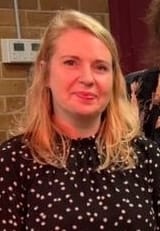
Catherine Grayling

Audience reflections

Catherine Grayling: I did really love hearing from the students and was so proud when my uncle acknowledged them and said that clearly the ethics program is working. Each week I am amazed at how thoughtful and engaged the children are and I agree with my uncle that the Primary Ethics materials are “marvellous”! It was fabulous to bring those things together on stage.

Gary: This was an extremely interesting deep dive into the history of ethical thinking and how it relates to education today. He highlighted the real need for critical thinking in an overly saturated age of information. I love that he asked us to always pose the question “Really?” when consuming ‘information’ online, essentially fact-checking as we sift through the noise.

Allan: Professor Grayling’s engaging and erudite talk had two themes: (1) what is ethics, why it is important and how it is significantly different to morality; and (2) what is critical thinking and how do we apply and cultivate it particularly in primary education practice. His clear and apt explanation of the Latin translation by the Roman orator Cicero (mid first century BC) of “moralis” for the Greek concept of “ethos” started to make a lot of sense to me. Morality concerns ‘proper’ behaviour or customs and is situated in a time and place, with Prof Grayling giving examples of the shifting moral expectations and standards from periods such as tight Victorian England, the roaring 1920s, the illiberal buttoned-down1950s and the swinging 1960s. Ethics is something more fundamental, more universal, more long-lasting. A phrase Prof Grayling used struck me as essential to understanding this. He said something like “ethics is predicated on sympathy for the human condition”. Yes! Whilst we don’t usually explicitly talk about the human condition in ethics, we do have our stories which illuminate and cultivate such sympathy, whether they are ancient fables (Aesop’s the farmer and the apple tree), myths (Daedalus and Icarus) or more modern examples, both fictional and real-world news stories.

It was an inspiring hour, with Zeus arguing with thunder outside to no effect. I am sure the audience understood and felt that the pursuit of ethics education at all ages is necessary and valuable.”

Bruce: AC Grayling was able to speak about some of the deepest ideas in the history of philosophy, and especially ethics, and to make those ideas so accessible for the audience – and that included my 10 year-old son! What the event showed me was how relevant, and even vital, ethical studies is for young people who are growing into themselves.”

Catherine: AC Grayling  was both engaging and deeply insightful. He articulated ideas that many of us intuitively understand but struggle to put into words. His discussion on the importance of teaching ethics to children was especially compelling. He made a persuasive case that these skills are not only valuable, but increasingly essential in a digital age.

Rousseau: This talk was very nourishing for the mind! One of the things that stood out for me was his explanation of what ethics means. Ethics isn’t teaching students specific rules of behaviour (which is morality), but helping them to cultivate character. In our lessons, this is developed through students learning together how to articulate their thoughts about what constitutes ethical behaviour, actively listening and conducting a respectful dialogue. His comments highlight the urgency of ethical education in today’s world where there are many societal problems that can only be tackled on the level of ethics, including AI which was raised in the questions and then discussed at length.

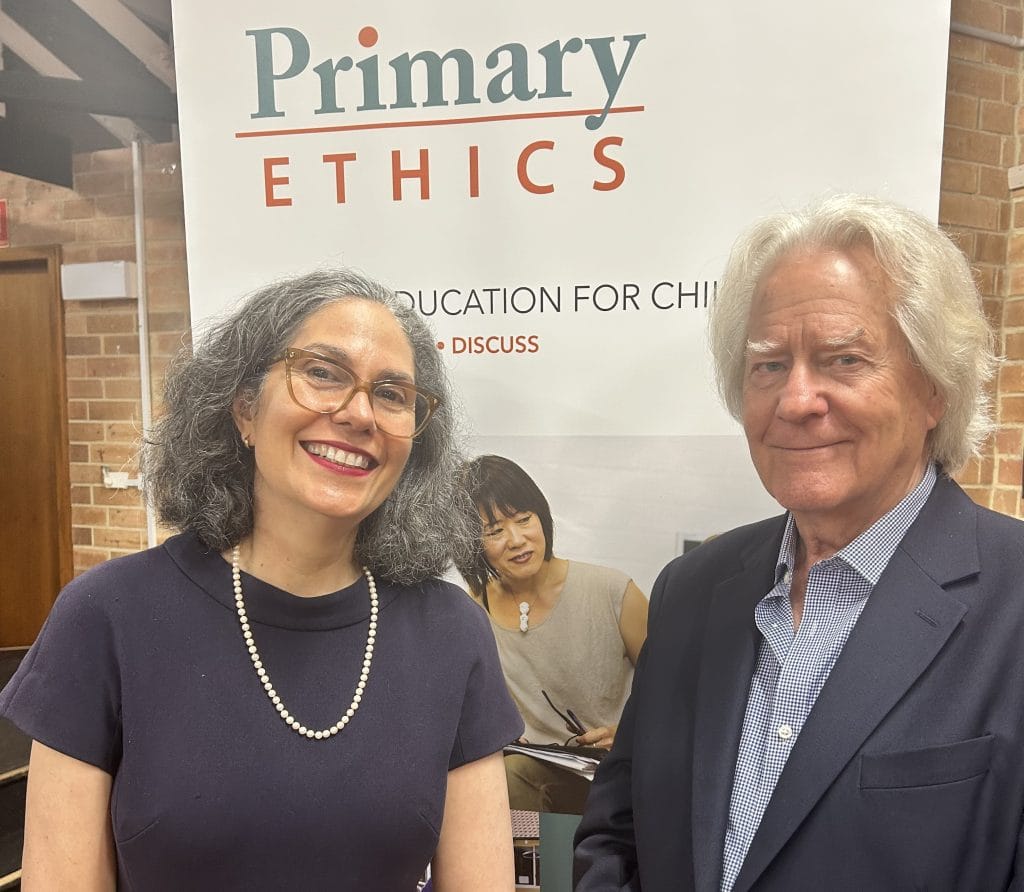
Laura Ramos with AC Grayling

Elizabeth: I was intrigued that Professor Grayling articulated what appears to be happening with global issues, eg. climate change, disease eradication, political self-determination. It came up in response to the question about use of AI and he called it Grayling’s Law: Anything that CAN be done WILL be done if it brings advantage or profit to those who can do it.

And the corollary to Grayling’s Law he mentioned, every bit as negative: What CAN be done will NOT be done if it brings costs, economic or otherwise, to those who could stop it.

Slightly depressing when set out like that, except that he was referencing that what’s needed to counter and break these laws (inter alia) is shared human experience  – which is what we talk about in the scenarios in ethics.

Mike: Such an inspiring event, delivered with such warmth and humility. Well done for arranging the thunder and lightning at key moments to dramatise AC’s key points!

They correctly guessed:

  • Hm (expressing curiosity or interest); and
  • Ah (reflection or understanding)

Acknowledging AC, I have added the element Re (‘Really’! – critical thinking response to a dubious assertion, seeking evidence or counter perspective).

Glynn: This was a delightful and thoughtful evening. AC (as our family calls him) opened with what he’s famous for: ethics, why it’s different to morals and the huge benefits of mastering critical thinking early in life. But this time it was a little different for me. AC reached out to the children, including the four primary students who started the evening telling us all why they liked ethics classes so much. Professor Grayling reminded us that children are nicely positioned to ask themselves “Really?” (when they hear something that needs a little more thought) and to hum “hmm” (when a little thinking time is needed).

And a highlight for me: AC asked “Where does the hole in a donut go when you eat it?”  The answer: ask a group of nine year olds, you’ll be surprised.

I’d also like to mention the pounding rain and thunder which wrapped up AC’s magical time with us!”

And the last word goes to Eli.

I really enjoy ethics classes. I hope they continue. And that AC Grayling might take up one of the volunteer positions here.

Eli

Eco-ethics at an urban farm

Primary Ethics has collaborated with Pocket City Farm, in inner-urban Camperdown, to create a half day of education about the ethics of sustainability. The pilot has run on two days this month, with visits from Y3 and Y4 students from Campsie Public School in Sydney’s south.

Sessions for groups of children were run by Farm educators and Primary Ethics teachers. The children learnt about forests, feeding weeds to the chooks and how the web of life keeps us all connected. Then in specially written ethics lessons, they explored protecting their environment.

Both days were very hot but the students were highly engaged – especially in the chookyard!

A webinar for Global Ethics Day 2025 – Misinformation & fake news

We celebrated Global Ethics Day 2025, 15 October, with a webinar featuring an ethics class composed of adults (also including one current high school student of ethics) discussing one of our high school lessons – on misinformation and fake news. You can watch the video of the class and discussion below.

The webinar was hosted by journalist Sarah Macdonald. Primary Ethics philosopher-in-residence and curriculum author Kelby Mason facilitated the lesson – an edited version of a lesson that is currently taught in secondary schools by Primary Ethics volunteer teachers. A Q&A followed the lesson.

Our special guest students included Allegra Spender MP (Member for Wentworth), Ed Coper (strategic communications specialist and author of Facts and Other Lies), Primary Ethics volunteer teachers Alexa Stuart (Bob Brown Young Environmentalist of the Year 2024), Winnie Tang (aeronautical engineer), Jean-Paul Leung (ethics team coordinator) and Kevin Farmer (corporate social responsibility consultant), plus current Year 7 ethics student Abby Webb.

Global Ethics Day 2025 webinar

Set aside some time to watch it here – well worth it!

Global Ethics Day 2025 – Volunteer spotlight on Rita

During this week surrounding Global Ethics Day 2025 (Wednesday 15 October), we are turning the spotlight onto our volunteers to hear about the impact of ethics education in their own lives.

This global celebration highlights ethics as a process for finding solutions in the collaborative and respectful manner often missing in today’s world. It’s about how we learn to live together, respect our differences and together face our major global challenges.

Rita Kusevskis-Hayes, Ethics volunteer beachside Sydney for three years

My first contact with the ethics program was when my son was in primary where they were running the initial trial. I was impressed and hopeful it would be taken up across NSW schools – which it has been!

I have always been the sort of person who thrives on a challenge and I love engaging with people especially in my local community. I have over 30 years in the education and equity sector, have a deep passion for people and innovation and a fascination with how opportunities or problems can be solved creatively – bringing together people, process and technology.

During the past couple of years I’ve been doing contract work so had time available for volunteering. I read a delightful piece on social media calling on volunteers to teach ethics at  Maroubra Junction Public School. As the time required each week is not onerous, it has fitted in well with my other commitments. For many years I’ve been involved with higher education and now am thoroughly enjoying working in primary education at my local school.

I have been teaching Stages 2 and 3 for three years now. I work with an incredible school co-ordinator and amazing students.  I have been so  impressed with the program that I wanted to share my teaching experience and knowledge further. So two years ago I began  volunteering with the dedicated Classroom Support Team, reaching out to support ethics volunteers across NSW as well as running workshops.

Every lesson brings new insights and completely different perspectives from the students. It is exciting as an adult and long term teacher to hear fresh views and reflections from primary children as they develop their views on the world. The structure is perfect for safe discussions, exploring issues with respect whilst building on each other’s ideas. Over the course of the year, and teaching across stages, I’ve observed the students work on their communication skills, especially in evaluating the shared ideas, forming deeper opinions based on evidence.

I strongly value the opportunity to spend time with these enquiring students each week, talking, listening, doing role plays, think-pair-shares and activities. Sometimes they come up with ideas I would never have thought of and often say the funniest, smartest things.

Teaching ethics has reminded me to take time in a busy life to reflect and to listen. Everyone should definitely volunteer to teach ethics at some point, no matter what your background, whether you’re a parent, grandparent, carer or just wanting to give back to your local area, like me.

Am loving the ethics program!

Global Ethics Day 2025 – Volunteer spotlight on Ken

It’s Global Ethics Day 2025 on Wednesday 15 October and to celebrate, we turn the spotlight onto some of our volunteers and hear about the impact of ethics education in their own lives.

This global celebration of the importance of ethical tools highlights ethics as a process for finding solutions in the collaborative and respectful manner often missing in today’s world. It’s about how we learn to live together, respect our differences and together face our major global challenges.

Ken Welsh, ethics volunteer southern Sydney for five years

For five years I’ve volunteered as the manager of two regions – Kogarah and Beverly Hills. In those regions the ethics program is taught in 12 schools to over 600 students by 32 ethics teachers.

I was a high school teacher and principal in NSW, Queensland and the ACT. Then for 15 years immediately prior to retirement I worked within the Australian Department of Defence assisting ADF members with the education of their children. These children frequently changed schools because of their parents being posted around Australia. Parents were sometimes absent due to overseas deployments or distant training. All this impacted on their children’s education.

Becoming a volunteer with Primary Ethics allowed me to continue to be involved in education more broadly and to make a contribution to my local community.

As manager of the two regions I have oversight of the program, work with ethics coordinators in some schools to promote Primary Ethics, advertise and recruit volunteers to teach in schools that do not have an ethics coordinator, allocate teachers to classes in those schools and liaise with appropriate Department of Education staff to ensure the successful implementation of the program. Because of my background I hope I also can provide support to all those 32 teachers and the coordinators if and when they need it.

‘Think critically, reason ethically and discuss respectfully’ are the three keystones of the ethics program. I can’t think of anything more important than developing those qualities in young people who live in a world that is so conflicted by differing ideas, powered by an influential social media environment and which doesn’t seem willing to listen to others. It’s a huge enough challenge for us as adults, so how important is it for us to do what we can to prepare young people to live in this future world. As adults we can become complacent in our attitudes and values – it is much easier than being challenged to examine what we hold so dear and possible re-evaluate that.

My major subject when I was a teacher was modern history. It doesn’t just require the ability to recall names, events and dates (Wikipedia can do that!) but rather the ability to examine why events occurred and how they impacted on people and societies. By questioning we learn and by learning we can change – ourselves and our societies – for the better. Primary Ethics provides opportunities for young people to do just that too. To consider how they think and feel about a particular topic. To listen to what others think and feel. To evaluate our thoughts and feelings. And maybe to change.

This old History teacher is thankful that besides the usual teachers working away in our schools there is also a group of volunteers offering their time and talents to develop enquiring minds. I’m very satisfied that I still play some part in that development.

Global Ethics Day – volunteer spotlight on William

It’s Global Ethics Day 2025 on Wednesday 15 October and to celebrate, we’ll turn the spotlight onto some of our volunteers and hear about the impact of ethics education in their own lives.

This global celebration of the importance of ethical tools highlights ethics as a process for finding solutions in the collaborative and respectful manner often missing in today’s world. We can use ethics to guide personal decisions, mitigate harmful outcomes, create a more respectful structure for debate, develop helpful public policy, build and deploy technologies responsibly and address some of the world’s most pressing challenges.

Ethics is not about getting everyone to agree on a single set of values. It’s about how we learn to live together, respect our differences and together face our major global challenges.

William Mitchell, volunteer in inner-west Sydney for 11 years

What drew you to ethics volunteering? My journey with Primary Ethics began through my interest in the Ethics Centre  and their Festival of Dangerous Ideas. After learning over coffee about a friend’s experience as an ethics facilitator, I was immediately convinced to volunteer. I’m now approaching my 11th year as a facilitator, currently teaching Stage 1 students at Taverners Hill Infant School in Petersham, having previously taught Early Stage 1 and Stage 2 classes.

Unlike many volunteers, I don’t have children or grandchildren of my own. Rather, philosophy was the focus of my undergraduate degree, so I thoroughly enjoy having the opportunity to help the children engage in the types of thinking and skill development that I am passionate about but didn’t get to explore until much later in my life.

What do you get out of the lessons? Has it given you a clearer sense of your own ethics? The benefits I derive are numerous and profound. As a lawyer by profession, it provides a refreshing contrast to my daily work (though there are surprising overlaps between the skills required to ensure the children keep discussion on track and respectful and running meetings as a professional). The program allows me to connect meaningfully with my local community and gives me a sense of accomplishment in helping children develop crucial life skills. The children’s unfiltered, creative responses serve as a reminder of the importance of maintaining open and innovative thinking in adult life – something we often lose touch with as we reach adulthood.

The curriculum has significantly influenced my own ethical framework and daily behaviour over the past decade. Preparing for classes requires deep personal reflection on the same questions we pose to the children. Likewise, the process of truly engaging with the children’s responses often challenges my own beliefs and introduces me to perspectives I hadn’t considered. This aligns perfectly with my background in philosophy and continues to enrich my understanding of ethical reasoning and subjects which, as the curriculum was designed to do, apply routinely to what is going on in my everyday life.

What do you see as the benefits for the children? The Primary Ethics curriculum offers children numerous valuable skills, but perhaps the most crucial are the abilities to engage in respectful disagreement and to be open to changing their minds based on new information or perspectives. It’s particularly heartening to witness students becoming increasingly comfortable with revising their positions as the school year progresses, demonstrating their growing capacity for reasoned discussion and intellectual flexibility. Seeing the hand of a child go up to let the group know that they’ve changed their mind on an earlier answer they gave based on someone else’s response or reasoning is exactly why I facilitate ethics.

Why is ethical decision-making important in today’s world? The Primary Ethics program provides children with essential life skills that aren’t expressly practised or developed throughout formal education. These skills and behaviours are fundamental to human interaction and decision-making, yet opportunities to develop them in a structured environment are rare and can be far more challenging to learn as an adult. By enabling the next generation to identify and meaningfully engage with ethical questions that are inherent in everyday life, we’re investing in the development of better communities and societies of which we are all a part. As a staunch believer in this mission, I volunteer my time to help children develop these crucial capabilities so that they can go on to help the world and achieve far greater accomplishments than I could ever hope to achieve as an individual.

Inquiring Minds Spring 2025

Welcome to Inquiring Minds for spring 2025, where we bring you stories and reflections from our ethics classrooms and our volunteers, as well as recent Primary Ethics highlights.

In this issue we collected stories from our wonderful volunteers, such as:

  • we hear from two professionals who put their skills learnt as ethics volunteers into practice at work
  • you can watch the video of our panel discussion on critical thinking and empathy in the age of AI
  • and we share a letter from a supporter whose father asked for him to be removed from Religion lessons in 1965.
  • Plus many more stories!

To receive the next Inquiring Minds direct to your inbox, make sure to subscribe to our newsletters.

Critical Thinking and Empathy in the Age of AI – panel discussion

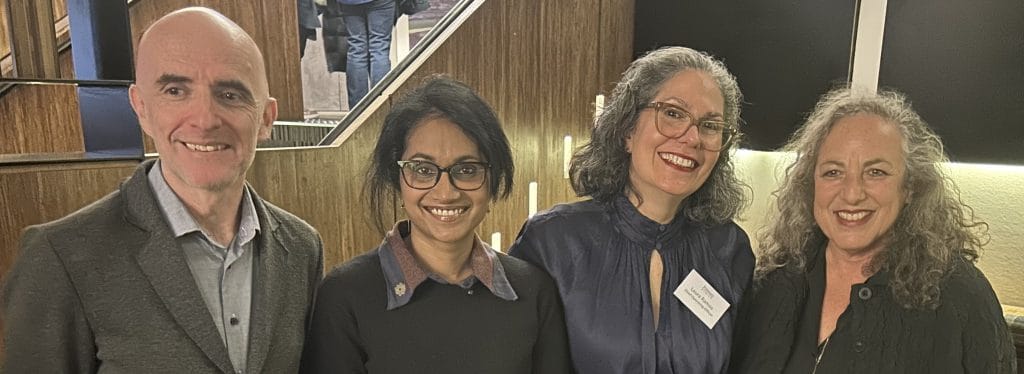
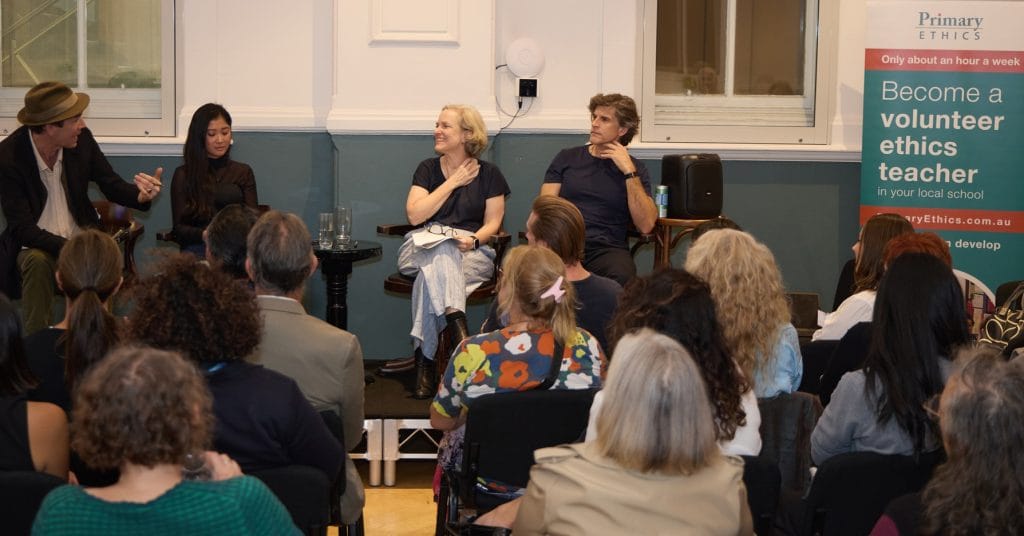
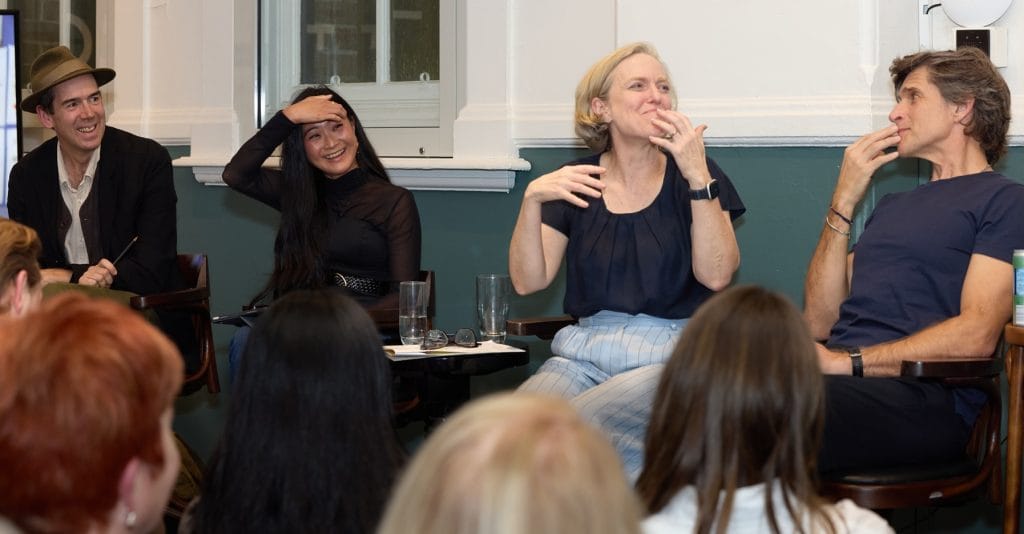
In May 2025, Primary Ethics hosted a panel discussion on Critical Thinking and Empathy in the Age of AI. An appreciative audience saw host Sarah MacDonald (centre below), radio journalist, discuss the ethical thinking skills needed to address the AI challenge with panellists Kelby Mason (Primary Ethics curriculum author, left), Microsoft strategist and ethics volunteer Sinéad Fitzgerald (far right), digital education specialist Tim Powers (second from left) and coordinator of ethics at Pembroke School in South Australia, Gabrielle Corbett (second from right).