Category: Philosophy

Dangerous ideas – a discussion of ‘Hatred’

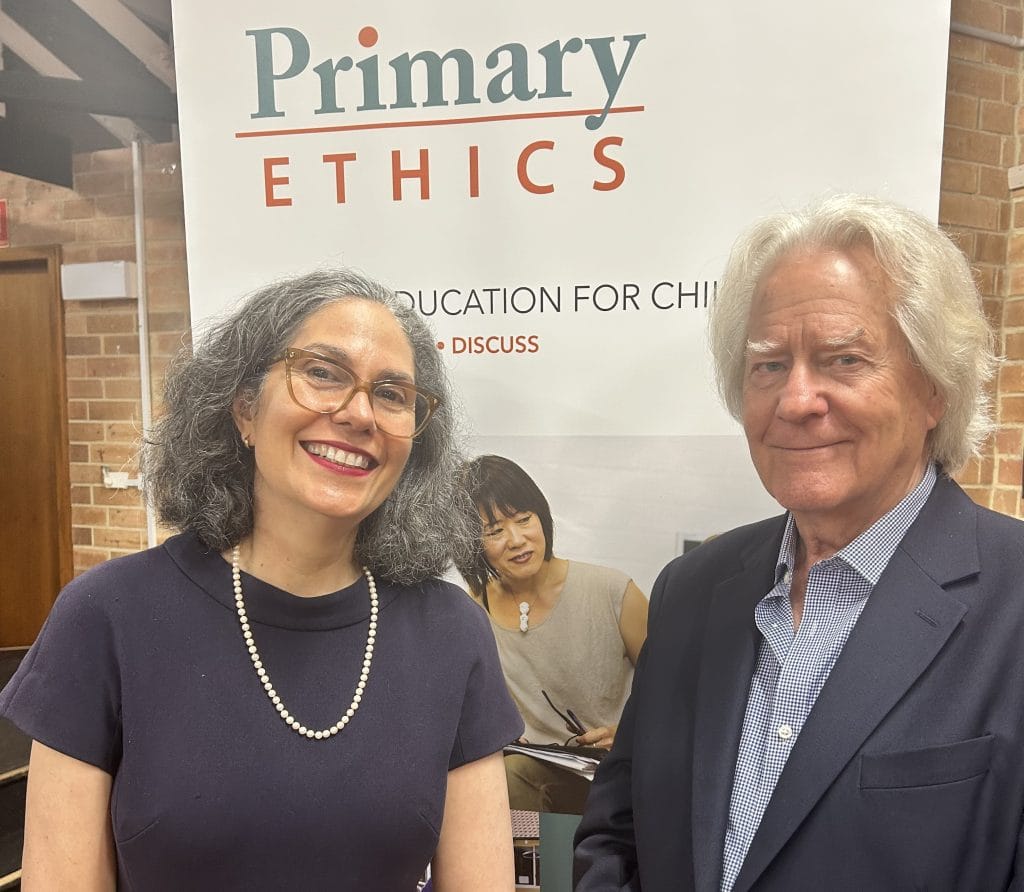
On Thursday 27 August, as part of the Festival of Dangerous Ideas, Primary Ethics held a special screening of the 1995 documentary, Hatred at the Dendy cinema in Newtown, followed by a panel discussion with the director Mitzi Goldman, author Shankari Chandran and Kelby Mason, our philosopher in residence.
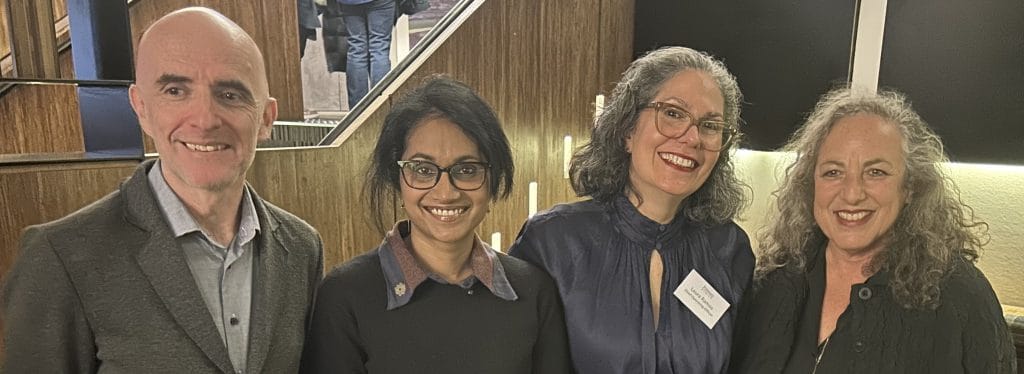
We knew that some of the issues raised by the film could be challenging, but that they would give us a moment to reflect on the importance of maintaining respectful and constructive dialogue – especially when we come across ideas that we find difficult and where we’re likely to encounter disagreement. Those are the skills that Primary Ethics volunteers are building in over 2000 classes throughout the school year.

Our panel

Dr Mitzi Goldman, the director of Hatred, is now CEO of Documentary Australia. Shankari Chandran is a Miles-Franklin-Award-winning author, a lawyer and former ethics teacher. Kelby Mason, our philosopher in residence, is also a lead ethics curriculum writer and trainer.

The film
Hatred is an award-winning Australian documentary – a personal journey that asks big social questions about identity and prejudice in the modern world. What makes us who we are and how easy is it to hate? This is a question for us all as we are tested with personal identity, the right to free speech and the incitement to hate on the basis of skin colour, ethnicity, religion and ideology.

In a multicultural society, how do you discuss hatred in classrooms which may contain students who have fled ethnic violence or persecution for any number of reasons? How do you introduce the topic to students who may come from ethnic, cultural or religious groups with strongly opposed views? How do you deal with the self-hatred which comes from internalising the prejudice of others? Director Mitzi Goldman confronts hatred, exploring it in a range of places and then turns her questions to herself. We are all accountable for our own thoughts and behaviours.

The film documents various kinds of hatred and their consequences, beginning with the hatred that led to the filmmaker’s German-Jewish father fleeing the Nazi Holocaust. This led to exploring hatred in the lives of the poor and people of colour in New York and then to the complex clash of identity, religion, history and ideology between the Israelis and the Palestinians.

Some of the issues arising from the film:

  • Is it ever okay to hate? It’s a word now used frequently, especially online; the relationship between hatred and violence; the philosophical context.
  • Dialogue vs silence: learning to converse despite grief and rage; what’s the impact for future generations?
  • Persisting with brave and difficult conversations: making space for speaking and listening after trauma; truth-seeking and justice; when is the right time to tell the truth?
  • Identity, nationalism, belonging: connections between culture, community, nationalism and exclusion
  • Race v gender-based violence: would the latter feature more if the film were made today?
  • Hope and personal action: Is there shared responsibility to challenge hatred and continue these difficult conversations?

The discussion

The discussion kicked off with Kelby’s question about whether anything has changed in the 30 years since this film was made. Mitzi responded that hatred was not a topic that could be discussed openly 30 years ago. She remembers being told when she was young that she couldn’t use that word – instead told that she could ‘dislike intensely’. She also thought it might be impossible to do the documentary in the same way now.

Is it ever okay to hate? Shankari thought that if we encounter this in ourselves, we can’t deny or pretend it’s not happening. Hatred is part of the human experience. It’s what you do with it that is important, how you manage it. Shankari also reflected on Sri Lanka’s experience with civil war, brutality and hatred that remains to this day. She reiterated that it’s so important what we do with our experience and what we teach our children – which is why ethics education is invaluable.

Both panellists reflected on how online media has changed how we perceive hatred. “The landscape has changed. We are becoming passive recipients of information.” They lamented a lack of curiosity and critical thinking.

Kelby put in: “If only there were a program that could help young people with this!”

The panellists concurred that it’s so important to give young people permission to face difficult topics, to have space to think through things that challenge them and to remember to face into those difficult topics. And to listen.

Shankari and Mitzi both reflected on the importance of having the courage to engage with others with whom we disagree. Shankari added that we also need to:

  • think about what it is others are saying
  • consider why they might be saying this; and also
  • connect that with how we might be feeling about this subject.

Mitzi chimed in: When we practice this, we can tap into a sense of compassion. Shankari agreed that listening critically and with curiosity and compassion can help us regulate our own emotions – something it’s very important for children to learn. Applying critical thinking also helps us to know and think strategically about when is the right time to speak up and when it’s better to listen.

As the panel drew to a close, Mitzi and Shankari commented on what gives them hope – and for Mitzi, having this film screened and discussed was in itself a point of hope.

Finally, Shankari raised the importance of ‘communication 101’ – let’s keep speaking, speaking up, listening and telling our stories.
@Home bulletin for parents – Term 3 2026

Welcome to @Home bulletin for Term 3 2026, where we let families know what your children, from kindergarten into secondary school, are exploring in their ethics lessons this term.

The topics we show below are based on classes which begin at the beginning of the year – this can vary as schools start their ethics programs at different times. If your child tells you they are discussing a topic you don’t see in this bulletin, you can also look at the Curriculum section of our website.

We hope the students talk about ethics with you at home – ask them questions about it!

Kindergarten: Sadie and the machines (*new in 2026*): Machines make some things easier and other things possible – but does that mean we should use them all the time? Through stories about Sadie and her family, students explore what machines are for and what makes a machine helpful. They’ll consider questions like: is a machine useful if it looks good but doesn’t work properly? Is it okay to use machines just for fun? Would we want a robot helper to do everything for us? And are there some things we might be better off doing ourselves?
Later in the year, students consider the importance of owning up to mistakes.

Stage 1 – Years 1 & 2: Saying sorry: What does it really mean to say sorry – and when should an apology be followed by forgiveness? Through stories about a young emu named Kalaya, students explore apologies, accidents, broken rules and the reasons people do the wrong thing. They’ll consider whether it matters how an apology is made, whether the person means it and whether they try to make things better. Is saying sorry always enough? Does understanding why someone acted as they did make them easier to forgive? And does forgiving someone mean that what they did was okay?
Later in the year, students talk about standing up for what we believe is right.

Stage 2 – Years 3 & 4: Imagining how others feel: Being able to imagine how someone else feels can help us decide how to respond to them. Students begin with familiar situations involving friends before considering the life of a child whose experiences are very different from their own. They’ll explore questions like: how can we work out what another person might be feeling? Is it possible to imagine an experience we’ve never had ourselves? Can we care about someone else while also feeling disappointed or upset about what their situation means for us? And how might understanding another person’s feelings help us recognise when something should change.
Later in the year, students think about how different kinds of living things should be treated.

Stage 3 – Years 5 & 6: With AI who needs school … or childhood? (*new topic in 2026*): As artificial intelligence becomes increasingly capable, students explore how it might change schools and the way we learn. Is it okay to use AI to complete an assignment if a teacher hasn’t explicitly said not to? Is it fair if some students have access to AI tools and others don’t? Students will also consider whether relying on AI could weaken our ability to think for ourselves, whether teachers should use it to assess work and provide feedback, even whether schools and teachers will still be necessary in the future.
Later in the year, students consider what influences how morally responsible someone is for their actions.

Stage 4 – Years 7 & 8: What do I owe my people?: What responsibilities do we have to the teams, countries and cultures we belong to? Students explore whether loyalty means putting the group first and whether we should remain loyal when we think our country is doing something wrong. They’ll also consider whether young people have a responsibility to preserve their culture and language, particularly when that culture is at risk of disappearing. Finally, students examine who can claim ownership of cultural objects, traditions and art forms, asking when cultural exchange becomes cultural appropriation and whether museums should return artefacts taken from other cultures.
Later in the year, students discuss the ethics of being ignored and how to navigate fake news.

Each term brings new ideas and questions and we hope these topics spark interesting conversations at home as well!

Philosopher AC Grayling: Critical thinking for kids

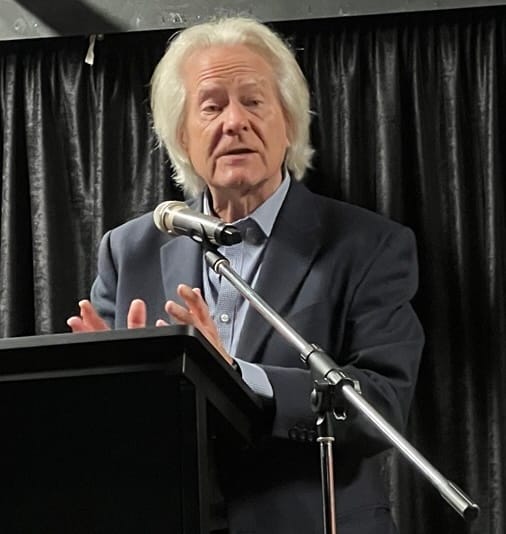
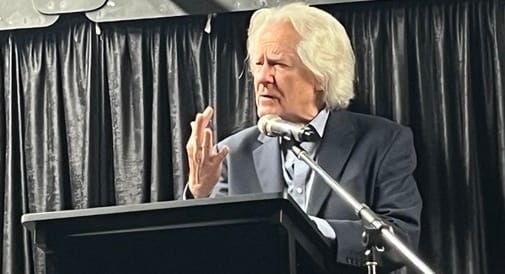
Prominent British philosopher Professor AC Grayling is in Australia to talk about the future of democracy and the future of truth in the upcoming Sydney Writers Festival. Professor Grayling’s niece Catherine is an ethics teacher at her children’s school, Dulwich Hill Public School in inner-west Sydney. We were delighted when Catherine, in collaboration with the school and with Primary Ethics, invited her uncle to address an audience of parents, children and ethics volunteers and supporters at the school one afternoon last week. The subject was children and critical thinking. A huge thunderstorm punctuated the event but the audience was held by an amusing but serious and stimulating talk. But first, Professor Grayling was introduced by some young students who told us what they especially value about ethics.

Thoughts from a Year 5 student

Eli from Year 5 had this to say about ethics: “I think these classes give us some really important skills. Usually, Catherine our ethics teacher gives us a dilemma and draws out our different opinions. She asks us whether our views change with new information. She teaches us to listen to what other people have to say, even if we don’t agree with them – because that helps us make our ideas better or more nuanced. Sometimes it can be hard to listen to someone you don’t agree with or when you think they’re wrong. But when you do listen, sometimes you learn something you didn’t know or hadn’t thought of, or in working out why you don’t agree with them, it strengthens your own reasoning. … Understanding competing interests can be a very powerful tool, as can developing advocacy skills. Both are proving quite handy with my parents.”

Ethics and morality

Then Professor Grayling spoke, first about the origins and meanings of two terms that are often used interchangeably, but benefit from a clear distinction. Ethics derives from the Greek word ethos, meaning character, disposition or way of being. He described it as relating to the philosophical inquiry into how one should live. Not in the sense of prescribing answers, but in examining and reasoning about them. In that sense, ethics is concerned with the process of forming character, of becoming a certain kind of person and thinker, with certain values.

Morality comes from the Latin mores, meaning customs, habits or social norms. Morality, therefore, refers to the rules, expectations or codes of behaviour that a society holds. It could be thought of as guidance [or in some stricter societies or religions, as a mandate] about what to do, how to behave.

Critical thinking

Professor Grayling used this distinction between ethics and morals as a segue into critical thinking. His point, in essence, was that developing one’s ethos, one’s character and way of thinking, is a process. And this process requires rigour in how we form, interrogate and review/revise our beliefs. Critical thinking, arguably, brings that rigour. It is not simply about having thoughts and opinions, but about testing them. He suggested things like asking whether the reasons support the conclusions, or testing assumptions. And he also spoke about the willingness to reconsider.


Catherine Grayling

Audience reflections

Catherine Grayling: I did really love hearing from the students and was so proud when my uncle acknowledged them and said that clearly the ethics program is working. Each week I am amazed at how thoughtful and engaged the children are and I agree with my uncle that the Primary Ethics materials are “marvellous”! It was fabulous to bring those things together on stage.

Gary: This was an extremely interesting deep dive into the history of ethical thinking and how it relates to education today. He highlighted the real need for critical thinking in an overly saturated age of information. I love that he asked us to always pose the question “Really?” when consuming ‘information’ online, essentially fact-checking as we sift through the noise.

Allan: Professor Grayling’s engaging and erudite talk had two themes: (1) what is ethics, why it is important and how it is significantly different to morality; and (2) what is critical thinking and how do we apply and cultivate it particularly in primary education practice. His clear and apt explanation of the Latin translation by the Roman orator Cicero (mid first century BC) of “moralis” for the Greek concept of “ethos” started to make a lot of sense to me. Morality concerns ‘proper’ behaviour or customs and is situated in a time and place, with Prof Grayling giving examples of the shifting moral expectations and standards from periods such as tight Victorian England, the roaring 1920s, the illiberal buttoned-down1950s and the swinging 1960s. Ethics is something more fundamental, more universal, more long-lasting. A phrase Prof Grayling used struck me as essential to understanding this. He said something like “ethics is predicated on sympathy for the human condition”. Yes! Whilst we don’t usually explicitly talk about the human condition in ethics, we do have our stories which illuminate and cultivate such sympathy, whether they are ancient fables (Aesop’s the farmer and the apple tree), myths (Daedalus and Icarus) or more modern examples, both fictional and real-world news stories.

It was an inspiring hour, with Zeus arguing with thunder outside to no effect. I am sure the audience understood and felt that the pursuit of ethics education at all ages is necessary and valuable.”

Bruce: AC Grayling was able to speak about some of the deepest ideas in the history of philosophy, and especially ethics, and to make those ideas so accessible for the audience – and that included my 10 year-old son! What the event showed me was how relevant, and even vital, ethical studies is for young people who are growing into themselves.”

Catherine: AC Grayling  was both engaging and deeply insightful. He articulated ideas that many of us intuitively understand but struggle to put into words. His discussion on the importance of teaching ethics to children was especially compelling. He made a persuasive case that these skills are not only valuable, but increasingly essential in a digital age.

Rousseau: This talk was very nourishing for the mind! One of the things that stood out for me was his explanation of what ethics means. Ethics isn’t teaching students specific rules of behaviour (which is morality), but helping them to cultivate character. In our lessons, this is developed through students learning together how to articulate their thoughts about what constitutes ethical behaviour, actively listening and conducting a respectful dialogue. His comments highlight the urgency of ethical education in today’s world where there are many societal problems that can only be tackled on the level of ethics, including AI which was raised in the questions and then discussed at length.

Laura Ramos with AC Grayling

Elizabeth: I was intrigued that Professor Grayling articulated what appears to be happening with global issues, eg. climate change, disease eradication, political self-determination. It came up in response to the question about use of AI and he called it Grayling’s Law: Anything that CAN be done WILL be done if it brings advantage or profit to those who can do it.

And the corollary to Grayling’s Law he mentioned, every bit as negative: What CAN be done will NOT be done if it brings costs, economic or otherwise, to those who could stop it.

Slightly depressing when set out like that, except that he was referencing that what’s needed to counter and break these laws (inter alia) is shared human experience  – which is what we talk about in the scenarios in ethics.

Mike: Such an inspiring event, delivered with such warmth and humility. Well done for arranging the thunder and lightning at key moments to dramatise AC’s key points!

They correctly guessed:

  • Hm (expressing curiosity or interest); and
  • Ah (reflection or understanding)

Acknowledging AC, I have added the element Re (‘Really’! – critical thinking response to a dubious assertion, seeking evidence or counter perspective).

Glynn: This was a delightful and thoughtful evening. AC (as our family calls him) opened with what he’s famous for: ethics, why it’s different to morals and the huge benefits of mastering critical thinking early in life. But this time it was a little different for me. AC reached out to the children, including the four primary students who started the evening telling us all why they liked ethics classes so much. Professor Grayling reminded us that children are nicely positioned to ask themselves “Really?” (when they hear something that needs a little more thought) and to hum “hmm” (when a little thinking time is needed).

And a highlight for me: AC asked “Where does the hole in a donut go when you eat it?”  The answer: ask a group of nine year olds, you’ll be surprised.

I’d also like to mention the pounding rain and thunder which wrapped up AC’s magical time with us!”

And the last word goes to Eli.

I really enjoy ethics classes. I hope they continue. And that AC Grayling might take up one of the volunteer positions here.

Eli

Helen: Primary Ethics and ‘senior’ me

For Seniors Week 2026, we asked some of our over-70 volunteers to tell us about their experience as ethics volunteers. There is no age limit to ethics volunteering – our oldest volunteer is currently 88. In her later-70s, Helen Kerr-Roubicek is in her eighth year of volunteering with Primary Ethics.

Helen’s experience

When I took that Primary Ethics pamphlet at the Drummoyne Primary School fete, I opened the door to a very stimulating volunteering adventure. That was around eight years ago and I was approaching 70. I had three granddaughters at the school. After I began volunteering, while we only shared limited time in ethics classes together, I enjoyed the fact they now saw me in a broader role in their school context. They have all moved on to high school but I’m still here – loving being the coordinator for Primary Ethics of a brilliant team of nine volunteer teachers.

Over those years I have always found my PE journey stimulating, because I am challenged to think deeply about the philosophy and research behind contemporary issues. These form the background to the curriculum that is set out for we teachers to follow and facilitate in lessons.

When people ask me ‘so what do you tell the kids?’, I delight in explaining that it is not about ‘telling’. It is a community of enquiry approach that encourages students to think together about topics such as fairness, disagreeing respectfully, screen time and understanding diversity. They develop their own ideas and become more confident in expressing those to others and giving reasons for why they think what they think. They develop skills in reflecting and listening to what others think and say. PE is open to all faiths and belief systems. Mutual respect is a very important underpinning value for the classroom discussions.

People also ask ‘what’s involved as a volunteer?’ Then I can’t wait to explain that the setup has many amazing strengths:

  • It is very economical timewise and the time commitment is predictable – after training, a teacher typically needs to download and read over a lesson a few times and print copies of any pictures or activities in preparation for the average 35-minute lesson each week. There is a quick online feedback process after each lesson.
  • PE is an organisation that provides professional layers of user-friendly training and support. The technical support for the Internet materials is very effective and makes it easy to be involved with only basic skills (which are bound to improve as well). There is also good classroom support if issues arise and if all else fails there is a helpdesk at the end of the phone to clarify direction. All this is provided free – it is not expensive to become involved.
  • Undoubtedly the most exciting aspect is the opportunity to have regular contact with young people, exploring day to day issues with them, hearing their ideas and having the opportunity to support their personal growth.

After three to four years, I was offered the opportunity to become the PE team coordinator for the school. I was reluctant at first, lacking confidence. This is a liaison role with the school on all relevant matters including the setting up (online) and management of classes. Actually it has turned out to be a perfect extension of my favourite professional roles – resource linking, mentoring, recruiting, team building and with limited administration. There is also plenty of support for this role. And the best thing – it’s time limited too! Setting up at the beginning of each year is the busiest time.

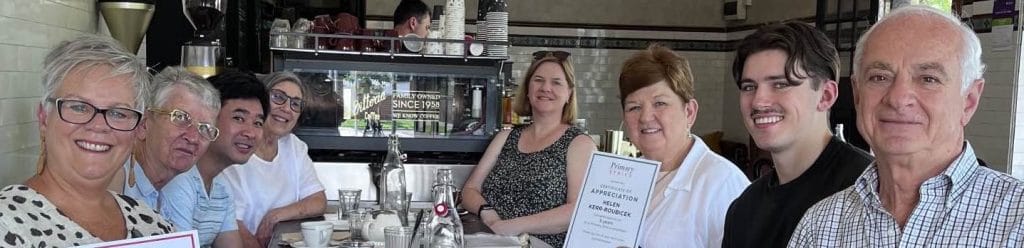
Helen third from right with other Drummoyne volunteers.

Our team is made up of a balance of retired older people who have a range of rich professional and community experiences, and keen parents of current students who keep us in touch with school news. We manage our team organisation through a Whatsapp group and look forward to catching up at our end of term dinners.

Over the past four years I have been through some tough times personally as I journeyed with my husband in his experience of serious illness until his recent death. The care and support from my team and the school-  from offering to take my classes or other tasks, to being available for ‘debrief’ coffees and messages – have made a real difference for me. And the regular classes with bright, lively faces each week ready for another discussion have provided a structure activity in my week that has also been helpful.

The camaraderie with my team and the wider PE community, including my regional manager, has been incredibly rewarding and uplifting. I realise as I look back over the eight years that this community building is at the heart of my PE experience and it is so good to feel that the lessons we provide are assisting students to do that in their own worlds.

Have I just been lucky with my school and team members? Would it be different somewhere else? There is no doubt that I have been fortunate and I know that there are many influences on how PE functions in different schools, including critical issues like when it is timetabled and how supportive the school executive is. But it is my belief now, that the community of enquiry approach as an underpinning of this program is right for this time and resonates with young people, parents, teachers and community members. Why else would we have growing numbers in our classes and more volunteers to teach in such a busy world?

A webinar for Global Ethics Day 2025 – Misinformation & fake news

We celebrated Global Ethics Day 2025, 15 October, with a webinar featuring an ethics class composed of adults (also including one current high school student of ethics) discussing one of our high school lessons – on misinformation and fake news. You can watch the video of the class and discussion below.

The webinar was hosted by journalist Sarah Macdonald. Primary Ethics philosopher-in-residence and curriculum author Kelby Mason facilitated the lesson – an edited version of a lesson that is currently taught in secondary schools by Primary Ethics volunteer teachers. A Q&A followed the lesson.

Our special guest students included Allegra Spender MP (Member for Wentworth), Ed Coper (strategic communications specialist and author of Facts and Other Lies), Primary Ethics volunteer teachers Alexa Stuart (Bob Brown Young Environmentalist of the Year 2024), Winnie Tang (aeronautical engineer), Jean-Paul Leung (ethics team coordinator) and Kevin Farmer (corporate social responsibility consultant), plus current Year 7 ethics student Abby Webb.

Global Ethics Day 2025 webinar

Set aside some time to watch it here – well worth it!

Global Ethics Day 2025 – Spotlight on volunteer Alokita

During this week surrounding Global Ethics Day 2025 (Wednesday 15 October), we are turning the spotlight onto our volunteers to hear about the impact of ethics education in their own lives.

This global celebration highlights ethics as a process for finding solutions in the collaborative and respectful manner often missing in today’s world. It’s about how we learn to live together, respect our differences and together face our major global challenges.

Alokita Shankhar, ethics volunteer northern Sydney for seven years

I started teaching ethics when my daughter began Kindergarten at our local public school at Hornsby. At the time there weren’t enough volunteers, so I decided to train as an ethics teacher and taught my first Year 1 class. Since then, I’ve had the joy of teaching Kindergarten, Year 1, and Year 2 and yes, even the special experience of teaching both my children along the way.

Teaching ethics opens up a window into how children think about the world which is both humbling and enlightening. Hearing their perspectives reminds me to stay curious, patient and open-minded. It has given me so much. In addition to being a weekly circuit breaker to my job, it has helped me grow as a parent and member of the community, reinforcing the importance of listening to understand, not just to respond. And I can also say, there have been many funny and heart-warming moments with the children along the way too, which I also cherish!

Some people say Kindergarten is too early to start ethics, but I have seen firsthand that it’s never too early to nurture curiosity and respectful discussion. At our school, teachers can choose to move up with their cohort and I’ve done that for three years; from Kindergarten through to Year 2. Watching the children develop not only in confidence but also in their ability to listen, question,and consider others’ viewpoints is a benefit of the program.

Ethical decision-making is more important now than ever. The world is changing rapidly and that includes socially, environmentally and technologically, with developments like AI reshaping how we live and work. As technology moves faster than we can sometimes process, helping children develop curiosity, empathy and critical-thinking skills becomes essential. Through ethics, they learn that there is no right answer but that they can get to a good answer by asking thoughtful questions and weighing consequences and then make decisions that consider different perspectives.

Global Ethics Day 2025 – Volunteer spotlight on Ken

It’s Global Ethics Day 2025 on Wednesday 15 October and to celebrate, we turn the spotlight onto some of our volunteers and hear about the impact of ethics education in their own lives.

This global celebration of the importance of ethical tools highlights ethics as a process for finding solutions in the collaborative and respectful manner often missing in today’s world. It’s about how we learn to live together, respect our differences and together face our major global challenges.

Ken Welsh, ethics volunteer southern Sydney for five years

For five years I’ve volunteered as the manager of two regions – Kogarah and Beverly Hills. In those regions the ethics program is taught in 12 schools to over 600 students by 32 ethics teachers.

I was a high school teacher and principal in NSW, Queensland and the ACT. Then for 15 years immediately prior to retirement I worked within the Australian Department of Defence assisting ADF members with the education of their children. These children frequently changed schools because of their parents being posted around Australia. Parents were sometimes absent due to overseas deployments or distant training. All this impacted on their children’s education.

Becoming a volunteer with Primary Ethics allowed me to continue to be involved in education more broadly and to make a contribution to my local community.

As manager of the two regions I have oversight of the program, work with ethics coordinators in some schools to promote Primary Ethics, advertise and recruit volunteers to teach in schools that do not have an ethics coordinator, allocate teachers to classes in those schools and liaise with appropriate Department of Education staff to ensure the successful implementation of the program. Because of my background I hope I also can provide support to all those 32 teachers and the coordinators if and when they need it.

‘Think critically, reason ethically and discuss respectfully’ are the three keystones of the ethics program. I can’t think of anything more important than developing those qualities in young people who live in a world that is so conflicted by differing ideas, powered by an influential social media environment and which doesn’t seem willing to listen to others. It’s a huge enough challenge for us as adults, so how important is it for us to do what we can to prepare young people to live in this future world. As adults we can become complacent in our attitudes and values – it is much easier than being challenged to examine what we hold so dear and possible re-evaluate that.

My major subject when I was a teacher was modern history. It doesn’t just require the ability to recall names, events and dates (Wikipedia can do that!) but rather the ability to examine why events occurred and how they impacted on people and societies. By questioning we learn and by learning we can change – ourselves and our societies – for the better. Primary Ethics provides opportunities for young people to do just that too. To consider how they think and feel about a particular topic. To listen to what others think and feel. To evaluate our thoughts and feelings. And maybe to change.

This old History teacher is thankful that besides the usual teachers working away in our schools there is also a group of volunteers offering their time and talents to develop enquiring minds. I’m very satisfied that I still play some part in that development.

Global Ethics Day – Volunteer spotlight on Vicky

It’s Global Ethics Day 2025 on Wednesday 15 October and to celebrate, we turn the spotlight onto some of our volunteers and hear about the impact of ethics education in their own lives.

This global celebration of the importance of ethical tools highlights ethics as a process for finding solutions in the collaborative and respectful manner often missing in today’s world. Ethics is not about getting everyone to agree on a single set of values. It’s about how we learn to live together, respect our differences and together face our major global challenges.

Vicky Votoupal, second year volunteering in northwest Sydney

Just over two years ago I saw an ad in my children’s school newsletter, calling out for Primary Ethics volunteer teachers. At the time I had been coaching/managing one of my children’s sports team and really enjoyed that opportunity to have a positive impact for children in our local community. I was also finishing up a contract work role that had been very meaningful and saw ethics as a chance to contribute in a way I might not have the scope for in a new work role. Having completed my training, my youngest child asked if I could teach their year group and I took that as an endorsement!

My first year was 2024, teaching Stage 1. The student group has mostly been the same from last year to this year, which is great. I’ll move up to Stage 2 with the same group next year.

At work I’m a procurement professional, so ethics ties in really nicely to that. Conduct, transparency and fairness are all essential in my line of work. It’s sometimes easier to talk ethics with children than with adults! I also like to be able to discuss current affairs with my children in an age-appropriate way and I think our Primary Ethics training really helps with that.

As for the students, I enjoy watching their minds open when they hear other opinions that may be different to their own. My favourite lessons are when, after a discussion, I ask if they think the actions of a person in the story are okay and they answer “A bit yes and a bit no”. They often start from a definite position because they have only considered one perspective, but most of the time at least some of the group will consider other points of view that have been raised throughout the discussion. I also think it’s important to point out to the children when there isn’t a consensus in the group. In real life, there is often no definitive yes or no yet we still need to find a pathway forward in those situations.

We hear in the media that we live in a more divided world than ever, which is a scary concept. I like to think that most people most of the time are simply trying their best to take on the challenges of daily life. If we can teach our children the concepts of fairness and equity, the ability to listen to others with curiosity and to keep an open mind, that will certainly make the world a better place.

Global Ethics Day – volunteer spotlight on William

It’s Global Ethics Day 2025 on Wednesday 15 October and to celebrate, we’ll turn the spotlight onto some of our volunteers and hear about the impact of ethics education in their own lives.

This global celebration of the importance of ethical tools highlights ethics as a process for finding solutions in the collaborative and respectful manner often missing in today’s world. We can use ethics to guide personal decisions, mitigate harmful outcomes, create a more respectful structure for debate, develop helpful public policy, build and deploy technologies responsibly and address some of the world’s most pressing challenges.

Ethics is not about getting everyone to agree on a single set of values. It’s about how we learn to live together, respect our differences and together face our major global challenges.

William Mitchell, volunteer in inner-west Sydney for 11 years

What drew you to ethics volunteering? My journey with Primary Ethics began through my interest in the Ethics Centre  and their Festival of Dangerous Ideas. After learning over coffee about a friend’s experience as an ethics facilitator, I was immediately convinced to volunteer. I’m now approaching my 11th year as a facilitator, currently teaching Stage 1 students at Taverners Hill Infant School in Petersham, having previously taught Early Stage 1 and Stage 2 classes.

Unlike many volunteers, I don’t have children or grandchildren of my own. Rather, philosophy was the focus of my undergraduate degree, so I thoroughly enjoy having the opportunity to help the children engage in the types of thinking and skill development that I am passionate about but didn’t get to explore until much later in my life.

What do you get out of the lessons? Has it given you a clearer sense of your own ethics? The benefits I derive are numerous and profound. As a lawyer by profession, it provides a refreshing contrast to my daily work (though there are surprising overlaps between the skills required to ensure the children keep discussion on track and respectful and running meetings as a professional). The program allows me to connect meaningfully with my local community and gives me a sense of accomplishment in helping children develop crucial life skills. The children’s unfiltered, creative responses serve as a reminder of the importance of maintaining open and innovative thinking in adult life – something we often lose touch with as we reach adulthood.

The curriculum has significantly influenced my own ethical framework and daily behaviour over the past decade. Preparing for classes requires deep personal reflection on the same questions we pose to the children. Likewise, the process of truly engaging with the children’s responses often challenges my own beliefs and introduces me to perspectives I hadn’t considered. This aligns perfectly with my background in philosophy and continues to enrich my understanding of ethical reasoning and subjects which, as the curriculum was designed to do, apply routinely to what is going on in my everyday life.

What do you see as the benefits for the children? The Primary Ethics curriculum offers children numerous valuable skills, but perhaps the most crucial are the abilities to engage in respectful disagreement and to be open to changing their minds based on new information or perspectives. It’s particularly heartening to witness students becoming increasingly comfortable with revising their positions as the school year progresses, demonstrating their growing capacity for reasoned discussion and intellectual flexibility. Seeing the hand of a child go up to let the group know that they’ve changed their mind on an earlier answer they gave based on someone else’s response or reasoning is exactly why I facilitate ethics.

Why is ethical decision-making important in today’s world? The Primary Ethics program provides children with essential life skills that aren’t expressly practised or developed throughout formal education. These skills and behaviours are fundamental to human interaction and decision-making, yet opportunities to develop them in a structured environment are rare and can be far more challenging to learn as an adult. By enabling the next generation to identify and meaningfully engage with ethical questions that are inherent in everyday life, we’re investing in the development of better communities and societies of which we are all a part. As a staunch believer in this mission, I volunteer my time to help children develop these crucial capabilities so that they can go on to help the world and achieve far greater accomplishments than I could ever hope to achieve as an individual.