My Journey as a Volunteer Ethics Teacher

COVID had an unexpected consequence for Lalita Kanetkar – it was the start of her journey to becoming an ethics teacher.

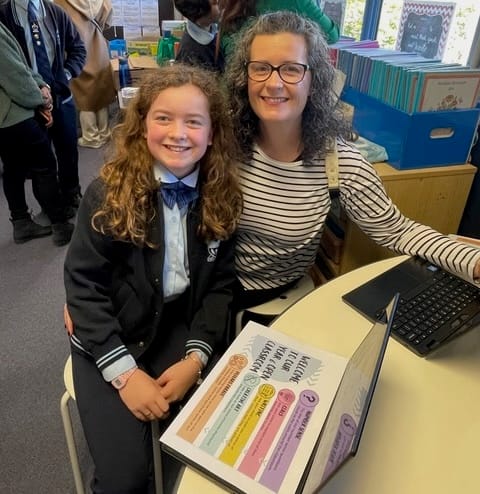
Lalita writes: During the COVID years, most parents had a very difficult and stressful time managing both their own jobs from home and the schoolwork of their children – particularly if the children were young. My younger daughter had a son in Year 1 and was dealing with her own job and home schooling. It got me wondering – could I be of any help with the home schooling?

When I put this to her, she was genuinely surprised … because, to be honest, I had never helped my girls with their schoolwork as they were growing up. Even so, my daughter accepted my offer. So the journey began, home schooling over Skype. I felt enormous relief and satisfaction when my grandson did really well that term, as evidenced by his school report. And so we continued with the home schooling and I had a sense of real success (in truth, the success belonged to my grandson!)

However, this success led to something quite unexpected. Around this time I started talking to a friend about Primary Ethics. She herself had been volunteering as an ethics teacher for a few years. My daughter’s encouragement and hearing about my friend’s experience got me really interested. I checked out the Primary Ethics website and registered my name. Following the interview, I undertook the training and so began my journey as a Primary Ethics teacher.
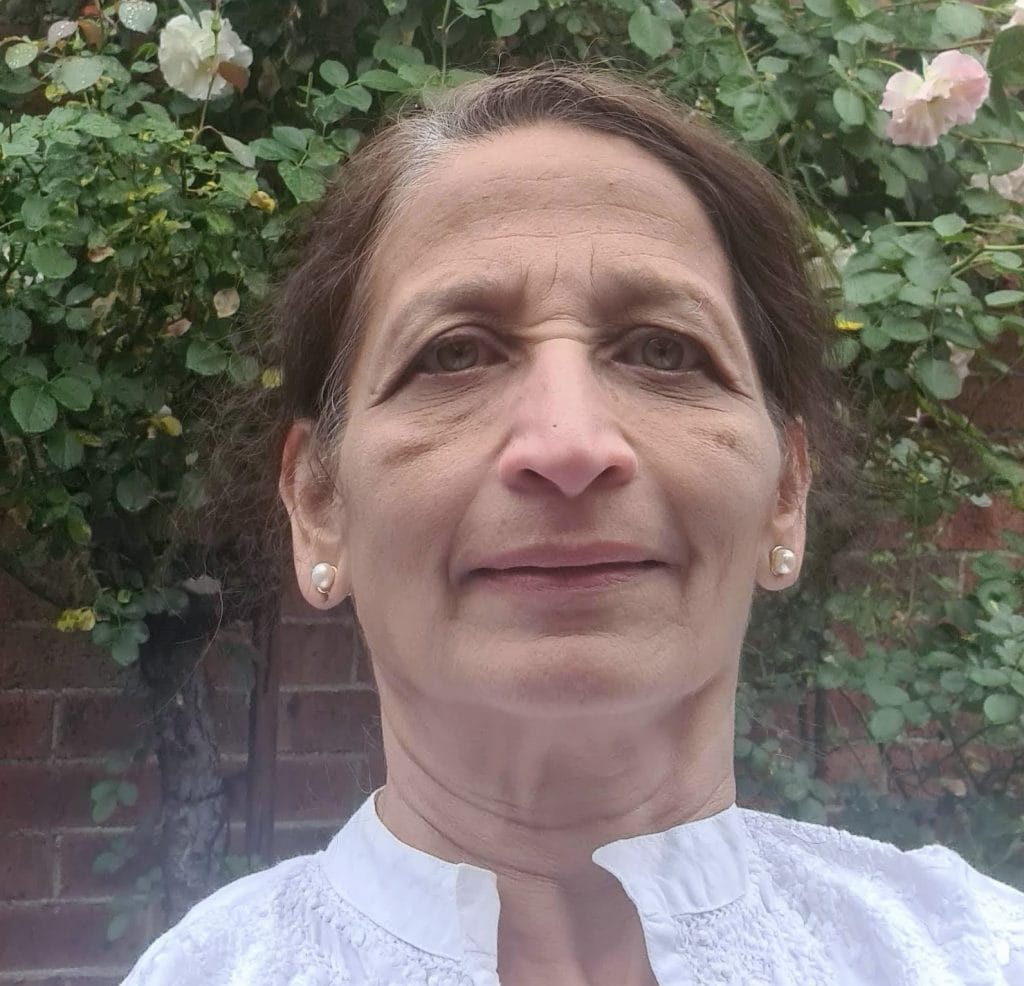
Lalita Kanetkar

The intention of ethics education is to teach children the skills they need for critical thinking from a very young age - recognising that it is so important in life to listen to different opinions, learn to question and develop the confidence to express one’s own point of view. After all, there are so many occasions in life when it not only important but also difficult to make choices and decisions. For example, how do we know if the choices we make are ‘right’ or ‘wrong’? Have we considered how they might affect others?

Lalita Kanetkar

These are the sorts of dilemmas the ethics curriculum aims to help children consider by introducing simple and relatable stories about choices and decisions they must make in their daily lives. By asking many questions, the lessons try to get children to think about why they agree or disagree with the opinions and decisions made by different characters in the stories.

For example, for younger children from Kindergarten to Year 2, we use simple stories on issues such as hurt feelings, teasing, telling the truth, showing empathy or accepting an apology. Children are able to relate to the characters and talk about whether they agree or disagree with them and whether they themselves would behave differently in the same situation. Slightly older children, from Year 3 and above, will have developed the capacity to think and question more critically. Again using stories, we consider topics of a more complex nature – be it keeping animals in zoos, bragging, etc.

To assist in critical thinking, the curriculum also introduces logic – recognising that the skills for logical thinking are an essential ingredient of critical thinking.

Since 2021 ethics has also been taught in Years 7 and 8 of public high schools.

Of course this means there is a great need for volunteers. In order to volunteer as a teacher, you need to obtain a Child Protection Certificate and a Police clearance. You also need to undertake a short training course. However, there is no requirement to have teaching experience.

Of course, being a volunteer means there is no financial remuneration. So you may well ask, what have I personally gained through my ethics teaching experience?

Well, my class goes for 30 minutes and I can assure you it is the most enjoyable half hour spent in the company of young, inquiring minds. I started teaching this group of children when they were in Kindergarten. They are now entering Year 3. It has been so exciting for me to see how their thinking has developed, how well they are now able to express themselves, set out their views and listen to each other. They understand that it is important to respect the opinions of their classmates though they themselves may disagree with those opinions.

And then of course, there are some heartwarming incidents. When for example, a child impulsively says, “I like you!” And once when I told my class I was going to be away for a couple of weeks, they cried out, “We’ll miss you!” I found that so touching.

And finally, teaching ethics is influencing me to think critically about my own day to day activities. The other day after a hard morning of housework, I finally sat down to watch a movie on Netflix. When it finished I was considering whether to watch another. And then the critically thinking voice inside me started questioning whether this would me a just reward for all my hard work in the morning or was I perhaps succumbing to laziness?

What do you think? If you were to join me in an ethics class I would love to hear your views. Better still, why don’t you consider starting your own journey as a volunteer ethics teacher!

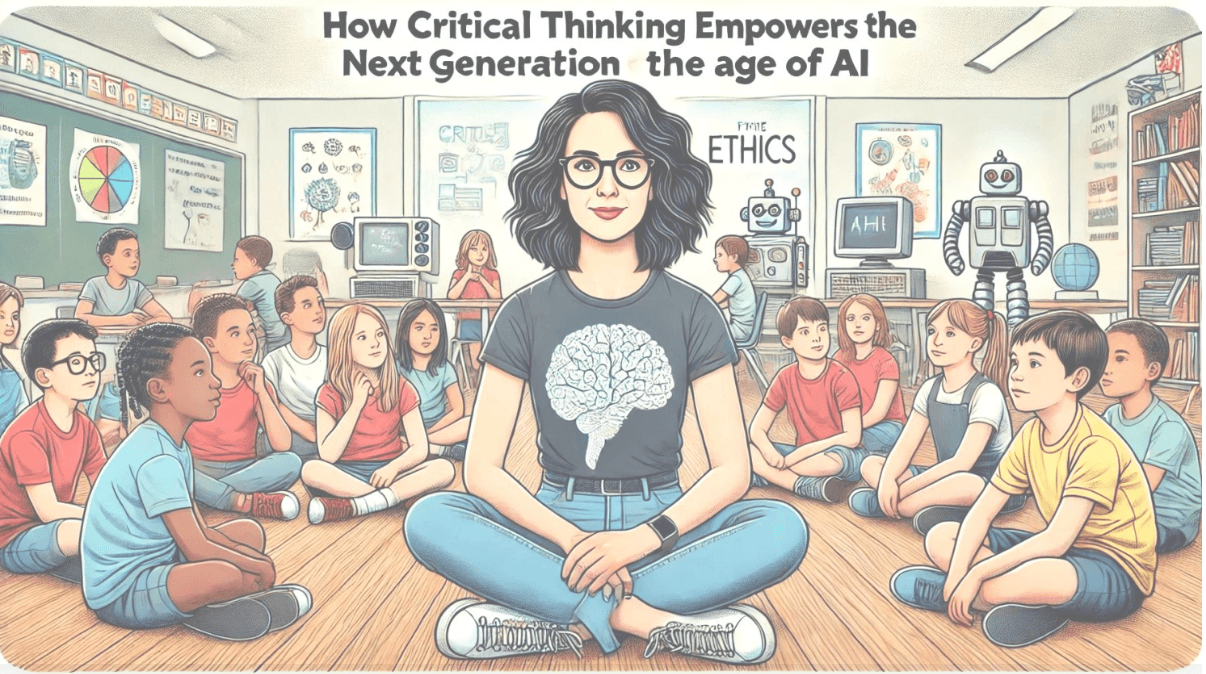
How Critical Thinking Empowers the Next Generation in the Age of AI

What if the future of our society rests in the hands of the next generation learning to think critically?

That’s the question Sinéad Fitzgerald pondered in 2023 while delivering work presentations about AI. Although she had heard of Primary Ethics, this question and the follow-up rhetorical reflection, ‘What are you going to do about it Sinéad?’ gave her the drive to become a volunteer ethics teacher.

Sinéad writes: Over the course of 2024, I had the absolute privilege of teaching ethics to an engaged and fun group of Year 5 students. These young minds — nine to 11 years old — opt for ethics over scripture and what I witness in their discussions is nothing short of remarkable. Their curiosity, resilience and willingness to grapple with ethical dilemmas give me hope, not just for their futures but for the future of our world. In their questions and reflections, I see the seeds of a generation ready to navigate an era dominated by artificial intelligence (AI). Watching these students explore complex issues reminds me of an essential truth: we are equipping them with perhaps some of the most necessary skills for the future — skills in ethical reasoning, critical thinking and collaborative inquiry.

Critical thinking: the compass for the AI era

How do we ensure our children are equipped to navigate a world dominated by AI?

As AI reshapes industries and lifestyles, critical thinking emerges as a non-negotiable skill. AI can analyse data, recognise patterns and even mimic creativity, but it cannot replace human abilities to question, interpret and decide based on values. For today’s young people, the overwhelming flood of information — often a blend of truth and distortion — makes critical evaluation essential.

Sinéad Fitzgerald

Primary Ethics is a not-for-profit organisation offering secular ethics education as an alternative to scripture classes in primary schools. The curriculum is crafted by a team of philosophers, educators and experts, ensuring lessons are age-appropriate, engaging and relevant. Aligned with The Ethics Centre, Primary Ethics offers a robust program that equips young minds with the tools to navigate moral and social challenges, fostering a generation of empathetic, informed and ethical decision-makers who can contribute meaningfully to society.

Lessons that inspire

Over the year, our lessons explored themes such as A Fair Society, where students tackled the question, do societies have a responsibility to ensure everyone has access to education and healthcare? This led to debates about the challenges of addressing inequality and whether luck — good or bad — should influence social responsibilities.

In Appeal to Authority, students examined when it’s appropriate to accept advice or rules from authority figures, such as teachers or doctors, and when it’s okay to challenge them. This lesson was instrumental in developing discernment and confidence, helping young thinkers navigate a world where blind trust can sometimes lead to misinformation or manipulation.

Discussions on Extending Human Rights to Animals asked whether rights traditionally reserved for humans, such as the right to free speech or education, should be extended to animals like chimpanzees. Students were encouraged to reflect on what it means to have rights and whether ethical considerations should transcend species boundaries.

Other lessons, like Beliefs, Opinions, Tolerance and Respect, prompted students to consider whether all beliefs deserve respect and tolerance, especially when those beliefs may cause harm. Meanwhile, the topic of Teasing dove into understanding when, if ever, teasing is acceptable and how it can impact relationships and emotional well-being.

Image generated with AI

As artificial intelligence (AI) technologies like chatbots, search engines and personalised recommendations become ever-present in students’ lives, it’s important for them to reflect on how they engage with such technologies. I was delighted to teach a new topic called Interacting with AI. Some big questions students discussed in this topic include: How is AI different from and similar to human intelligence? Is it okay to use artificial intelligence to help with schoolwork? Can we be friends with a chatbot? Is it wrong to be cruel to artificial intelligence? Can we trust the information provided by artificial intelligence?

The most profound moments in my ethics classes have often come from the students themselves. During our AI-focused lesson, a discussion emerged around AI-generated art. A student asked, “If AI can create art, is it really ‘stealing’ or are we redefining creativity in a new way?” which sparked a spirited debate. Several students argued that human intent makes art meaningful, while others proposed that art’s value lies in the audience’s experience, not its creator.

Sinéad Fitzgerald

This wasn’t just a theoretical exercise but a testament to the power of critical thinking. The students weren’t just finding answers — they were learning to ask the kind of questions that lead to deeper understanding. Across all lessons, students are encouraged to question assumptions, evaluate arguments and consider the broader implications of their ideas.

A small role, a big impact

I genuinely enjoy playing my small role in helping our children become ethical decision-makers. Watching them learn to think critically, give evidence-based reasons for their opinions and have attentive discussions, even in respectful disagreement, has been deeply rewarding. These skills will serve them for a lifetime, enabling them to navigate and shape an ethical, equitable and thoughtful society.

These young thinkers show us that tomorrow’s potential lies in curiosity and empathy. They recognise that technology, including AI, is neither inherently good nor bad — how we use it determines its impact.

The World Economic Forum and LinkedIn’s recent analysis of the skills most in demand for future talent notably emphasise that critical thinking and problem-solving skills are essential for the modern workforce. This aligns perfectly with what we’re cultivating through these lessons, which are more than classroom exercises — they are opportunities for students to develop the tools needed for thoughtful and engaged citizenship in a rapidly changing world.

By nurturing these capabilities today, we are cultivating a generation that will thrive in the AI age and steer it toward a more inclusive and ethical future. Imagine a world where our leaders, innovators and creators are as conscientious as they are competent—a world shaped by those who ask not just what can we do? but what should we do?”

Let us prioritise critical thinking in education, recognising its role in creating a brighter tomorrow. By empowering young minds to ask big questions, engage in thoughtful discussions and tackle ethical dilemmas, we prepare them to navigate and redefine the complexities of our world.

The future is not just bright — it is inspiring, dynamic and waiting to be shaped by a generation of thinkers ready to lead.

In time, not very much time at all, it will be the decisions of the children we teach today that will shape the world

Dr Simon Longstaff, The Ethics Centre and Primary Ethics Board

From Kindy to Year 6 – ethics reflections

Emma Bonham has taught ethics to her daughter’s class from the start of primary school and now to the end. She reflects on “a remarkable time”.

I’ve had the most remarkable time guiding my little ethics group from Kindergarten to Year 6, with very few class changes along the way. I have been so lucky in this, because it has allowed me to see the immense benefits that children gain when they get the opportunity to have consistent exposure to the ethics program.

From almost before they can read and count, they are also learning how to reason, think, disagree with courtesy and keep their minds open. It fills me with joy to see them now, in year 6, able to grasp complex subjects with ease and dive into potentially divisive topics with eagerness and curiosity. Their minds are flexible and their natures open – they understand the ethics circle to be a place of safety and confidentiality and they do not hold back their opinions!

For me, the lack of an engaging non-scripture alternative was what drew me to ethics. I wanted my own children to have this option and when I started seven years ago, volunteers were (probably still are) in short supply. As soon as I reached a time when I could attend the training I did so. The training course pushed me out of my comfort zone in that I had been a stay-at-home mum for quite a few years by then and it seemed confronting to be surrounded by people I did not know, learning new things and making presentations in a group scenario. Once I got there, however, I realised that of course everyone running it was lovely and delighted to have volunteers eager to learn. And everyone volunteering had a desire to contribute to their local community that of course was similar to mine, so it became a fun few days.

emma-bonham-daughter
Emma and her daughter

Before I became a mum I was a university lecturer, but it was actually my parenting skills and the in-school reading group experience that came to the fore with ethics training. Teaching at uni is teaching adults, not crowd-managing kids in a classroom!

A firm voice, clear boundaries, an understanding of your next 30 minutes, these are the things that are important in an ethics class.

Emma

And the training is designed to get you to a place where you feel comfortable delivering a lesson and managing kids in their many moods. I feel I haven’t had to do terribly much classroom management this past year or so, because I’ve had the same kids for so long. A quiet reminder here and there that only one person talks at a time, but not much else. In earlier days, though, I found that adding levity to a situation worked wonders. When they were little I would tell them they needed to put up their hand to speak so my ears didn’t fall off if they all shouted at once. I often used positive reinforcement when they were young too, praising whichever child or side of the circle was showing me the best listening face, or congratulating them on their grown-up behaviour.

It has been great to see the kids learn how to disagree, sometimes passionately, but always with respect. More, though, for me, there is a huge sense of satisfaction in watching them change their minds and be able, and confident to articulate that they had thought one thing at the start of the lesson and had their mind changed by the ensuing discussion. I have always offered praise for this sort of flexibility and humility, because it’s such a great skill, to be able to concede with grace. In conjunction with this is the learning to not judge a scenario in the first instance, a compassionate skill that will stand them in good stead as they head to high school.

For myself, I’ve had to learn and perfect the ‘resting neutral face’! Sometimes the kids are so confident and so quick to ask a question it might be easy to judge or respond with my own bias, so it’s been a very good learning curve for me, to learn to restrain that first response and give them the space to express their views.

Emma

One of the joys I wasn’t expecting is the little lift I get when one or two hang back after class or walk into the playground with me, because they’re not quite ready to stop talking about the topic of the day. This is a big deal, given that my class is right before recess and they generally shoot off into the playground! I know they’ve had a great lesson if they want to keep talking. Also, a few times I’ve had the in-class teacher afterwards comment on the great topics and how interesting they are to listen to, which is always good feedback for the program. Honestly, I can’t remember all the way back to Kindy, but recently my group have loved the topic on Midas, the story of the man who stole from a pharmacy for medicine for his sick wife, and the question of whether to prioritise helping people nearby or far away.

By far the most wonderful reward after all these years, though, came very recently. My daughter got in the car after school and began telling me about her day, as usual, and mentioned that the class teacher had been using AI to mark assignments and various other classroom tasks. She told me that she and a couple of her classmates, who are in ethics with her, began a whole-class discussion about AI, ‘just like in ethics last week’. My grin could not have been bigger.

There’s personal satisfaction, of course, in realising they retain the knowledge, but also a sense that they will go into high school with these important skills and an ability to think with flexibility that they might not get in any other part of their learning. What a fabulous note with which to end my time with them!

Primary Ethics moves to The Ethics Centre Sydney office

Primary Ethics has moved and is now co-located within The Ethics Centre at its offices in Sydney. The move enables the two organisations to share office space and office resources, as well as to continue to collaborate on ethics education projects.

Evan Hannah, CEO of Primary Ethics, said: “We’re delighted to join The Ethics Centre in their Sydney CBD office, where we will continue our work to help students develop essential skills in critical thinking, ethical reasoning and respectful discussion.”

“We also thank our generous donor Rob Keldoulis for paying our rent for the past decade at our previous home in Potts Point.”

ethics-centre

Dr Simon Longstaff AO, Executive Director of The Ethics Centre, said: “Since the establishment of Primary Ethics, 13 years ago, The Ethics Centre has continued to develop innovative ethics programs for school students, including the Moral Courage and Common Ground programs for high schoolers. This success, when coupled with Primary Ethics’ achievements, provides an excellent platform for an approach that combines our distinctive strengths when developing and executing impactful programs that strengthen ethical understanding in generations of Australian students.”

MEDIA CONTACTS

Primary Ethics: Susan Ardill, communications@primaryethics.com.au

The Ethics Centre: Kathleen Evesson, communications@ethics.org.au

Reflecting on my seventh ethics year

How to better regulate playground and global tensions? Have children take ethics, says experienced volunteer Katie Rockliff.

It’s the last week of Primary Ethics in my seventh year of volunteer teaching. I’m headed to class and reflecting on the year that’s been.

While walking and enjoying the embrace of early summer, ruminating on the value of school ethics as a program, I’m also listening to a neuroscience podcast (as you do). Today’s is with guest speaker Dr Ethan Kross, Professor of Psychology at the University of Michigan, USA, and director of the Emotion and Self-Control Laboratory. In closing, Dr Kross references how in his Lab they often define wisdom as: “the concept of how well you are able to deal with social situations involving uncertainty”. He goes on to discuss the art/ science of entering conversations not to try to change others’ minds, but rather with a state of humility and curiosity and genuine interest – and first and foremost (I’m paraphrasing) trying to understand the other person or group’s point of view.

katie-rockliff-smiling
Katie Rockliff

And it occurs to me, on this walk to class on a sunny morning, that in an era of much socio-political divide, economic and climate turbulence, fake news and the rise of AI, that honing these skills is exceedingly useful – perhaps more so than ever before. This is where listening to Dr Kross and my ruminations on the value of school ethics collide…

Of all the subjects at school, ethics is perhaps the only one where no rights or wrongs, no dogma or rules apply.

One is simply encouraged to think. To think deeply.

To be open enough to both articulate, consider and review or reconfirm one’s own thoughts.

To truly listen to others. And to constructively build on their thinking.

And to collectively seek, if not consensus, a place of common ground and positive way forward for all.

It’s a skill many school playgrounds, corporate boardrooms and politicians would benefit from! And an empowering skill for parents to know their child can possess. To know that their child can, as Dr Kross defined it, “navigate social situations involving uncertainty” (let’s just call that life shall we?) – to navigate it well.

As a volunteer teacher from Kindergarten through to Y6, there is one question the curriculum has asked me to ask the students on repeat … and that question is “why?

“Thank you for sharing your thoughts. I’d like you to please share with us why you think this?”

This, I see now, is my why. This is why I teach ethics. And why I see value in all students taking ethics.

Not to be told what to think but how to think for themselves.

Not to learn how to follow but to learn the value of respect.

Not to learn only one right answer but the ability to adapt to find new answers.

Not to own the conversation but to share in the conversation.

And to learn that there is always more learning to be done and absolutely always someone that knows something you don’t.

katie-rockliff
Katie Rockliff

And lastly but by no means not least, the awareness and desire to work with others, in some way, for the greater good.

It’s a sunny view of what the next gen, through the power of their own thinking and listening, can achieve.

And as an answer to my ‘why’ and what I’m glad to be a part of – that’s the greater good of ethics education that I’m thrilled exists.

****

Katie Rockliff is a communications consultant, small business owner and volunteer ethics teacher at Darlinghurst Public School 2018-2024.

Kinghorn Volunteers of the Year 2024

Primary Ethics is delighted to announce the winners of the Kinghorn Volunteers of the Year 2024.

Yes, that’s winners, plural. This was the first year in which nominations could be made for a team as well as an individual.

[Read more about the Award here.]

So the 2024 winners are Jim Neely, Regional Manager, ethics teacher and coordinator in the Queanbeyan region near Canberra, and the Northmead Public School ethics team from western Sydney. Jim, who coordinates three schools in Queanbeyan, receives $$3000 in prize money to distribute to the library services in his schools, while the Northmead team receives $1000.

The judging panel was Jill Kinghorn, Bruce Hogan (Primary Ethics Chair), Barb La Ganza (winner 2023), Kaye Remington (community volunteer), Martin Bregozzo (parent volunteer) and Evan Hannah (CEO).

jim-neely
Jim Neely

Jim Neely is currently regional manager for five ethics programs in the Queanbeyan region, which deliver lessons to thousands of students every week. Currently, he is keeping 15 ethics teachers engaged and himself teaches four classes every week in three different schools.

Jim is dedicated to growing ethics education and works diligently to recruit via local events and media. Besides his five schools, he explores every option to launch new programs in other schools in the region.

From one of his team: “Jim strongly supports teachers at Queanbeyan schools and graciously relieves us when we can’t take our class or seeks out another teacher who can. Behind the scenes, I know he works with the Queanbeyan schools to encourage their participation and active support for ethics classes. My own class had only six students in Term 1 this year. Through his efforts with the school, I now have about 13. And a happy class it is!”

“I nominate Jim because I believe he epitomises the qualities and ethos that are so necessary in an organisation that relies on volunteers in order to be effective and respected. Any organisation would be lucky to have Jim. Primary Ethics is fortunate that we are where he chooses to commit his time and effort. I feel fortunate to volunteer in his area.”

northmead-team-2024
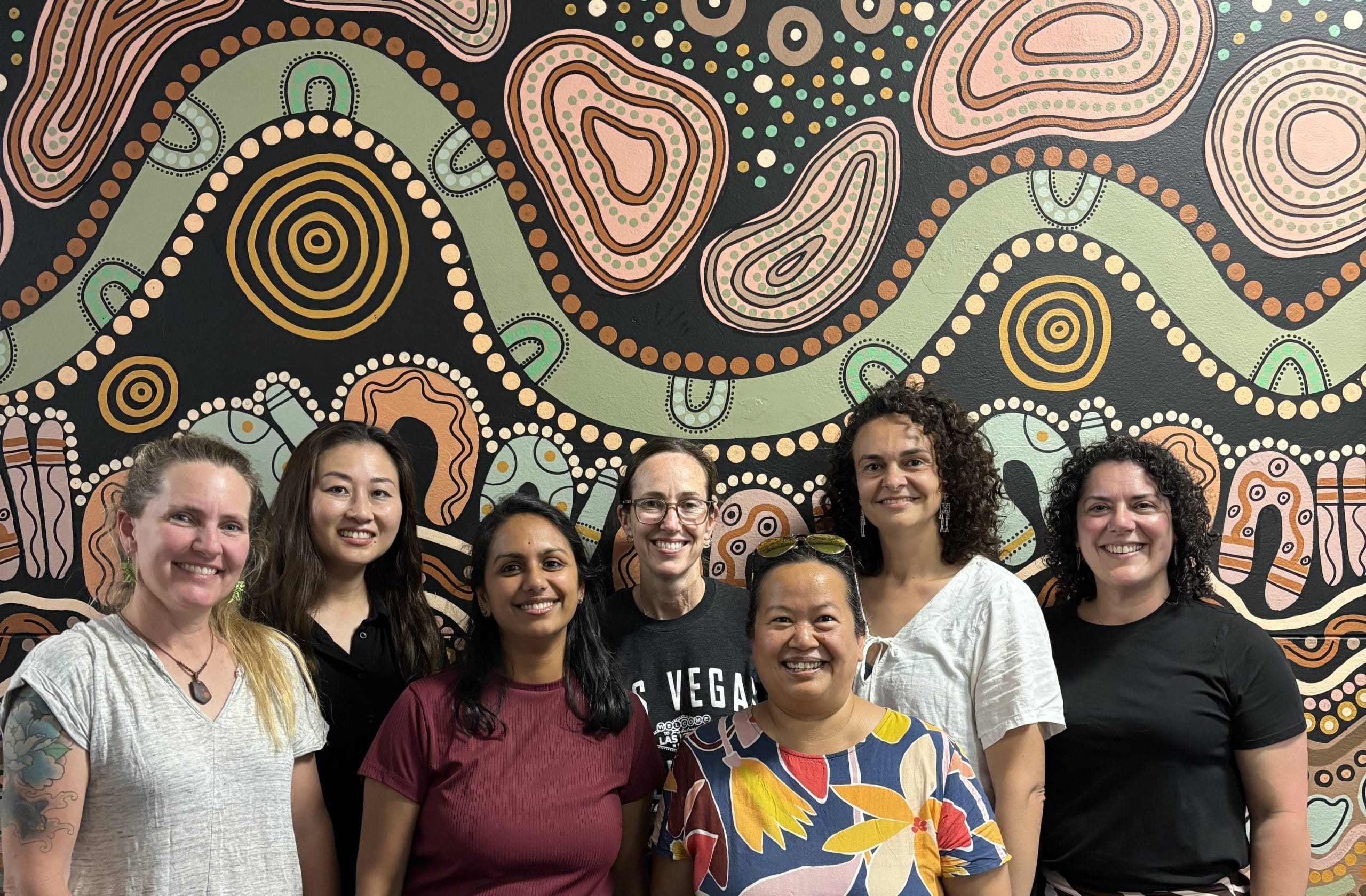
The Northmead team 2024, f rom left: Veronica, Mallika, Susannah, coordinator Tania, Christina (back), Myat (front), Elaine. Missing: Abha.

Northmead Public School ethics team: This team volunteers in a large, diverse school in western Sydney and this nomination is particularly special this year – it is the school’s centenary year!

The team have worked really hard at building a very strong, steady and committed presence to ensure that ethics is now offered across all the school years, having started 10 years ago with only two classes. The reputation and popularity of the program has grown significantly and there are now over 200 students engaged in weekly lessons. This represents almost one third of the school population. The program is seen as an important part of school life and the team is well known and respected as very community-minded.

As well as the two winners, the judging panel gave a special commendation to Faith Weisbrot, who has been on every shortlist since the award commenced in 2022. Faith is a coordinator, teacher and relief teacher at schools in the eastern suburbs of Sydney.

Most weeks Faith teaches from three to five lessons, making sure no children are missing out. Faith has proven year on year what a great team leader she is. She is always available to her teams, mentoring the newer volunteers, making sure to catch up once a term, fostering a sense of team bonding. She organises Classroom Support workshops and observations where feasible.

Faith embodies the true spirit of a Primary Ethics volunteer, humble and hardworking.

faith-weisbrot
Faith Weisbrot
Arpana: ‘So much more than I ever expected’

“I started as an ethics volunteer when my eldest daughter was in Stage 2 and now she’s at university! Teaching ethics has given me so much more than I ever expected.”

Arpana writes about her journey as an ethics teacher.

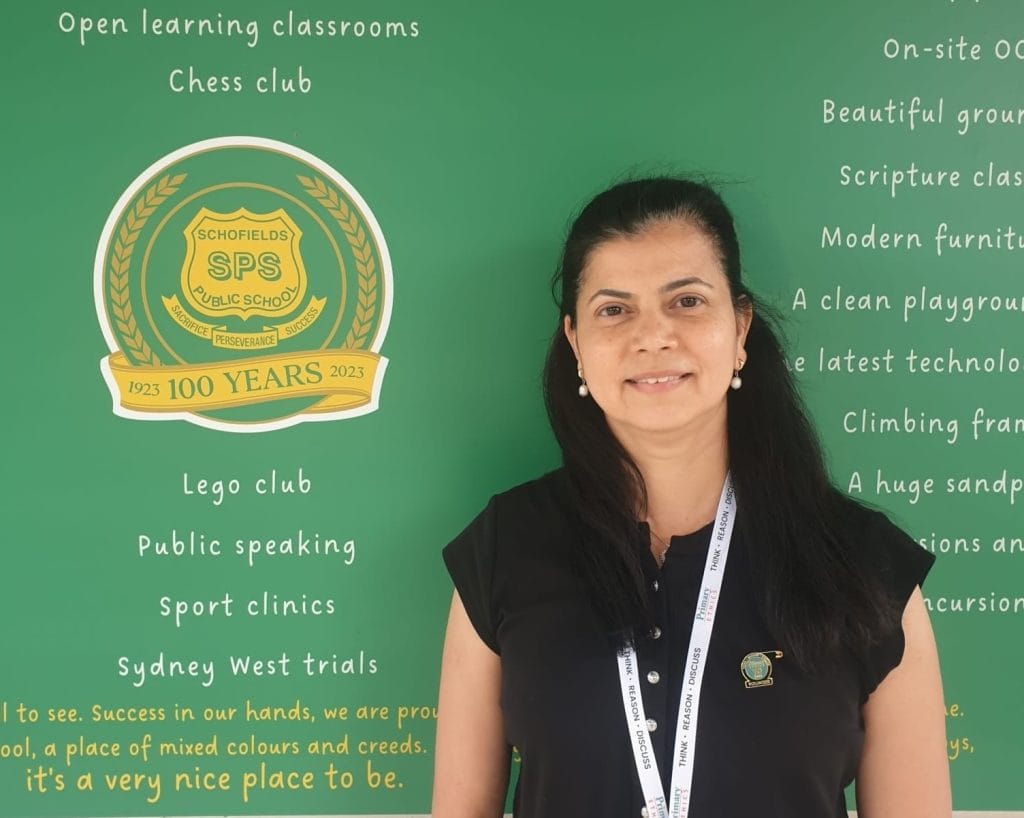
“When my daughter started school, I was looking to get involved in the school community. I became an active member of the P&C but wanted to find other ways to apply my interests in children’s learning for life skills. Then, one day, I saw a callout in her school newsletter for ethics volunteers. The idea of contributing to children’s learning in this way was incredibly exciting, even though I had no prior experience in the teacher role. Thankfully, the process of signing up was extremely simple. I submitted my resume, attended a weekend training workshop and learned how to deliver the scripted lessons. The training made it clear I didn’t need to be an expert. Everything I needed was provided and we even practised running discussions. I couldn’t wait to try it with real students!

“I still remember the day I taught my first ethics lesson. I was nervous about meeting the students and running an interactive lesson, but the kids were so engaged. They jumped into the discussions straightaway and it was wonderful to see how much they enjoyed it.

arpana-schofields-public-school
Arpana at the school where she teaches in Sydney's west.

The principal asked a group of students what the best part of their day was and there was an overwhelming response of 'today’s ethics lesson'!

Arpana

“Later that day, the school’s Twitter page shared an update. The principal had asked a group of students what the best part of their day was and there was an overwhelming response of “today’s ethics lesson!” This served as a major confidence boost for me and from then on ethics became a highlight of my week.

“Currently, I dedicate just 30 minutes a week teaching ethics, although this has varied over the 10+ years I have been a volunteer. One thing that has stayed constant is how valuable each lesson is — not just for the students, but for also for me. I’ve been pleasantly surprised on multiple occasions by how thoughtful and mature the student discussions are. They’re learning to be open-minded, to listen to others’ perspectives, to share their own in a way that’s respectful. It’s inspiring to see them build on each other’s ideas and sometimes even change their minds after hearing someone else’s point of view.

“There have also been moments that really stayed with me. Once, I missed a class because I wasn’t feeling well. When I came back the next week, the children were all asking, “Where were you? Why didn’t you come?” I explained I’d been unwell and one of them piped up, “That’s not good — why didn’t you send your husband?” It made me laugh, but it also hit me how much they valued ethics lessons. They don’t see it as being about me; it’s about the lessons and the conversations we share.

“Over the years, I’ve also received more formal recognition for my efforts. I was honoured as a nominee for the NSW Volunteer of the Year Awards in 2018. Such credits really make me feel like I’m part of a larger team, with the shared vision of bringing these ethics lessons to many students.

“Watching my daughter grow up has been a reminder of how quickly time passes, but ethics has stayed a constant part of my life. It’s such an inclusive program, not tied to any religion or culture, which is what makes schools the perfect place for it. I hope these lessons can reach as many kids as possible because they’re learning skills that will stay with them for life.

“Teaching ethics has taught me to see things differently, to listen better and to appreciate the diversity of thoughts that young minds bring. It’s been an incredible journey and I’m so grateful to have had the chance to be part of something so meaningful.”

Find out more about volunteering >>

Graduating to high school ethics

Adam Bennett and Billie Acosta, after many years of teaching ethics in primary schools, have finally graduated to teaching high school ethics.

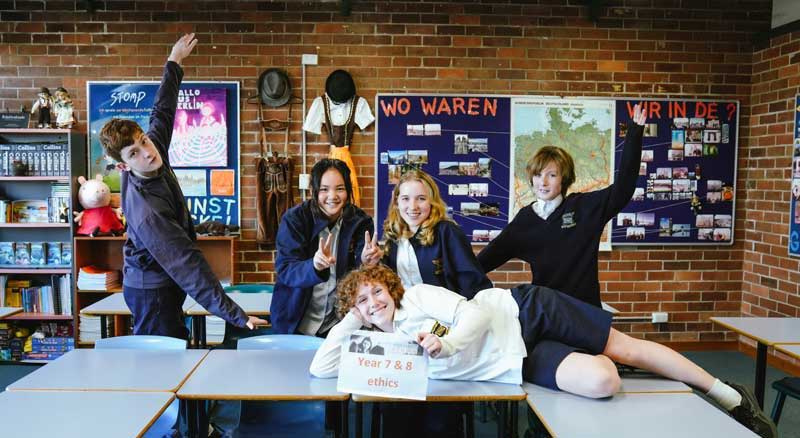
Billie and Adam have both taught ethics to their own children for over seven years, teaching all stages at primary school as their kids grew up. This year, they began teaching ethics at Smith’s Hill High School in Wollongong. Both have children at the school and in 2024 the school began offering ethics to year 7 and 8 students for the first time.

'More challenging...'


I’ve certainly appreciated the evolution of responses, when it comes to teaching high school ethics.

smiths hill

Adam Bennett has always enjoyed teaching ethics but was a little nervous about high school classes. “Even the most engaged children become more challenging as they get older, gain experience and develop more confidence. It can be hard to keep students engaged and pace the lesson just right to keep them involved. You never know which topic will captivate them and which will bore them.”

The Primary Ethics high school training observes how 11-to-13-year-olds can appreciate more advanced material and techniques and helped prepare Adam for the more self-assured students.
smiths-hill-students
Some of the ethics class from Smiths Hill High School

Even so, both teachers are finding that employing the new discussion moves, introduced with the high school curriculum, can be hit-and-miss. They notice that there seems to be an implicit consensus among the students that the point of ethics classes is to argue. The year 7 and 8 students seem to enjoy verbal sparring, as they debate their points of view. But with occasional reminders of the guidelines for healthy discussion, they do respectfully disagree, giving reasons and examples.

Billie Acosta has noticed that building on others’ points remains a popular strategy for Stage 4 classes, which have discussed topics including the environment and custodianship vs. ownership, politics and the media, social and cultural responsibility, human longevity and how it affects society, mindful communication and respect, among others. However, not all topics receive rave reviews from the students. As Billie recounted, “If you’re a fan of the pithy response, I offer you this from one of our students after one lesson – ‘some topics have overstayed their welcome!’ I don’t disagree.”

Is this the age where it happens and we, as ethics teachers, get to witness it first hand?

Both teachers find that the new discussion moves serve as a crucial fallback when organic debate is not flowing freely, but timing can be very important. Guiding the class in this way is not always aligned with class feeling about the topic and can just as easily stall the conversation as prompt fresh ideas. One of the main aims is to make sure the lesson continues to be a safe space: students are safe to disagree, provide their reasons and to express their point of view. Arguing for one side of an issue or another is an important element of the class, which many of the students may have learned from primary school, and it can be challenging to keep some students from arguing all possible angles of a given question.

billie-adam
Billie and Adam

We realise there’s a need for curriculum and lesson plans but sometimes this may not leave the time or scope to tease out nuances in a particular discussion. Obviously, the demographic plays a part in student responses and Smiths’ Hill is certainly a specific demographic, as an academically selective school. Watching the students subconsciously sort through the issues and build on or try to refute each other’s ideas remains hugely satisfying. Occasionally, however, the discussion grinds to a halt.

Adam and Billy say: “As teachers, we often learn some interesting new slang and sometimes a little more about our students and the culture they live in, during these ‘brick wall conversations’. Sometimes we get stuck here and have to limp back to our questions and discussion moves, to get things moving again. Sometimes, the students surprise us with their lateral thinking and this level of understanding leads to a whole new class of ethical discussion.”

Adam and Billy agree: “Teaching ethics is a rewarding way to help children become skilled critical thinkers, able to identify and evaluate different opinions, formulate cogent arguments and disagree respectfully, as well as learning from each other.

Although we got involved to teach our own kids, even after 7+ years, teaching ethics is still great fun and we’d recommend it to anyone!”

@Home bulletin for families Term 4 2024

Welcome to @Home for Term 4 2024, where we let families know what your children, from kindergarten into secondary school, could be exploring in their ethics lessons this term.

The topics we show below are based on classes which began at the beginning of the year. Schools start at different times of the year, some lessons go faster or slower than others, some schools skip ethics for the first and last weeks of the term while others teach every single week – and so on. 

If your child tells you they are discussing a topic you don’t see in this bulletin, you can also look at the Curriculum section of our website.

Kindergarten: Does telling the truth matter?
Our youngest students will begin to consider when – and if – it’s important to tell the truth. What if the truth might hurt someone’s feelings, like when choosing to go to one friend’s birthday party over another’s? They’ll also reflect on what it feels like when friends lie and how repeated dishonesty can impact friendships.

Stage 1 – Years 1 & 2: Ownership
Our Stage 1 students will dive into questions about what it means to own something. Can we claim to own a shell found on the beach or a sandcastle we’ve made? What about animals, like pets or creatures in the wild? Can we own a picture of someone else or even the smell of food we make? These questions will help them explore different perspectives on ownership.

Stage 2 – Years 3 & 4: Breaking a promise
Our Stage 2 students will discuss the meaning of a promise and how it differs from simply agreeing to do something. Is it ever acceptable to break a promise? They’ll consider how trust plays a role in friendships and reflect on the importance of keeping their word.

Stage 3 – Years 5 & 6: Should we take circumstances into account?
In Term 4, our Stage 3 students will wrestle with whether it’s always wrong to do certain things – like lying or breaking a promise – or if circumstances should be considered. For example, they’ll discuss whether cultural traditions, like eating whales in some cultures, influence what we think of as right or wrong.

Stage 4 – Years 7 & 8: Being yourself
Stage 4 students will reflect on what it means to be yourself. Can we be different people in different contexts and is that necessarily a bad thing? They’ll explore the importance of self-expression and how being labelled can impact a person’s sense of self.
Each term brings new ideas and questions and we hope these topics spark thoughtful conversations at home as well!