Category: Parents

An education of my own

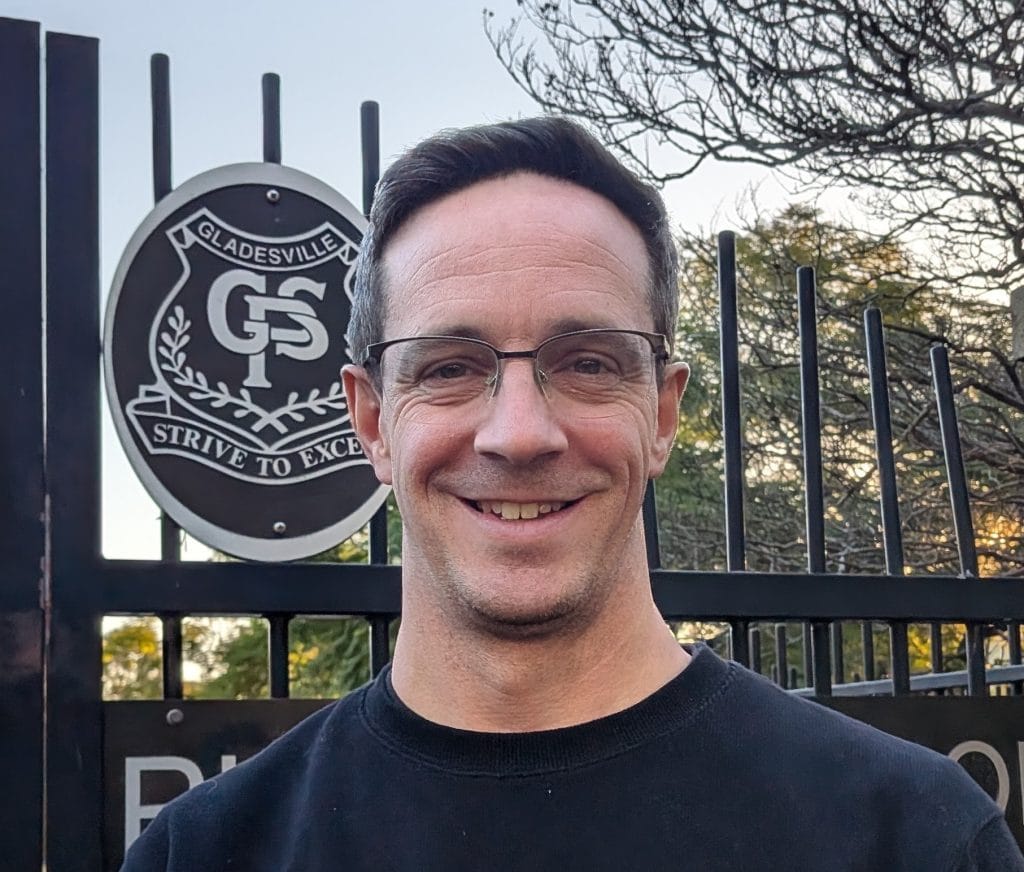
Rupert Standley gained much more than he first expected when he became an ethics volunteer almost a decade ago. He credits his volunteering experience with helping him return to the workforce. Here’s Rupert’s story.

When my eldest started Kindergarten in 2017, I didn’t quite know what to expect from our local primary school – either for him as a student or for us as parents.

Not long after he started, an opportunity to help with reading classes opened up for parent volunteers, and I decided to get involved. To an office worker like me at the time, a classroom of kindergartners looked like organised chaos. But I loved it. I loved seeing the kids explore new topics and perspectives through the medium of books and games.

Two years later, another parent gently ‘encouraged’ me to get involved in ethics to help plug a volunteer gap at the school. Truthfully? I was reluctant.

But I thought back to those reading groups and figured this could be a great way to help my son, support the school, and even test the waters of becoming a teacher as I considered returning to work from my stay-at-home Dad duties.

At the time, I thought ‘ethics’ just meant debating which track a runaway trolley should take; I hadn’t given it much thought in a primary education environment. If I am being honest, choosing Ethics for my son was initially more about not wanting him to pursue the alternatives.

But as I went through the training and started running classes, I received an education of my own. I quickly realised the huge value this program brings to our little people. We weren't just talking about abstract philosophy; we were teaching everyday, relatable decision-making.

Rupert

We were embracing critical thinking, largely through storytelling that the kids absolutely loved, and we were teaching the art of respectful disagreement. Since then, I couldn’t be more convinced of the benefits of the program.

Today, as a Coordinator, I work alongside eight incredible teacher volunteers. We cover every year group at our school. We are a committed group of parents and supporters who deliver classes consistently each week, supporting the program and one another where we can. We receive excellent backing from our school, and I am proud to say that the families who have selected the Ethics program for their children now represent a significant majority of our school community.

When I finally did return to the workforce, it was actually my experience as a Primary Ethics teacher and Coordinator that helped me land a job as a Road Safety Workshop Coordinator for high school students. It also gave me a profound appreciation for what our primary school teachers do every single day. I was in awe of them — even if I ultimately decided classroom teaching wasn’t my permanent calling!

I am incredibly grateful to Primary Ethics for the benefits it has provided me and my family over the years. But more than that, I am proud to be involved with a program that equips our young people with essential life skills in a familiar, supportive environment.

@Home bulletin for parents – Term 3 2026

Welcome to @Home bulletin for Term 3 2026, where we let families know what your children, from kindergarten into secondary school, are exploring in their ethics lessons this term.

The topics we show below are based on classes which begin at the beginning of the year – this can vary as schools start their ethics programs at different times. If your child tells you they are discussing a topic you don’t see in this bulletin, you can also look at the Curriculum section of our website.

We hope the students talk about ethics with you at home – ask them questions about it!

Kindergarten: Sadie and the machines (*new in 2026*): Machines make some things easier and other things possible – but does that mean we should use them all the time? Through stories about Sadie and her family, students explore what machines are for and what makes a machine helpful. They’ll consider questions like: is a machine useful if it looks good but doesn’t work properly? Is it okay to use machines just for fun? Would we want a robot helper to do everything for us? And are there some things we might be better off doing ourselves?
Later in the year, students consider the importance of owning up to mistakes.

Stage 1 – Years 1 & 2: Saying sorry: What does it really mean to say sorry – and when should an apology be followed by forgiveness? Through stories about a young emu named Kalaya, students explore apologies, accidents, broken rules and the reasons people do the wrong thing. They’ll consider whether it matters how an apology is made, whether the person means it and whether they try to make things better. Is saying sorry always enough? Does understanding why someone acted as they did make them easier to forgive? And does forgiving someone mean that what they did was okay?
Later in the year, students talk about standing up for what we believe is right.

Stage 2 – Years 3 & 4: Imagining how others feel: Being able to imagine how someone else feels can help us decide how to respond to them. Students begin with familiar situations involving friends before considering the life of a child whose experiences are very different from their own. They’ll explore questions like: how can we work out what another person might be feeling? Is it possible to imagine an experience we’ve never had ourselves? Can we care about someone else while also feeling disappointed or upset about what their situation means for us? And how might understanding another person’s feelings help us recognise when something should change.
Later in the year, students think about how different kinds of living things should be treated.

Stage 3 – Years 5 & 6: With AI who needs school … or childhood? (*new topic in 2026*): As artificial intelligence becomes increasingly capable, students explore how it might change schools and the way we learn. Is it okay to use AI to complete an assignment if a teacher hasn’t explicitly said not to? Is it fair if some students have access to AI tools and others don’t? Students will also consider whether relying on AI could weaken our ability to think for ourselves, whether teachers should use it to assess work and provide feedback, even whether schools and teachers will still be necessary in the future.
Later in the year, students consider what influences how morally responsible someone is for their actions.

Stage 4 – Years 7 & 8: What do I owe my people?: What responsibilities do we have to the teams, countries and cultures we belong to? Students explore whether loyalty means putting the group first and whether we should remain loyal when we think our country is doing something wrong. They’ll also consider whether young people have a responsibility to preserve their culture and language, particularly when that culture is at risk of disappearing. Finally, students examine who can claim ownership of cultural objects, traditions and art forms, asking when cultural exchange becomes cultural appropriation and whether museums should return artefacts taken from other cultures.
Later in the year, students discuss the ethics of being ignored and how to navigate fake news.

Each term brings new ideas and questions and we hope these topics spark interesting conversations at home as well!

Considering volunteering? I say go for it!

Rachel Linton has words of encouragement for anyone considering becoming an ethics volunteer – she says just ‘go for it’!

I first became aware of primary school ethics lessons around eight years ago, when my son was in kindergarten. Our school needed more ethics teachers and the ethics coordinator approached me to ask if I’d be interested in volunteering. I was curious to hear more, and after meeting with her, I was keen.

What first drew me in was the opportunity to talk to my son and his classmates about ethical issues – to help them think about what matters and how to act on those values. Outside of religious education, there aren’t many structured opportunities for having these kinds of conversations with children.

Life was busy at the time and it took another two years before I signed up and completed the process to become an ethics teacher. I’ve now been teaching for over five years.

I enjoy talking to the kids about ethical issues – that’s why I first signed up. But it’s more than that. I love being part of their world, hearing how they make sense of things, helping shape the way they engage with each other when discussing what’s right or wrong. This is my contribution to my local community and my way of being part of the life of the school.

I've also come to believe that the Primary Ethics program is doing something important in the world. It gives children a way to think critically about difficult issues, listen to different perspectives, build on others' ideas and disagree agreeably.

Rachel

The community of enquiry process is probably even more important than the content of what we discuss, because it helps children learn to engage thoughtfully, respectfully and collaboratively.

Not every lesson goes smoothly and sometimes the discussion might go over some kids’ heads. But I believe that participating in these conversations supports children’s development over time. A moment that stayed with me: in the end-of-year lesson last year, one of the boys in my class said that before ethics, he used to “just do things” — now he thinks about them first.

The ability to think critically and engage in constructive dialogue is needed now more than ever. So for anyone considering becoming a volunteer ethics teacher, I say go for it. It’s a wonderful way to contribute to your local school community and to the positive development of the next generation – and you might just find you love it too.

‘Crucial skills’: Ched’s volunteering story

Ched Smokovic believes ethics lessons give children “crucial skills” for the modern world. He’s in his seventh year of ethics volunteering at his children’s Sydney school.

Starting out…

My wife was reading Greenwich Public School newsletter, saw they were looking for volunteer ethics teachers and thought it would be a good change of pace for me – balancing the abstract corporate role I had at the time with a more down-to-earth, wholesome activity. It took a few nudges on her part, but looking back, she was absolutely right. As soon as I started reading about the Primary Ethics methods and goals, I found that it resonated with my deep beliefs on how children should be educated – by allowing them to think for themselves.

After I got in touch with the Primary Ethics regional coordinators, they explained the process, which seemed simple enough. I remember going to meet the coordinator for an interview, where we discussed my reasons for wanting to volunteer and my availability.

The online workshop that followed focused on the outcome – to have a well-behaved classroom that works as a team discussing the topic, thinking and broadening their minds. It covered everything from the Primary Ethics curriculum methods to behaviour management to working with children of different ages, child safety and support structure. The workshop was very thoughtfully prepared and delivered.

Six classes a week

I’ve been gradually increasing the number of classes I do every week. It started with two a week, covering just my kids’ classes, to now six a week – one high school class and five primary school classes, all spread over three days. My typical preparation consists of downloading the material from the Primary Ethics website and going through it the day before the class. The material is well written and describes in great detail how the class should be run, what the main points of discussion are, what is expected, how to run various activities, etc. It usually takes me 15-20 minutes per class to prepare.

In the class itself, we usually open by briefly reviewing the Discussion Rules (setting behaviour expectations such as ‘one person speaks at a time’) and then refreshing our memory on what was discussed last time. We then jump straight into each topic and tell a story or a scenario that we discuss and ask ethical questions around.

The curriculum covers a wide range of topics from fairness and justice, honesty and lying, friendship and loyalty, how we should treat animals, the environment, cheating, misinformation and what it means to be a member of society. What I find particularly well designed about the curriculum is that the topics are age-appropriate and relatable but never dumbed down.

Personal motivations

I started volunteering as I wanted to do my part for the community, wanted to get out of my comfort zone from a corporate role and, I admit, I was curious to see how my kids were doing at school and how different they are from the kids I know at home.

Although I do get most of those things, there is one thing I enjoy the most.

The best feeling by far is when I leave the classroom after an amazing discussion in which the kids brought up deep thoughtful points and novel ideas that never occurred to me and I leave feeling optimistic about their future.

Ched

What’s in it for the children?

I always saw Primary Ethics lessons as a chance to show the young ones the wide variety of scenarios they will inevitably encounter in their lives and ask them ‘what do you think? and ‘what would you do?’ and more importantly, ‘why?’ There’s been many a time that as soon as I ask for the reasons behind their opinion, I can clearly see the student assessing their world view and either coming up with a very strong argument for, or acknowledging to themselves and others that perhaps their original thought was not the best and the group discussion made them change their mind.

I believe these are crucial skills that the kids will need to manoeuvre their way through this modern world.

Ched

One time when we were talking about what’s fair and unfair in society, the consensus in the class was that the laws are already set and the government already has rules for these things so there was little point in discussing them. When I mentioned that government consists of people just like us and one day some of them might be in the government and might need to decide on things like these, the discussion completely shifted and broadened and it was great to hear their uninhibited thoughts.

The secret weapon against polarisation – Osher Günsberg

Osher Günsberg, radio and television presenter and now popular podcaster, has joined the ranks of ethics volunteers at his son’s school. Osher says: “When I open my phone, it explodes in a cascade of fear, fury and furphies… leaving me spinning in a tizz of desperation and powerlessness. … I think I have found something that makes that feeling less intense and instead gives me the feeling that I am actually doing something that will make a difference.”  Thanks Osher for this lovely reflection, we wish you the best in your year of ethics volunteering ahead.

The thriving ethics community of Bondi Beach

Evelyn Levisohn is an ethics volunteer at Bondi Beach – a teacher and team coordinator. She writes here about their thriving ethics community, who help children look beneath the surface and have come together in firm solidarity after the recent tragedy on their doorstep.

Beyond the surface: Surfers, sunshine, run clubs and speedos: these might be the first things you think of when you think of Bondi Beach. It’s a place often associated with the ‘surface’: the tans, the activewear, the perfectly poured Instagrammable matcha latte. [Though tragically, it is also now known for the terrible shootings that took place in December 2025. More on that later.]

Look a little further, past the tourists on the promenade, and you’ll find there is a community engaged in something much deeper. At Bondi Beach Public School, just across the road from the beach, we have a thriving ethics program that is teaching the next generation how to look beneath the surface and question the status quo.

I’ve been part of this organisation for six years now, teaching two classes a week and serving as the ethics coordinator. We currently run 11 classes every week, from Kindergarten to Year 6, powered by a dedicated team of nine volunteers.

The Bondi Beach team at the beach, Evelyn on left.

Journey into the ethics classroom: My journey into the classroom actually started at my day job. I’m a Marketing Manager for Studiosity, a purpose-driven edtech company that believes in the power of education to change the world. Because they value social impact, my work is flexible enough to allow me to teach and coordinate each year. In fact, I first heard about Primary Ethics because my boss was a volunteer. Every Wednesday, she would come into the office and regale us with stories about how funny the kids were, how fascinating the topics were and how rewarding and challenging the role was.

It sounded incredible and I signed up to teach at Bondi Beach the year before my eldest son even started there. I still remember the nerves of that first day teaching Kindergarten. They were so sweet and charming, offering unselfconscious answers with brash honesty. But the moment that truly hooked me, the moment I felt that click of satisfaction, was when a child made a logical argument about a story that even I hadn’t considered. Watching a child learn to reason, think and find their own voice is incredibly gratifying.

Becoming a coordinator: Eventually, my passion for the program outweighed my fear of stepping into the team coordinator role. When our previous coordinator moved away, I realised I was too invested to let anyone else take the reins. I cared deeply about the program’s success, especially as we navigated the long road back from the COVID shutdowns. Our school was actually the last in the state to bring scripture and ethics back onsite, only resuming in 2023. During that break, I kept my skills sharp by doing relief teaching at other local schools. When we finally came back onsite, my mission was clear: I wanted to build back a sense of belonging and camaraderie within the team. I started ensuring we had termly coffee catch-ups and end-of-year dinners.

The team out for dinner, Evelyn second from left.

Depth and compassion: Today, we have a thriving team from all walks of life, parents and community members alike. Our catch-ups are no longer just an admin checkbox; they are filled with deep personal reflections and philosophical musings. We support each other, as does the whole Bondi Beach community who came together with steadfast compassion when the school had to close for a few days following the shootings, ensuring nobody was feeling alone and the kids had a sense of togetherness and normalcy.

In the darkest of times, our community shone in its solidarity.

Evelyn

The world beyond the beach: Despite recent events, Bondi will always have its sunshine and its tourists, but what happens inside our classrooms is what prepares these kids for the world beyond the beach. Considering what our community has been through, and in an era of AI and global upheaval, these lessons in critical thinking and logical reasoning are what will truly help our children navigate the changing world. We aren’t teaching them to follow a specific set of beliefs; we’re teaching them to think for themselves. And there is nothing more important than that.

Celebrating team achievements. Evelyn is centre.
Danya: Building strong foundations

Danya Webb, with an extensive background in marketing and sales, is the training operations manager for Primary Ethics. Her team delivers all the new teacher training sessions. They also create all the e-learning modules for new teacher/coordinator training, as well as the many short courses and handouts available to volunteers. And they run monthly information webinars and collaborate with Classroom Support colleagues on professional development workshops.

My own journey with Primary Ethics began as a volunteer ethics teacher in 2018 when my younger daughter started kindergarten (her older sister had already been in ethics for a few years). My involvement grew when I took on the additional role of volunteer ethics coordinator at my children’s new school in 2021 to launch their ethics program. We now have a team of 12 ethics teachers at this K-12 school, covering almost all the demand for ethics from K-8. My younger daughter is now in Year 7 and I still teach her Stage 4 ethics class!

The power of the program is personal to me. I’ve seen both my children’s critical thinking and empathetic reasoning skills develop over the years thanks to their involvement in ethics education.

Danya

As training manager, I work with a dedicated team to ensure our volunteer ethics teachers and coordinators are well-prepared for their roles. Our commitment to continuous improvement and a supportive learning environment is at the heart of everything we do.

Our team of 14 trainers deliver regular interactive new teacher training workshops face-to-face in Sydney and Wollongong and online via Zoom. The online option makes our training more accessible to regional volunteers, as well as those who prefer the convenience of training from home or in the evenings.

We train all sorts of people – barristers and psychologists, cleaners and librarians. Regardless of background, everyone is trained in the same way, equipping all with the skills to become capable ethics teachers or coordinators.

We also develop and manage digital learning resources, including:

  • E-learning modules for new teacher and new coordinator training.
  • Many short courses and handouts available in our Document Library.
  • Collaborative professional development.
Danya and Snowflake

Learning doesn’t stop after the initial training. We strongly believe that every ethics lesson offers a chance to hone technique. We collaborate closely with the Classroom Support team to offer ongoing professional development, including:

  • Engage-Reflect-Connect workshops for ethics teachers
  • Coordinator Essentials workshops for ethics coordinators
  • Information webinars about ethics for parents and the community.
  • Commitment to continuous improvement.

To ensure our program remains current and impactful, we also run an annual program review. This evaluation is vital, helping us modify our approach to address any gaps and drive quality improvement.

Our training methodology has evolved significantly over the years — we are now on Version 11 of our new teacher training manual! This is a testament to our focus on integrating feedback, keeping up with best practice in adult learning methodology and adapting to the needs of our volunteers and students.

@Home bulletin Term 4 2025

Welcome to @Home bulletin for Term 4 2025, where we let families know what your children, from kindergarten into secondary school, are exploring in their ethics lessons this term.

Subscribe here to receive our @Home email bulletin once a term.

The topics we show below are based on classes which begin at the beginning of the year. If your child tells you they are discussing a topic you don’t see in this bulletin, you can also look at the Curriculum section of our website.

We hope the students talk about ethics with you at home – ask them questions about it!

Term 4 curriculum selections

Kindergarten: Does telling the truth matter? Children often face tricky moments where honesty and kindness pull in different directions. This term, they’ll hear stories about friends who tell small untruths to spare feelings or avoid trouble and discuss whether it’s ever okay to make something up. They’ll explore why truth-telling matters, how lies can affect friendships and trust and whether it’s possible to be both kind and truthful at the same time.

Stage 1 – Years 1 & 2: Being kind Our Stage 1 students will explore what it really means to be kind. Through stories about Oli and her missing pet bird Tiwi – and other children trying to help in different ways – they’ll reflect on why people act kindly, what it means to understand how others feel and whether helping still counts as kindness if it’s done for the wrong reasons or only because someone told you to.

Stage 2 – Years 3 & 4: Cheating Fair play and honesty take centre stage this term. Students will unpack what it means to cheat – and whether it’s ever acceptable – across settings like backyard games, card matches and online competitions. They’ll consider why people bend the rules, when cheating seems less wrong and whether it’s possible to cheat yourself in a solo game.

Stage 3 – Years 5 & 6: Why should we trust science? Stage 3 students will explore how we decide what to believe and why science deserves our trust. They’ll learn about scientific ideas that changed the way people saw the world – like Galileo’s discovery that the Earth moves around the Sun – and discuss what makes a good scientific explanation. Along the way, they’ll consider how our beliefs about the world can shape our choices and actions.

Stage 4 – Years 7 & 8: The cost of a human life Our high schools will tackle one of the most challenging ethical questions of all – how to weigh the value of a human life when making decisions. They’ll explore why governments sometimes assign a dollar value to life, how those figures influence policies and what happened when these ideas were debated during the COVID-19 pandemic. Students will discuss fairness, dignity and whether every life should be valued equally, while considering whether it’s ever right to reduce human life to numbers.

Each term brings new ideas and questions, we hope these topics spark interesting conversations at home as well!

Global Ethics Day 2025 – Spotlight on volunteer Alokita

During this week surrounding Global Ethics Day 2025 (Wednesday 15 October), we are turning the spotlight onto our volunteers to hear about the impact of ethics education in their own lives.

This global celebration highlights ethics as a process for finding solutions in the collaborative and respectful manner often missing in today’s world. It’s about how we learn to live together, respect our differences and together face our major global challenges.

Alokita Shankhar, ethics volunteer northern Sydney for seven years

I started teaching ethics when my daughter began Kindergarten at our local public school at Hornsby. At the time there weren’t enough volunteers, so I decided to train as an ethics teacher and taught my first Year 1 class. Since then, I’ve had the joy of teaching Kindergarten, Year 1, and Year 2 and yes, even the special experience of teaching both my children along the way.

Teaching ethics opens up a window into how children think about the world which is both humbling and enlightening. Hearing their perspectives reminds me to stay curious, patient and open-minded. It has given me so much. In addition to being a weekly circuit breaker to my job, it has helped me grow as a parent and member of the community, reinforcing the importance of listening to understand, not just to respond. And I can also say, there have been many funny and heart-warming moments with the children along the way too, which I also cherish!

Some people say Kindergarten is too early to start ethics, but I have seen firsthand that it’s never too early to nurture curiosity and respectful discussion. At our school, teachers can choose to move up with their cohort and I’ve done that for three years; from Kindergarten through to Year 2. Watching the children develop not only in confidence but also in their ability to listen, question,and consider others’ viewpoints is a benefit of the program.

Ethical decision-making is more important now than ever. The world is changing rapidly and that includes socially, environmentally and technologically, with developments like AI reshaping how we live and work. As technology moves faster than we can sometimes process, helping children develop curiosity, empathy and critical-thinking skills becomes essential. Through ethics, they learn that there is no right answer but that they can get to a good answer by asking thoughtful questions and weighing consequences and then make decisions that consider different perspectives.