Category: Parents

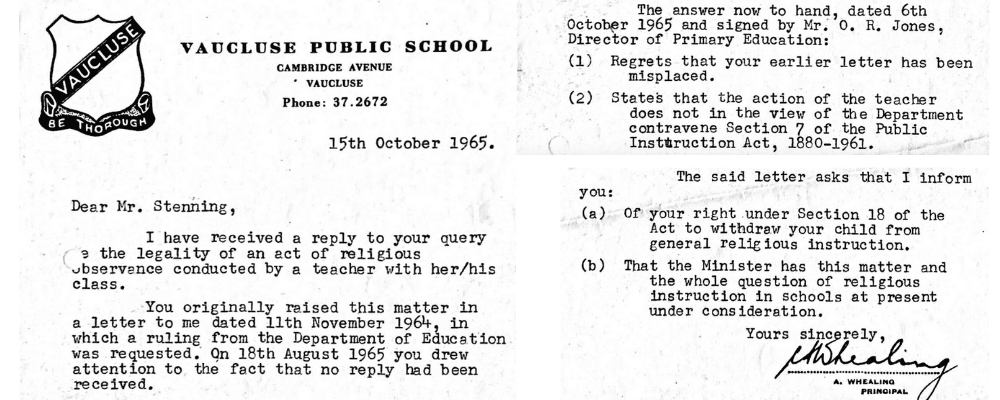
A letter from 1965 about ‘religious instruction’

Gordon Stenning recently sent us a copy of a very interesting old letter from 1965. The letter was sent to Gordon’s father and concerns his wish for his children not to receive ‘religious instruction’ at school. It was another 45 years until Primary Ethics came into being to provide an alternative to religious instruction in NSW public schools. Prior to that, some schools made Religion mandatory for all children or the children whose families did not opt for Religion were placed in ‘non-religion’, which could consist of doing nothing or colouring in, etc.

Gordon writes: I received your annual report recently and was pleased to see that Vaucluse Public School [in Sydney’s east] has a Primary Ethics program. I have attached a letter written to my father, who was interested in alternatives to religious indoctrination when I was at primary school. He would be delighted to have been aware of your success. Please feel free to pass this on to your volunteers to emphasise the timeless relevance of their invaluable volunteer work. My thanks and  congratulations to you and your colleagues for the advancement of public education in Australia.

Gordon continues: By way of background, my father had a lifelong interest in secular education and  ethics and was a member of a group I recall to be the Secular Educational Society, as well as the Australian Council for the Defence of Government Schools. He was a lifelong member of the NSW Humanist Society and at one time President of the Australian Humanist Society.

He was opposed to the idea of publicly supported religious indoctrination of primary school children and wanted my brother and I  to be excused from scripture classes on that basis. I recall that he was successful in that endeavour and we were allowed to sit in a  classroom with other children for the duration of the religious classes.

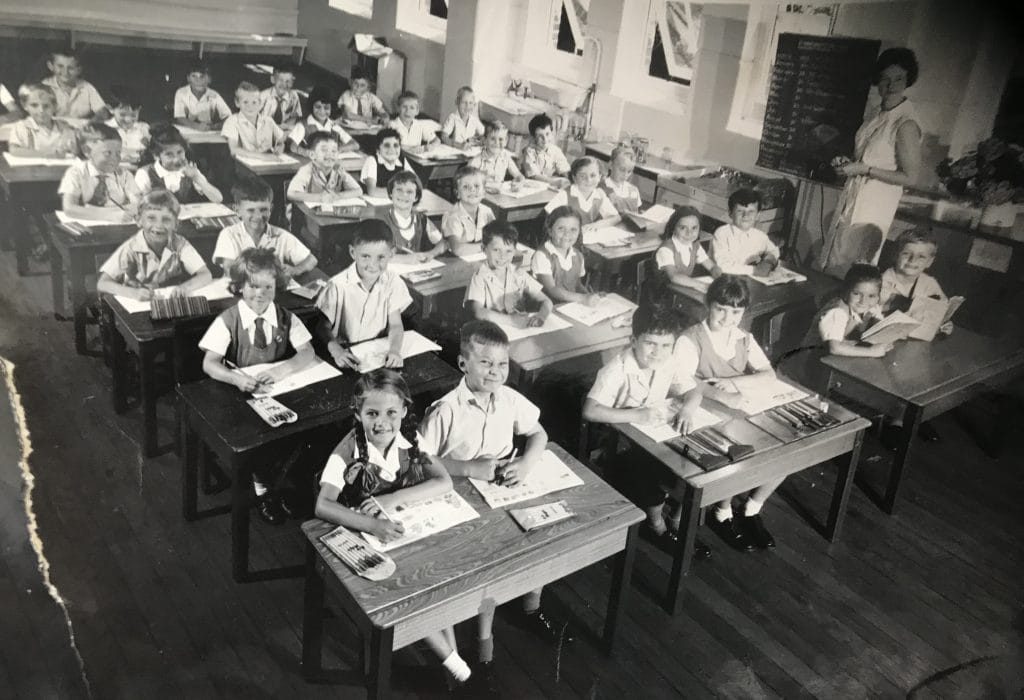
I have attached a photo of our year 1 class provided by one of my school friends, Stephen Gonski, who went on to become a primary school teacher.

Vaucluse Public School 1965 - Gordon is possibly the boy on far right front row.
Northmead – volunteer team of the year

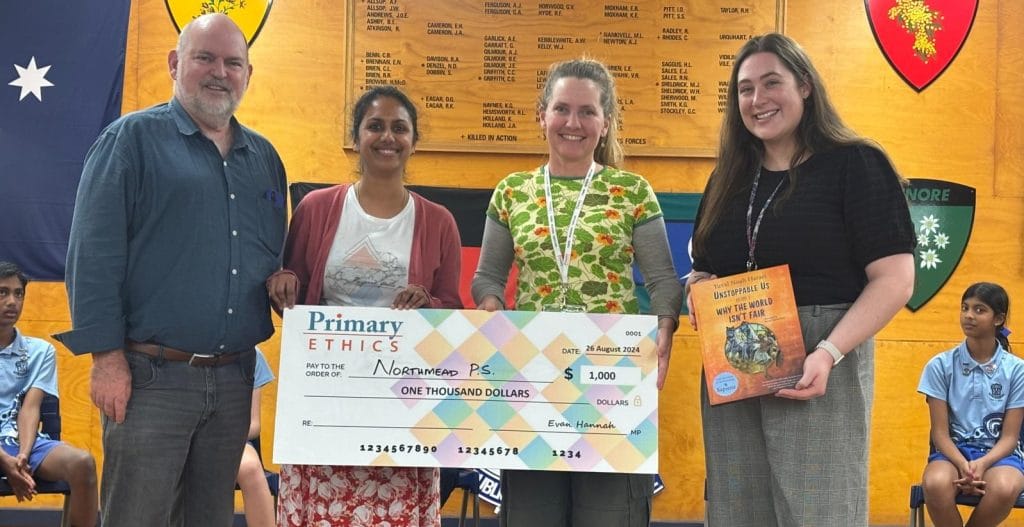
Northmead Public School ethics team were co-winners of the 2024 Kinghorn Volunteers of the Year award – in their school’s centenary year. At a recent school assembly they were presented with their $1000 winning cheque to go to their school library, as well as a hardback copy of Unstoppable Us by Yuval Noah Harari.

Evan Hannah, Primary Ethics, Mallika Ramaswamy, Veronica Roelink and the school librarian.

Northmead is a large, diverse school in western Sydney. The team have worked really hard at building a very strong, steady and committed presence to ensure that ethics is now offered across all years, having started with only two classes a decade ago. The reputation and popularity of the program has grown significantly and now almost one third of the school population is engaged in ethics lessons. The program is seen as an important part of school life and the team is well known and respected. With a diverse, committed and community-minded team, they’re not only teaching ethics — they’re building a lasting legacy

Our volunteers love the conversations and lessons we get to share with the kids and we especially love catching up each term to chat all things ethics and learning from each other's experiences. We all feel that we get as much from the experience of teaching ethics as we give to our students each week.

Former ethics coordinator Tania

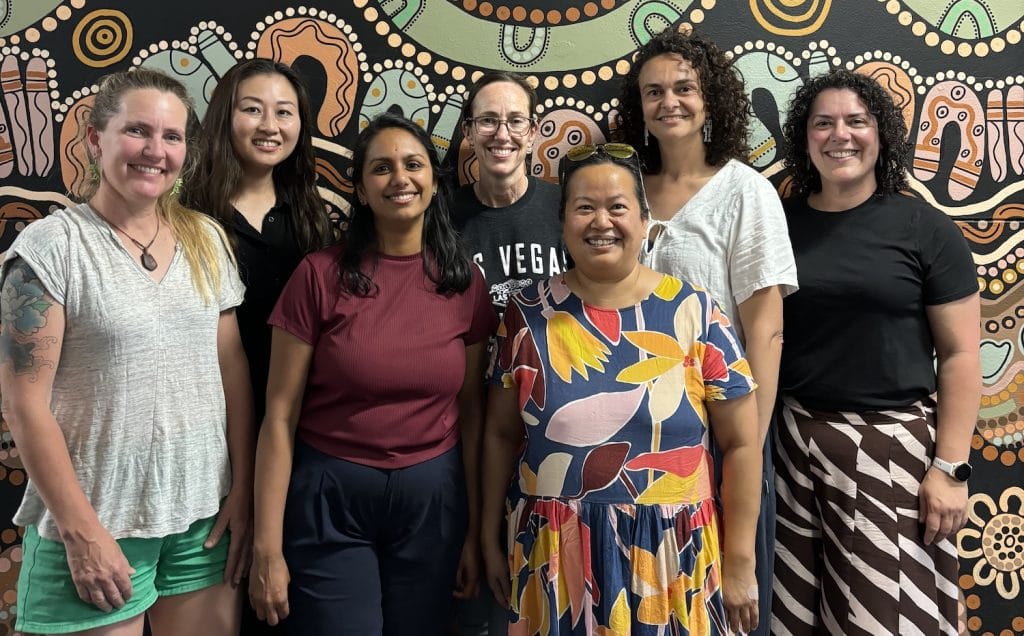
The 2024 Northmead ethics team, from left: Veronica, Christina, Mallika, Susannah, Myat, coordinator Tania, Elaine. Missing: Abha.

Volunteer Elaine

One of the team, Elaine Lee, told her story:

I have always wanted to volunteer in a program that has an impact for others. Taking a career break, I saw this opportunity  advertised at our school and jumped at the offer after reading up on the Primary Ethics program. My background is in Learning & Development and the program aligned with my values of instilling morale and critical reasoning, even more cause to volunteer with Primary Ethics.

What makes it great is that you don’t have to have facilitator experience! The training program is very well constructed, mine was led by Kelby Mason. 

Knowing that I can make an impact for my child and the children of tomorrow makes it very rewarding and fulfilling. The curriculum is current with today’s scenarios and it’s such a pleasure to work with a cohort of like-minded volunteers who  want to make a difference. 

I encourage anyone who has the opportunity to participate in this program. I hope this becomes the norm as part of a child's learning in primary and high school. Thank you, Primary Ethics!

Elaine Lee. volunteer at Northmead Public School

@Home bulletin for parents Term 3 2025

Welcome to @Home bulletin for Term 3 2025, where we let families know what your children, from kindergarten into secondary school, could be exploring in their ethics lessons this term.

Subscribe here to receive our @Home email bulletin once a term.

The topics we show below are based on classes which begin at the beginning of the year. Schools start at different times of the year, some lessons go faster or slower than others, some schools skip ethics for the first and last weeks of the term while others teach every single week – and so on. 

We hope the students talk about ethics with you at home – ask them questions about it!

If your child tells you they are discussing a topic you don’t see in this bulletin, you can also look at the Curriculum section of our website.

Kindergarten: Changing your mind
Sometimes we change our minds – and sometimes we don’t want to. This term, young students will explore what it means to change our mind and why we sometimes hold onto ideas even when new reasons are offered. Is changing your mind a sign of weakness or strength? They’ll practise recognising when it’s time to rethink and when it’s okay to stand firm – and why good reasons for having an opinion matter.

Stage 1 – Years 1 & 2: Stereotyping
This term, Stage 1 students will explore the idea of stereotypes. They’ll start with playful examples – like assuming all wombats are grumpy – before turning to more serious ones, such as assumptions about people based on how they look. They’ll consider whether it’s fair to judge someone before getting to know them and discuss why generalisations can be both helpful and harmful.

Stage 2 – Years 3 & 4: Intentions
When someone causes harm but didn’t mean to – is it still wrong? And what if someone tries to do something wrong but ends up helping? Stage 2 students will explore how much our intentions matter and whether we should judge actions based on what people meant to do or what actually happened. They’ll reflect on praise, blame and the difference between accidents and choices.

Stage 3 – Years 5 & 6: Stealing
Most kids know that stealing is wrong – but what counts as stealing and why is it wrong? Is it stealing to use someone else’s Netflix account? What about watching a fireworks display you didn’t pay for? Stage 3 students will examine different types of stealing and think about whether something can be morally wrong even if it’s not illegal – and whether stealing is always wrong in every situation.

Stage 4 – Years 7 & 8: Does it matter if everyone disagrees with you?
Teenagers are often encouraged to ‘think for yourself’ – but what happens when everyone else disagrees? Does that mean you’re wrong? This term, students will explore disagreement and confidence in our own views. They’ll discuss examples from food, art and ethics and consider whether some opinions are just a matter of taste – or whether it’s possible to be mistaken, even about your own point of view.

Each term brings new ideas and questions and we hope these topics spark interesting conversations at home as well!

Ethics teaching – a family affair

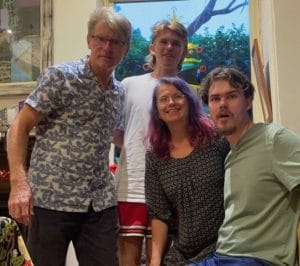
This year a third member of the Scott family has become an ethics volunteer. Peter Scott describes their journey to being an ethics family.

As ethics teachers, we often reflect on the benefits the Primary Ethics program has for our students. I have been an ethics teacher at Glenmore Rd Public Sschool in Paddington for 13 years now. Not only have I seen it benefit my many students over that time, but ethics volunteering has given my family a sense of common purpose and brought us closer together as we grow older.

In my second year I taught our younger son Lachlan, who was in Year 6. He was a little embarrassed to have his dad in front of his mates, although he got used to it as I brought my soccer coaching skills to bear. Our older son Alasdair had already left for high school when I started ethics teaching and felt a little left out of the conversations we were having at the family table.

Eight years later their mother Sarah became an ethics teacher too, partly to better inform her architectural work designing early childhood education facilities. She could see how much value I was getting from teaching the curriculum. Now she is part of our group of eight teachers at the school and absolutely loves it.

Sarah tells this story about witnessing the impact of ethics thinking skills in her class:

``One of my favourite ethics moments occurred with the lesson about the intent and structure of an ethics class. I followed the script, starting the class with random questions about unrelated topics which they could not possibly have answers for. They were all initially very puzzled and confused, but then one girl had a lightbulb moment and put her hand up with much animation. 'I know what this is!' she exclaimed excitedly, then in a conspiratorial voice she added, 'It’s an ethics class about ethics classes!' They all went 'Ahhhh'.``

Sarah Scott

After all these years the wheel has now turned full circle. Alasdair, who just missed out on being a student in the primary school ethics program, finally had some time to contribute after completing six years of university. We did the teacher training together in January 2025 – it was my second time and after 13 years it was completely different. Not only had the curriculum evolved, so had the teaching techniques.

So now Alasdair too has become part of our group of teachers and also loves it.

So we are an ethics teaching family! We sit down at the dinner table, speak one at a time, there are no putdowns and we build upon each other’s ideas … Okay, no, that doesn’t quite happen – we are a normal family and all talk at once. However, we  all recognise that the ethics program offers a really positive way of engaging with younger generations and listening to each other in order to build a future together.

Peter, Lachlan, Sarah and Alasdair Scott
From Kindy to Year 6 – ethics reflections

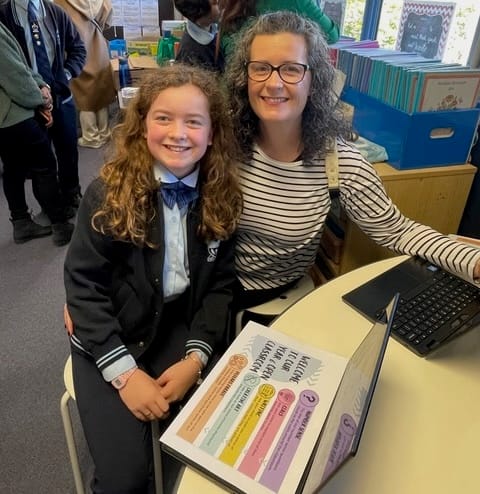
Emma Bonham has taught ethics to her daughter’s class from the start of primary school and now to the end. She reflects on “a remarkable time”.

I’ve had the most remarkable time guiding my little ethics group from Kindergarten to Year 6, with very few class changes along the way. I have been so lucky in this, because it has allowed me to see the immense benefits that children gain when they get the opportunity to have consistent exposure to the ethics program.

From almost before they can read and count, they are also learning how to reason, think, disagree with courtesy and keep their minds open. It fills me with joy to see them now, in year 6, able to grasp complex subjects with ease and dive into potentially divisive topics with eagerness and curiosity. Their minds are flexible and their natures open – they understand the ethics circle to be a place of safety and confidentiality and they do not hold back their opinions!

For me, the lack of an engaging non-scripture alternative was what drew me to ethics. I wanted my own children to have this option and when I started seven years ago, volunteers were (probably still are) in short supply. As soon as I reached a time when I could attend the training I did so. The training course pushed me out of my comfort zone in that I had been a stay-at-home mum for quite a few years by then and it seemed confronting to be surrounded by people I did not know, learning new things and making presentations in a group scenario. Once I got there, however, I realised that of course everyone running it was lovely and delighted to have volunteers eager to learn. And everyone volunteering had a desire to contribute to their local community that of course was similar to mine, so it became a fun few days.

emma-bonham-daughter
Emma and her daughter

Before I became a mum I was a university lecturer, but it was actually my parenting skills and the in-school reading group experience that came to the fore with ethics training. Teaching at uni is teaching adults, not crowd-managing kids in a classroom!

A firm voice, clear boundaries, an understanding of your next 30 minutes, these are the things that are important in an ethics class.

Emma

And the training is designed to get you to a place where you feel comfortable delivering a lesson and managing kids in their many moods. I feel I haven’t had to do terribly much classroom management this past year or so, because I’ve had the same kids for so long. A quiet reminder here and there that only one person talks at a time, but not much else. In earlier days, though, I found that adding levity to a situation worked wonders. When they were little I would tell them they needed to put up their hand to speak so my ears didn’t fall off if they all shouted at once. I often used positive reinforcement when they were young too, praising whichever child or side of the circle was showing me the best listening face, or congratulating them on their grown-up behaviour.

It has been great to see the kids learn how to disagree, sometimes passionately, but always with respect. More, though, for me, there is a huge sense of satisfaction in watching them change their minds and be able, and confident to articulate that they had thought one thing at the start of the lesson and had their mind changed by the ensuing discussion. I have always offered praise for this sort of flexibility and humility, because it’s such a great skill, to be able to concede with grace. In conjunction with this is the learning to not judge a scenario in the first instance, a compassionate skill that will stand them in good stead as they head to high school.

For myself, I’ve had to learn and perfect the ‘resting neutral face’! Sometimes the kids are so confident and so quick to ask a question it might be easy to judge or respond with my own bias, so it’s been a very good learning curve for me, to learn to restrain that first response and give them the space to express their views.

Emma

One of the joys I wasn’t expecting is the little lift I get when one or two hang back after class or walk into the playground with me, because they’re not quite ready to stop talking about the topic of the day. This is a big deal, given that my class is right before recess and they generally shoot off into the playground! I know they’ve had a great lesson if they want to keep talking. Also, a few times I’ve had the in-class teacher afterwards comment on the great topics and how interesting they are to listen to, which is always good feedback for the program. Honestly, I can’t remember all the way back to Kindy, but recently my group have loved the topic on Midas, the story of the man who stole from a pharmacy for medicine for his sick wife, and the question of whether to prioritise helping people nearby or far away.

By far the most wonderful reward after all these years, though, came very recently. My daughter got in the car after school and began telling me about her day, as usual, and mentioned that the class teacher had been using AI to mark assignments and various other classroom tasks. She told me that she and a couple of her classmates, who are in ethics with her, began a whole-class discussion about AI, ‘just like in ethics last week’. My grin could not have been bigger.

There’s personal satisfaction, of course, in realising they retain the knowledge, but also a sense that they will go into high school with these important skills and an ability to think with flexibility that they might not get in any other part of their learning. What a fabulous note with which to end my time with them!

Reflecting on my seventh ethics year

How to better regulate playground and global tensions? Have children take ethics, says experienced volunteer Katie Rockliff.

It’s the last week of Primary Ethics in my seventh year of volunteer teaching. I’m headed to class and reflecting on the year that’s been.

While walking and enjoying the embrace of early summer, ruminating on the value of school ethics as a program, I’m also listening to a neuroscience podcast (as you do). Today’s is with guest speaker Dr Ethan Kross, Professor of Psychology at the University of Michigan, USA, and director of the Emotion and Self-Control Laboratory. In closing, Dr Kross references how in his Lab they often define wisdom as: “the concept of how well you are able to deal with social situations involving uncertainty”. He goes on to discuss the art/ science of entering conversations not to try to change others’ minds, but rather with a state of humility and curiosity and genuine interest – and first and foremost (I’m paraphrasing) trying to understand the other person or group’s point of view.

katie-rockliff-smiling
Katie Rockliff

And it occurs to me, on this walk to class on a sunny morning, that in an era of much socio-political divide, economic and climate turbulence, fake news and the rise of AI, that honing these skills is exceedingly useful – perhaps more so than ever before. This is where listening to Dr Kross and my ruminations on the value of school ethics collide…

Of all the subjects at school, ethics is perhaps the only one where no rights or wrongs, no dogma or rules apply.

One is simply encouraged to think. To think deeply.

To be open enough to both articulate, consider and review or reconfirm one’s own thoughts.

To truly listen to others. And to constructively build on their thinking.

And to collectively seek, if not consensus, a place of common ground and positive way forward for all.

It’s a skill many school playgrounds, corporate boardrooms and politicians would benefit from! And an empowering skill for parents to know their child can possess. To know that their child can, as Dr Kross defined it, “navigate social situations involving uncertainty” (let’s just call that life shall we?) – to navigate it well.

As a volunteer teacher from Kindergarten through to Y6, there is one question the curriculum has asked me to ask the students on repeat … and that question is “why?

“Thank you for sharing your thoughts. I’d like you to please share with us why you think this?”

This, I see now, is my why. This is why I teach ethics. And why I see value in all students taking ethics.

Not to be told what to think but how to think for themselves.

Not to learn how to follow but to learn the value of respect.

Not to learn only one right answer but the ability to adapt to find new answers.

Not to own the conversation but to share in the conversation.

And to learn that there is always more learning to be done and absolutely always someone that knows something you don’t.

katie-rockliff
Katie Rockliff

And lastly but by no means not least, the awareness and desire to work with others, in some way, for the greater good.

It’s a sunny view of what the next gen, through the power of their own thinking and listening, can achieve.

And as an answer to my ‘why’ and what I’m glad to be a part of – that’s the greater good of ethics education that I’m thrilled exists.

****

Katie Rockliff is a communications consultant, small business owner and volunteer ethics teacher at Darlinghurst Public School 2018-2024.

Arpana: ‘So much more than I ever expected’

“I started as an ethics volunteer when my eldest daughter was in Stage 2 and now she’s at university! Teaching ethics has given me so much more than I ever expected.”

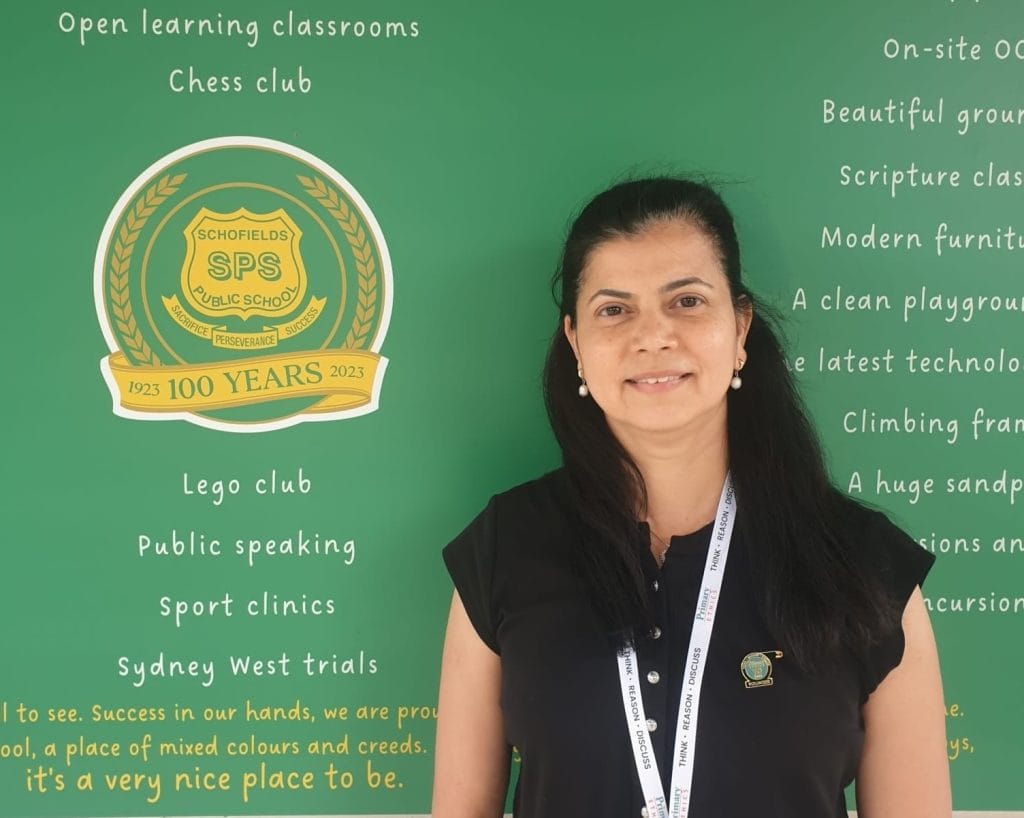
Arpana writes about her journey as an ethics teacher.

“When my daughter started school, I was looking to get involved in the school community. I became an active member of the P&C but wanted to find other ways to apply my interests in children’s learning for life skills. Then, one day, I saw a callout in her school newsletter for ethics volunteers. The idea of contributing to children’s learning in this way was incredibly exciting, even though I had no prior experience in the teacher role. Thankfully, the process of signing up was extremely simple. I submitted my resume, attended a weekend training workshop and learned how to deliver the scripted lessons. The training made it clear I didn’t need to be an expert. Everything I needed was provided and we even practised running discussions. I couldn’t wait to try it with real students!

“I still remember the day I taught my first ethics lesson. I was nervous about meeting the students and running an interactive lesson, but the kids were so engaged. They jumped into the discussions straightaway and it was wonderful to see how much they enjoyed it.

arpana-schofields-public-school
Arpana at the school where she teaches in Sydney's west.

The principal asked a group of students what the best part of their day was and there was an overwhelming response of 'today’s ethics lesson'!

Arpana

“Later that day, the school’s Twitter page shared an update. The principal had asked a group of students what the best part of their day was and there was an overwhelming response of “today’s ethics lesson!” This served as a major confidence boost for me and from then on ethics became a highlight of my week.

“Currently, I dedicate just 30 minutes a week teaching ethics, although this has varied over the 10+ years I have been a volunteer. One thing that has stayed constant is how valuable each lesson is — not just for the students, but for also for me. I’ve been pleasantly surprised on multiple occasions by how thoughtful and mature the student discussions are. They’re learning to be open-minded, to listen to others’ perspectives, to share their own in a way that’s respectful. It’s inspiring to see them build on each other’s ideas and sometimes even change their minds after hearing someone else’s point of view.

“There have also been moments that really stayed with me. Once, I missed a class because I wasn’t feeling well. When I came back the next week, the children were all asking, “Where were you? Why didn’t you come?” I explained I’d been unwell and one of them piped up, “That’s not good — why didn’t you send your husband?” It made me laugh, but it also hit me how much they valued ethics lessons. They don’t see it as being about me; it’s about the lessons and the conversations we share.

“Over the years, I’ve also received more formal recognition for my efforts. I was honoured as a nominee for the NSW Volunteer of the Year Awards in 2018. Such credits really make me feel like I’m part of a larger team, with the shared vision of bringing these ethics lessons to many students.

“Watching my daughter grow up has been a reminder of how quickly time passes, but ethics has stayed a constant part of my life. It’s such an inclusive program, not tied to any religion or culture, which is what makes schools the perfect place for it. I hope these lessons can reach as many kids as possible because they’re learning skills that will stay with them for life.

“Teaching ethics has taught me to see things differently, to listen better and to appreciate the diversity of thoughts that young minds bring. It’s been an incredible journey and I’m so grateful to have had the chance to be part of something so meaningful.”

Find out more about volunteering >>

Graduating to high school ethics

Adam Bennett and Billie Acosta, after many years of teaching ethics in primary schools, have finally graduated to teaching high school ethics.

Billie and Adam have both taught ethics to their own children for over seven years, teaching all stages at primary school as their kids grew up. This year, they began teaching ethics at Smith’s Hill High School in Wollongong. Both have children at the school and in 2024 the school began offering ethics to year 7 and 8 students for the first time.

'More challenging...'


I’ve certainly appreciated the evolution of responses, when it comes to teaching high school ethics.

smiths hill

Adam Bennett has always enjoyed teaching ethics but was a little nervous about high school classes. “Even the most engaged children become more challenging as they get older, gain experience and develop more confidence. It can be hard to keep students engaged and pace the lesson just right to keep them involved. You never know which topic will captivate them and which will bore them.”

The Primary Ethics high school training observes how 11-to-13-year-olds can appreciate more advanced material and techniques and helped prepare Adam for the more self-assured students.
smiths-hill-students
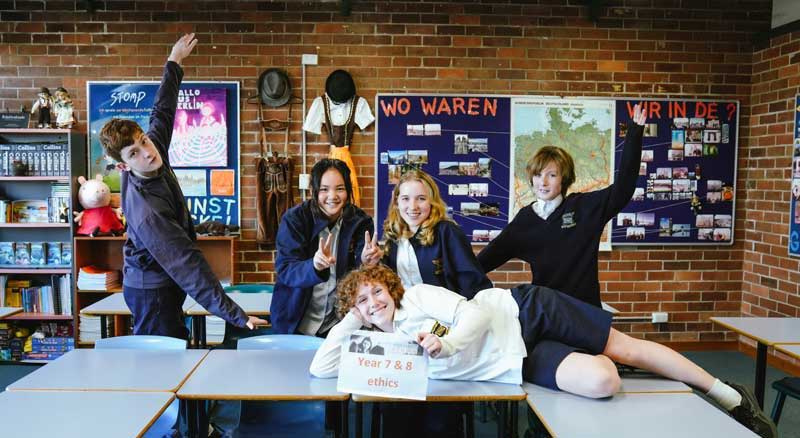
Some of the ethics class from Smiths Hill High School

Even so, both teachers are finding that employing the new discussion moves, introduced with the high school curriculum, can be hit-and-miss. They notice that there seems to be an implicit consensus among the students that the point of ethics classes is to argue. The year 7 and 8 students seem to enjoy verbal sparring, as they debate their points of view. But with occasional reminders of the guidelines for healthy discussion, they do respectfully disagree, giving reasons and examples.

Billie Acosta has noticed that building on others’ points remains a popular strategy for Stage 4 classes, which have discussed topics including the environment and custodianship vs. ownership, politics and the media, social and cultural responsibility, human longevity and how it affects society, mindful communication and respect, among others. However, not all topics receive rave reviews from the students. As Billie recounted, “If you’re a fan of the pithy response, I offer you this from one of our students after one lesson – ‘some topics have overstayed their welcome!’ I don’t disagree.”

Is this the age where it happens and we, as ethics teachers, get to witness it first hand?

Both teachers find that the new discussion moves serve as a crucial fallback when organic debate is not flowing freely, but timing can be very important. Guiding the class in this way is not always aligned with class feeling about the topic and can just as easily stall the conversation as prompt fresh ideas. One of the main aims is to make sure the lesson continues to be a safe space: students are safe to disagree, provide their reasons and to express their point of view. Arguing for one side of an issue or another is an important element of the class, which many of the students may have learned from primary school, and it can be challenging to keep some students from arguing all possible angles of a given question.

billie-adam
Billie and Adam

We realise there’s a need for curriculum and lesson plans but sometimes this may not leave the time or scope to tease out nuances in a particular discussion. Obviously, the demographic plays a part in student responses and Smiths’ Hill is certainly a specific demographic, as an academically selective school. Watching the students subconsciously sort through the issues and build on or try to refute each other’s ideas remains hugely satisfying. Occasionally, however, the discussion grinds to a halt.

Adam and Billy say: “As teachers, we often learn some interesting new slang and sometimes a little more about our students and the culture they live in, during these ‘brick wall conversations’. Sometimes we get stuck here and have to limp back to our questions and discussion moves, to get things moving again. Sometimes, the students surprise us with their lateral thinking and this level of understanding leads to a whole new class of ethical discussion.”

Adam and Billy agree: “Teaching ethics is a rewarding way to help children become skilled critical thinkers, able to identify and evaluate different opinions, formulate cogent arguments and disagree respectfully, as well as learning from each other.

Although we got involved to teach our own kids, even after 7+ years, teaching ethics is still great fun and we’d recommend it to anyone!”

‘This is for me!’ Ramya’s journey as an ethics teacher

Ramya is a volunteer ethics teacher in western Sydney. This is the story of her journey.

I still remember the day I saw a Primary Ethics leaflet in my child’s school bag. As I took it in my hands and read it all through, I felt straightaway, ‘this is for me!’

I like helping people and was already volunteering at our school P&C. When I heard about ethics and read about the topics, I was curious. My favourite activity is spending time listening to my children, so this opportunity to teach ethics to children looked perfect to me.

ramya
Ramya

I immediately called the number and spoke to the Primary Ethics coordinator, who then gave me all the information about applying and training. It took me a long time, however, to take the next step and start my journey with ethics – but I did it in the end.

To begin with, I did my training, which at that time was available only on Zoom due to Covid. At first I was very anxious, as I don’t have any experience in teaching and, in the interview, I’d understood that I need to manage the classroom too. The training was a bit challenging at first but I suppose anything can be challenging at the beginning.

My main issue was my accent, as I was new to Australia. I was nervous about my accent and also not sure whether I would understand the students from different backgrounds.

Yet the trainers were so good and made me feel comfortable and confident even though I’d never had any experience of teaching. I had many doubts, but once I finished the training I was confident and clearly understood my ethics teacher role. And once I started my first class, I felt relieved with no doubts at all and began to enjoy each ethics day as my day. I completely fell in love with ethics!

I now volunteer at my children’s school every Wednesday morning. As an ethics teacher, I basically follow the script, which makes it easy and gives us clarity on what we have to do and where we are going in the lesson. Usually a class takes half an hour. That’s all! Thirty minutes to actually volunteer. I prepare ahead of my class by spending an hour reading, to understand the topic and the lesson.

Following the scripts and being neutral is very important. In the classroom I start the topic and read a scenario, using modulation of tone to make it interesting. Then ask the substantive questions and encourage the children to participate.

anuya-ramya
Area manager Anuya Velpanur with Ramya as she received her 3-year volunteering certificate.

I’m just a facilitator in the class, listening and engaging with them to open up and share their ideas, plus reminding them about the rules. Managing the class was a bit challenging at first but once you know the class and the students, you get to know how to manage them. Or we can ask for the school teacher’s help if required (often there’s a teacher in the classroom during my ethics lesson, quietly doing their own work).

I teach my own kids, which for me is a good experience.  I discussed it with my kids before my first class and gave clear instructions to them how to behave. So far, my kids like me to see me as a teacher in their school. Watching them participate in the discussions has been an added perk.

From being an ethics volunteer, I’ve built confidence in myself that I can do something valuable while being a stay-at-home mum. Teaching ethics helped me get over some of the fears I had and I started to see the world from all aspects, not just with 'Mum-eyes'.

Ramya

The best thing about volunteering as an ethics teacher is the opportunity to be in the class with kids – and also growing to understand the topics. To listen and encourage them to participate. I enjoy seeing the way young children think and make decisions. When I saw them changing their opinions and giving reasons for that, that was my moment!

I also want to say I was nominated as a volunteer of the year 2023 NSW from Primary Ethics which was unexpected and felt good. And I enjoy the great support I get from all the team of Primary Ethics.

At the beginning I started volunteering for my kids as I was keen on sending them to ethics. Now after my almost four years of experience,  I can surely say that it has opened up many benefits in my own life such as confidence, peace, understanding different perspectives and giving clarity to my thinking.

Choosing to volunteer for ethics has changed my life for the best, cleared all the doubts I had before about myself and given me clarity about what I can do. At the end of the day, the very best thing is to hear the children say, “she is my ethics teacher”.