Category: Parents

Brilliant Bangalow

Claire McLisky has been the ethics program coordinator at Bangalow Public School in the far north of the state since 2019. Claire recently to the local Bangalow Herald about the value of ethics education.

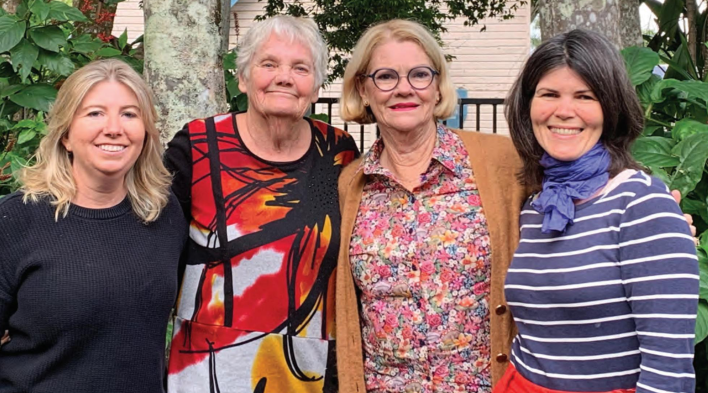
Some of the Bangalow team: Angela Saurine, Jane Barker, Deborah Green and Claire McLisky.

“I started teaching ethics in 2017, when I signed up in anticipation of my daughter starting kindy. Since then I have taught all four stages and have loved getting to know the school and all the smart, cheeky, funny and thoughtful children who have been in my classes. I’ve been the Bangalow coordinator since 2020 (a difficult year!) and am enjoying building and supporting my team of teachers as they discover the delights and challenges of ethics teaching.

Ethics at primary school level is important for two reasons. Firstly, it gives students an opportunity to develop skills that are essential in our complex world – such as critical thinking, giving evidence-based reasons for their opinions, being able to discuss and disagree with others respectfully and how to make well-considered ethical decisions.

Secondly, without the Primary Ethics program, the students who opt out of Religious Education would have to spend a half hour of their school time doing ‘meaningful activities’ in non-scripture, which mostly seems to just mean colouring in or chatting to their friends.

“Of course, some parents prefer for their students to do non-scripture, which is their right, but many more choose to enrol their children in the ethics program.

Ethics at Bangalow Public School is very popular! Around 60 percent of all students opt for ethics.

Claire McLisky

In early stages (Kindy and Years 1 and 2), the classes focus on being curious and asking questions, with our trained facilitators employing storytelling and games to get the students engaged. Topics include the difference between knowing and guessing something, changing your mind, telling the truth. In later stages (Years 3 and above), students explore more complex ethical questions, with stories, contemporary issues and real-life scenarios forming the basis of their discussions on issues such as how we should treat living things, voting and fairness in our society.

“Primary Ethics has done a lot of research which shows that our teaching method – using a ‘community of inquiry’ approach where students sit in a circle and share their ideas with each other – improves children’s general reasoning skills as well as their ethical reasoning capabilities.

“We would love to welcome some new volunteers to our team. There are so many benefits that come from teaching ethics – from the chance to engage with young people in a meaningful way and feel connected to the local community, to the opportunity to give back, to the glow that comes from having a really good discussion and having our own assumptions challenged.

“We think our ethics education program is brilliant!”

@Home bulletin for parents Term 3 2024

Welcome to @Home for Term 3 2024, where we let families know what your children, from kindergarten into secondary school, could be exploring in their ethics lessons this term.

Subscribe here to receive our @Home email bulletin once a term.

The topics we show below are based on classes which began at the beginning of the year. Schools start at different times of the year, some lessons go faster or slower than others, some schools skip ethics for the first and last weeks of the term while others teach every single week – and so on. 

We hope the students talk about ethics with you at home – ask them questions about it!

If your child tells you they are discussing a topic you don’t see in this bulletin, you can also look at the Curriculum section of our website.

Kindergarten: Disagreeing
Disagreements happen all the time, both big and small. In Term 3, our Kindergarten students will dive into the ethics of disagreeing with others. Is it okay to tell someone they’re wrong? Are there good and bad ways to voice disagreement? Our curriculum aims to help children think about their ideas and those of others. By listening to different viewpoints, especially ideas that challenge their own, students learn that respectful disagreement is an important part of learning together.
Later in the year, they’ll tackle topics like owning up and being truthful.

Stage 1 – Years 1 & 2: Being brave
In Term 3, our Stage 1 students will explore what it means to be brave. Can you be brave if you aren’t afraid or does being brave mean overcoming fear? They’ll also think about a special kind of courage – moral courage. When is it important to stand up for what we believe is right?
Later in the year, students will think about saying sorry and forgiving people.

Stage 2 – Years 3 & 4: Understanding diversity
In Term 3, our Stage 2 students will reflect on some big questions about cultural diversity. Why do different groups of people have different laws? Is it because they have different moral values or is something else going on? And is it fair that the punishments for crimes sometimes differ? For example, in Australia, we might fine someone for stealing, while in traditional Inuit culture, they might banish the person from the tribe.
Later in the year, students will reflect on whether we should always strive to avoid harming living things.

Stage 3 – Years 5 & 6: Getting ahead in sport
In Term 3, our Stage 3 students will discuss the ethics of sports and unfair advantages. Athletes use various methods to gain an edge, but what exactly counts as an unfair advantage? Is loading up on carbohydrates before a race fair? Drinking coffee? Training at special high-altitude camps? Wearing a special swimsuit? Or taking performance-enhancing drugs?
Later in the year, students will consider whether we can blame people for their actions when they have no other options.

Stage 4 – Years 7 & 8: Lizard people and fake news
The internet is full of all kinds of information, some of it quite strange. How important is it, therefore, to think carefully about what we believe? Why do so many people fall for conspiracy theories? Why might politicians spread fake news and does fake news harm democracy? Do media organisations have a duty to combat fake news? In Term 3, our Stage 4 students will dive into these questions, learning how to navigate the complex world of online information responsibly.
Later in the year, students will discuss the ethics of being ignored and whether it’s important to be true to oneself.

Twelve years an ethics teacher

Peter Scott has been an ethics teacher at an inner-Sydney school for more than 12 years now. In this blog post, Peter looks back – and into the future.

I have been a Primary Ethics teacher at Glenmore Rd PS for 12 years now and I still wake up each week with the excitement of exploring the curriculum with new students. In my early years I used to get butterflies at the thought of managing a group of students. The school’s teachers and Primary Ethics colleagues helped me with lots of tips and built up my confidence. I have taught three stages and seen the curriculum evolve over the years, becoming easier to deliver and more effective in the discussions.

I recently started a new topic with my stage 3 class, Interacting with AI. We were all excited to discuss something so important. About 10 minutes in, I asked the class to tell me what they thought artificial intelligence was. Hands shot up around the circle, but before I could choose a student, a voice calmly rang out with a full description. The class went very quiet as calling out was breaking our class rules.

Peter Scott

More disturbing though was that the voice was not one of my students, it was Siri!

I use an Ipad to deliver the curriculum and Siri had been listening in. When the question was asked she couldn’t contain herself and jumped into the middle of the discussion. It was quite spooky and seemed entirely appropriate, although it took several minutes to get the class calmed and back on track.

So now I have an extra student in my class. I have asked Siri to please observe the class rules before she decides to call out again!

Ethics @Home bulletin for parents Term 2 2024

Welcome to term 2 @Home bulletin for parents  – and a special welcome to those of you whose children have only recently commenced ethics classes.

Our @Home bulletin lets you know what your children will be discussing in their ethics lessons this term. We hope the students talk about ethics with you at home – ask them questions about it! These topics are relevant to us as adults too. We’d love to hear of any good discussions you have.

Subscribe here to our @Home email bulletin.

Here’s a brief look at what your children, from kindergarten into secondary school, could be exploring in their ethics lessons this term. 

The topics we show you below are based on classes which began at the beginning of the year. Schools start at different times of the year, some lessons go faster or slower than others, some schools skip ethics for the first and last weeks of the term while others teach every single week – and so on. 

If your child tells you they are discussing a topic you don’t see in this bulletin, you can also look at the Curriculum section of our website.

Kindergarten: Doing harm without meaning to 

Accidents often happen and sometimes things are broken or someone is hurt. In Term 2, students in Kindergarten talk about accidents and responsibility. They’ll talk about the difference between doing something wrong on purpose and by accident – and whether it’s okay to punish someone who does something bad by accident.

Later in the year, students will consider whether it’s okay to hide a mistake by making up a story. 

Stage 1 – Years 1 & 2: Laziness 

We can all be a little lazy from time to time. In Term 2, our Stage 1 students explore the ethics of laziness. They’ll think about what counts as being lazy (for example, is there a difference between relaxing and being lazy?) They’ll also consider what, if anything, is wrong with being lazy.

Later in the year, students will talk about when it’s important to share with others. 

Stage 2 – Years 3 & 4: Should we keep animals in captivity? 

In Term 2, our Stage 2 students ponder the ethics of keeping animals in captivity. They consider whether it matters whether the animal is kept in a zoo or a circus and whether it’s okay to treat animals and people differently.

Later in the year, students will think about bragging and taking the time to imagine how others are feeling. 

Stage 3 – Years 5 & 6: Beliefs, opinions, tolerance and respect 

People have all sorts of beliefs and opinions – about things like smoking, politicians, the moon landing, aliens, ethics and so on. In Term 2, our Stage 3 students reflect on how tolerant and respectful we should be of other people’s beliefs and whether people are always entitled to their beliefs.

Later in the year, students will consider the ethics of how they can now use artificial intelligence, like ChatBots. 

Stage 4 – Years 7 & 8: From moon trash to migrant horses 

In Term 2, our Stage 4 students discuss some big questions to do with environmental ethics and what caring for our land can mean. As part of this, students consider custodianship, land ownership, littering and introduced species.

Later in the year, students will discuss the ethics of being ignored and how to navigate fake news. 

‘Each lesson is an adventure’ – Lee’s story

Lee Edgerton’s story of volunteering as an ethics teacher at his daughter’s school in Sydney’s north.

“Volunteering as a Primary Ethics teacher has been one of the most enriching experiences of my life. It’s been a journey that has not only allowed me to bring such a valuable curriculum to young minds but also to learn and grow alongside my students.

Their unfiltered perspectives often challenged my own, pushing me to view situations through a lens of simplicity and honesty.

While Primary Ethics readies their volunteers with in-depth training, nothing can prepare you for taking those first steps into the classroom. From my first lesson with my Stage 1 class (Years 1 and 2), there were students absolutely soaking up what I was sharing. Teaching ethics isn’t about conveying morals; it is about nurturing their ability to find their sense of right and wrong and helping them understand the importance of values  and principles in everyday life.

Each lesson is an adventure, for the children and me. In term 1 we explored the theme ‘pride’ through storytelling, interactive discussions and visual aids. While they were thinking deeply about what it means to be proud, I was learning about myself and about how I can engage with my own children on these topics in a better way.

It was very rewarding to see how involved the students were. With six-to-seven year olds, you need different strategies to manage the class, so that you can cover the topics and reach every student. But by the end of the first term, when a child was being noisy and distracting, their classmates would tell them to pay attention. It was amazing to see students so interested and encouraging others to be interested too.

As much as I was there to teach, I found myself learning from these young philosophers. Their unfiltered perspectives often challenged my own, pushing me to view situations through a lens of simplicity and honesty. Not only that, but the positive Primary Ethics approach to managing behaviour in the classroom has given me tools to use at home with my own children.

Volunteering has given me a profound sense of fulfillment. Knowing that I’ve played a part in helping these young minds to develop their reasoning skills – and their compassion – is rewarding in itself. It’s a privilege to contribute to their journey of ethical development and to plant seeds that can grow into strong, ethical foundations for their future.

Where magic happens

I’m very grateful for the opportunity to make a difference in the lives of these children. While I’ve sometimes felt out of my depth, I’m often reminded that’s where the magic happens. I look forward to continuing this journey of teaching, learning and growing together.

Teaching ethics to primary school children is not just an educational endeavour – it’s a way to build a better world, one lesson at a time. And for anyone considering volunteering in this capacity, while I can say it comes with its own challenges, I can absolutely also say it will be one of the most rewarding experiences you can have.

Please feel free to reach out to me if you’re thinking about volunteering to teach ethics, via communications@primaryethics.com.au”

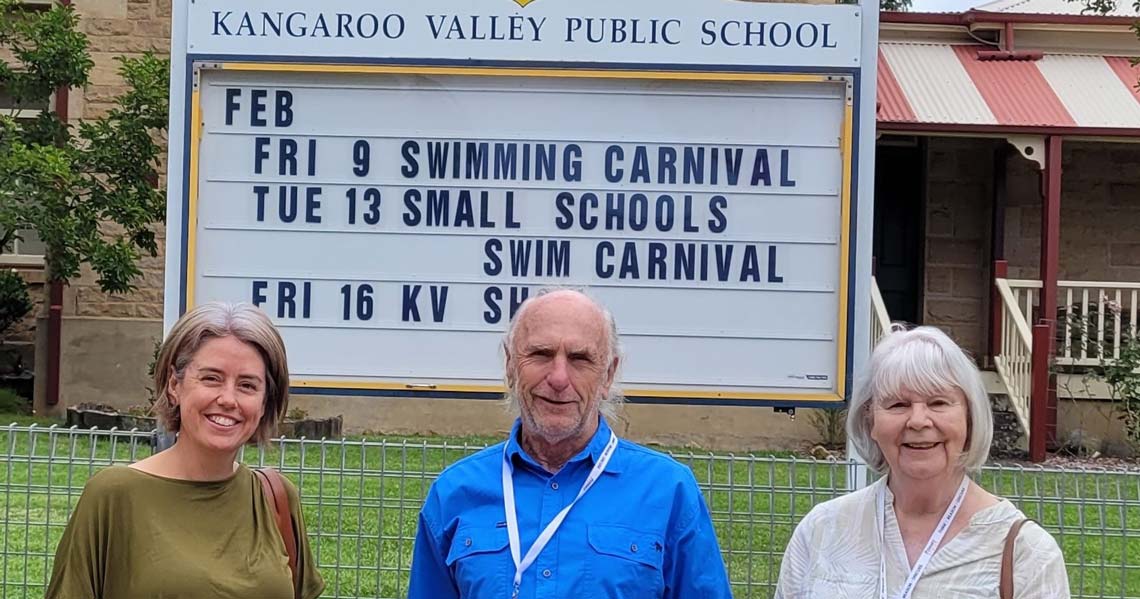
‘It’s a privilege’ – Kangaroo Valley ethics

Every Thursday in term time, three trained volunteers teach ethics at Kangaroo Valley Public School. In ethics classes, children from kindergarten onward are guided to develop their skills in critical thinking, ethical reasoning and respectful discussion. Ethics lessons explore everyday ethical issues such as truth and lying, getting even, being fair or unfair, cheating and friendship.

Michael Cox is entering his seventh year as an ethics volunteer. He started out teaching his grandchildren but they’ve moved on. Michael stayed because he wanted to keep contributing within his community and finds the course materials “excellent” and personally interesting.

“The course explores how we humans derive our sense of right and wrong and our principles such as honesty, fairness and equity, how we can live together in a way that facilitates human flourishing and wellbeing. We could do with a bit more of all that,” Michael says.

The capacity to evaluate

‘In these times where there is increasing blurring of what’s true and what’s not and lapses of ethical behaviour in some of our social institutions, I think children need to be equipped with the skills to reason out ethical dilemmas and to engage in respectful dialogue with others. And to develop the capacity to evaluate and make their own considered judgements about what they see, hear or read and to become proficient at spotting bias.”

Irene Dungey has also been volunteering for several years – in fact she taught ethics in Dapto and Port Kembla before moving to Kangaroo Valley.

“Initially, I was retired and searching for something to volunteer for in the community. When I heard about the ethics program, I was excited at the prospect of teaching something I believed in. I found my initial training excellent and we were given feedback that was very useful.

“When the fires went through the valley in 2020/21 our house was destroyed. By the time I was back on my feet I heard that ethics had started at our local school and here I am.”

Gai Halcrow also initially began teaching ethics outside of Kangaroo Valley. “I first volunteered for Berry Primary School when my child was in preschool. Then when he started at our local small school here in Kangaroo Valley, I joined Michael and started teaching my son as part of the kindergarten class. We are now up to Grade 4.”

Each of these volunteers greatly enjoys teaching ethics.

Says Michael, “I sometimes feel quite inspired by the ability of the children to address complex issues … when a child comes up with an insightful way of looking at a problem we’ve posed and others pick up on this and make a further contribution, even though there may be no clear black and white answer.

“I feel I’m making some humble contribution to the emerging generation of good citizens and community members. I would hope they feel that it has been of benefit to them in developing ways of figuring out what’s okay and why it is okay – or not. And we have a bit of fun.”

Irene echoes this. “The lessons constantly make me rethink some of the ideas I had about certain topics and hearing the children’s perspective is encouraging to me.

“I enjoy the interaction with the students. Giving them the space and time to think about the reasons for their decisions is, I believe, a big step towards them understanding and thinking more deeply about the question. Hearing what others think and say can guide their mind to thinking in another direction, other possibilities.”

What are Gai’s reasons for volunteering with Primary Ethics? “Firstly, volunteering with small schools is a really lovely way of being a part of this community. Secondly, I’m an aid worker by profession and I’ve always appreciated the values and ideas behind ethics and the types of discussions we have around social justice issues. Thirdly, the kids! Each ethics circle as the years have progressed, they bring their own perspectives and ways of thinking through topics.”

Pro-social behaviours

Michael explains how he came to be an ethics teacher. “I had never taught children before, but as a grandparent I have a personal interest in fostering the ability of children to think for themselves, solve problems in living and develop pro-social behaviours. Having retired from work I had the time available.

I undertook a two day in-person training course [there are also fully-online training courses]. I did not find the course material difficult, I think it is excellent and well thought out.”

Michael estimates that he spends 30 to 60 minutes in preparation each week, a bit of time printing out material [some people read the lesson scripts from a tablet], 20 minutes each way in travel. Kangaroo Valley’s class time is 50 minutes.

“The classes are discussion-based and follow a clear format provided in the lesson script each week. I don’t impose my own views but try to draw out ideas from the children using the course material provided. Questions are posed, stories read that raise issues for consideration within the group or sometimes in pairs.”

Irene feels that being an ethics teacher is a privilege. “To have the opportunity to teach children ethics is a fulfilling and rewarding experience.”

Gai agrees. “It’s a privilege and it’s great to have our little valley school be able to support this program and to have our numbers grow to the point we can offer three classes this year.”

In fact there is demand for a fourth ethics class at Kangaroo Valley Public School in 2024 but all ethics lessons require a volunteer to teach them. If you have a spare hour a week on Thursdays, find out more about what is required on our website. To chat about options, call the helpdesk between 9am-5pm on weekdays on (02) 8068 7752.

Ethics arrives on Lord Howe Island

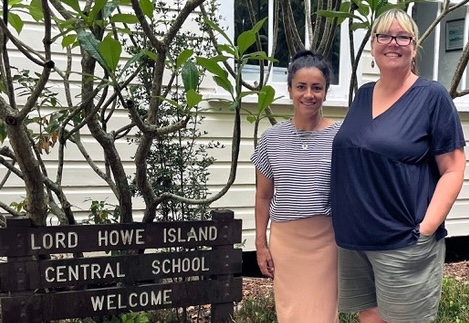
Our most isolated program – Lord Howe Island Central School (LHICS) – commenced its first ever ethics program in Term 4 2023. Lisa Ralph and Lucille Wilson, friends who are both school parents, trained as ethics teachers and kicked off the program. LHICS is a tiny school with just 41 students from Kindy to Year 6. In its first term, ethics enrolled a third of the student body! The island does not have mobile coverage, but it does have an ethics program.

Lisa moved to Lord Howe 12 years ago and with her husband runs the Dive Lord Howe shop. Lu came to the island in 2021. Lisa and Lu were very enthusiastic about bringing ethics into their school as an alternative for the non-scripture students. In the past, students who opted out of scripture would sit in a separate room together doing colouring-in, hardly a ‘meaningful activity’.

A unique island

People living on the island find themselves in a unique environment. There are countless advantages to the tranquillity and beauty; there are also inherent challenges in the isolation. Note, though, the Primary Ethics remote online training model works really well!

Lu says that “offering Primary Ethics is an important part of ensuring our kids have access to the same educational experiences as students on the mainland. Having my own son in my class is really enjoyable, because I get to see firsthand how he works with his peers and I really love being able to engage with the kids as a teacher, rather than just Leo’s mum.”

Lisa Ralph and Lucille Wilson outside their pretty island school.

Our remote location means our kids are less exposed to city-based influences, but they know there’s a wide world out there and I think ethics will help them be ready to embrace it.

Lisa echoes Lu’s thoughts. “I’d also like to add that I thoroughly enjoy fostering critical thinking and watching the students’ intellectual growth as they respectfully explore the complexities of right and wrong. Having my eldest daughter in the class is both challenging and rewarding and I love witnessing her contribute to our conversations, both during our sessions and at home.”

Lu also thinks that “the popularity of ethics within the school is a great indication of the progressive nature of the next generation coming through on the island. Historically, we might have a conservative culture and our remote location means our kids are less exposed to city-based influences, but they know there’s a wide world out there and I think ethics will help them be ready to embrace it.”

Working with a small remote school

Initially in 2023, both the classes on Lord Howe were just under the eight mark, which is usually our minimum for a class. We worked with the volunteers and school to ensure that lesson materials matched the group needs. In 2024, the program and class sizes have grown, so that both now number over eight. It’s wonderful to have a program that’s growing on such a small island!

Ethics@Home bulletin for parents Term 1 2024

Welcome to 2024 ethics – and a special welcome to those of you whose children start ethics this year. This @Home bulletin lets you know what your children will be discussing in their ethics lessons this term.

Subscribe here to our @Home email bulletin.

We hope the students talk about ethics with you at home – ask them questions about it! These topics are relevant to us as adults too. We’d love to hear of any good discussions you have. Schools commence their ethics programs at different points of the term – some are quick to start, others take awhile to get organised and begin in late February or early March. If you haven’t yet heard, give it a week or two then ask your child.

We always – no exaggeration- need more volunteers to teach ethics. You don’t need any previous teaching experience and it only takes an hour or so a week, at the same time every week so there’s no spillover into the rest of your life. Check out what a volunteer does and how you can apply (or suggest it to friends or grandparents.)

Here’s a brief look at what your children are exploring in their ethics lessons in Term 1 2024. 

The topics we show you below are based on classes which begin at the beginning of the year. Schools start at different times (and depend on there being enough volunteers), some lessons go faster or slower than others, some schools skip ethics for the first and last weeks of the term while others teach every single week – and so on. If your child tells you they are discussing a topic you don’t see in this bulletin, you can also look at the Curriculum section of our website.

Kindergarten: Being curious and asking questions 

Young children are curious about countless things and a goal of our curriculum is to nurture this curiosity (as well as their thinking and questioning abilities) so that they’re motivated and confident enough to think critically and for themselves about issues that matter to them. Our first topic of the year encourages students to start thinking about why we ask questions. Students will also consider why it can sometimes be hard to ask questions out loud when we’re worried about looking silly. 

Later in the year, students will consider questions about sharing, fairness and doing harm without meaning to. 

Stage 1 – Years 1 & 2: Pride 

In the first Stage 1 topic of the year students explore some big questions to do with pride. What does it mean to be proud of something? Is it okay to be proud of our accomplishments? What about being proud of the things we’re given, like gifts and rewards – is that okay? And why are we sometimes proud of other people? 

Later in the year, students will reflect on the importance of having good reasons and discuss the ethics of laziness. 

Stage 2 – Years 3 & 4: Being selfish 

In the first Stage 2 topic of the year, students delve into the ethics of being selfish. Is it okay to act selfishly, or is it always wrong? If you’ve put lots of time or effort into something or you’re worried it could get broken, is it okay not to share it? What does it mean if you help someone but for selfish reasons – is that misleading or deceitful? 

Later in the year, students will think about how to disagree respectfully and whether it’s okay to keep animals in captivity. 

Stage 3 – Years 5 & 6: A fair society 

In the first Stage 3 topic of the year, students ponder what it means to have a fair society. Do we have a responsibility to make sure everyone can go to school and receive medical treatment? What are some of the challenges involved in providing such opportunities? And do governments have a responsibility to address inequalities that are the result of good or bad luck? 

Later in the year, students will consider whether it’s ever okay to challenge a rule or piece of advice given by an authority. 

Stage 4 – Years 7 & 8: Role models 

The first topic of the year invites students to consider the place of role models in our lives. What makes someone a good role model? Must someone to be a good person to be a good role model? Is it fair to have higher expectations of someone just because others consider them a role model? Can having a role model, even if it’s someone you’ve never met, help you navigate life’s moral challenges?  

Later in the year, students will discuss whether the voting age should be lowered and some ethical dilemmas to do with friendships. 

Barb La Ganza: Kinghorn Award 2023

“Barb is a workhorse and superstar volunteer.”
Barb La Ganza is the Kinghorn Volunteer of the Year 2023. Barb, who’s been an ethics volunteer for nine years, is currently an ethics teacher and coordinator at one Sydney northern beaches school, as well as teaching ethics at two others. At one of her schools she teaches three back-to-back classes every week.
Barb was presented with her award at a lovely gathering in December 2023. Read excerpts from her acceptance speech below.

Barb La Ganza with ethics supporter Jill Kinghorn and the inaugural 2022 winner, Swee Goh.

Barb is always ready to go the extra mile … Barb has an encyclopaedic knowledge of the curriculum at all stages. She has mentored me and many other ethics teachers. She is always willing to share her knowledge. She has a calm encouraging manner. She is inspirational.

Barb’s story: “My ethics journey started when my son was in year 1. He brought home a note on bright red paper to say that ethics was going to be offered at Elanora Heights Public School and I was so excited I filled in the form, wrote ‘yay’ with a smiley face on it and sent it off with him.  A few weeks later I found the form scrunched up at the bottom of his bag – it hadn’t made it to the channels that were allocating SRE classes. I then somehow found out that if you teach for Primary Ethics, your kids will be included on the class roll. And so here I am nine years later!

One of my most memorable experiences in the classroom was when a kid came every week to class and sat quietly and read a book. He was neurodiverse and I didn’t think he was engaged at all as he never looked up from the book or joined in at all.  Until term three, when he answered a question. It was so heartwarming to know he had been present in his own way all along.

My favourite topic of all time is Stage 3 Homelessness, but it’s also the one I find the hardest to teach, as I teach in three schools in very privileged areas.  Another favourite is the Stage 2 topic when a young boy had to go and make carpets to get money for his family instead of going to school. Getting the kids to tie their shoelaces starts out as fun and easy for the kids, but after tying their shoelaces over and over and over again for even just five minutes, you can see that they can imagine how someone might feel if they had to do that all day long.

One of my Stage 3 kids asked me, quite incredulously, why I teach ethics if I don’t get paid. Well, there are not many opportunities to volunteer in the kids space – loads for elderly or homelessness. The curriculum is incredible and I love connecting with the students and hearing their points of view.  Community is very important to me and I now belong to three communities of ethics teachers as well as the three schools I teach at.  I learn so much from both the kids and my fellow teachers and it really makes me feel like a valued member in my local community.  Nothing nicer than your students seeing you in the shops with their parents and greeting you.

There is such a range of experiences from Kindergarten kids who can’t even read your name badge but who aren’t as filtered in their responses as the older children, to the stage 3 participants who have some incredibly insightful contributions.  And my daughter who has just finished school will start teaching ethics this year which is so lovely to see her be inspired to volunteer in her community too.

I am proud to be an ethics teacher and hope I can continue to be a volunteer and mentor to others in the Primary Ethics space. I look forward to continuing to be a part of my three school teams even when I am old and grey (although I am actually both those already!)

“Thank you to Primary Ethics and the Kinghorn Family. I am so grateful to be recognised for this award.  I know I was amongst some impressive competition and a debt of gratitude goes to my teams plus my co-ordinators Joy and Dina for nominating me and saying such kind words to support their applications.  Thank you in particular to my area manager Sandra, who has supported me since I took on the role of co-ordinator in 2022.  Whilst I am not one to be motivated by accolades and awards, it really touched me to be recognised as a volunteer of note and my certificate sits proudly in my home on display for all to see.”

Barb is one of those volunteers who just ‘gets it done’. She will go out of her way to ensure that all classes are covered every week, not just at the school where she is coordinator, but also for the two other schools she teaches in. She is efficient and a great communicator. Her team adore her as do other volunteers in the region, as she is so amiable and genuinely helpful.