Category: Teaching

Helen: Primary Ethics and ‘senior’ me

For Seniors Week 2026, we asked some of our over-70 volunteers to tell us about their experience as ethics volunteers. There is no age limit to ethics volunteering – our oldest volunteer is currently 88. In her later-70s, Helen Kerr-Roubicek is in her eighth year of volunteering with Primary Ethics.

Helen’s experience

When I took that Primary Ethics pamphlet at the Drummoyne Primary School fete, I opened the door to a very stimulating volunteering adventure. That was around eight years ago and I was approaching 70. I had three granddaughters at the school. After I began volunteering, while we only shared limited time in ethics classes together, I enjoyed the fact they now saw me in a broader role in their school context. They have all moved on to high school but I’m still here – loving being the coordinator for Primary Ethics of a brilliant team of nine volunteer teachers.
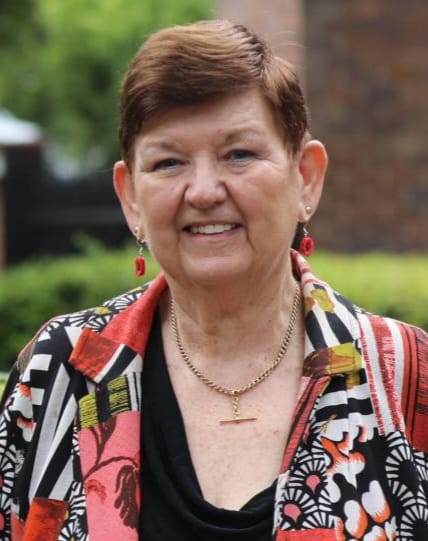
Over those years I have always found my PE journey stimulating, because I am challenged to think deeply about the philosophy and research behind contemporary issues. These form the background to the curriculum that is set out for we teachers to follow and facilitate in lessons.

When people ask me ‘so what do you tell the kids?’, I delight in explaining that it is not about ‘telling’. It is a community of enquiry approach that encourages students to think together about topics such as fairness, disagreeing respectfully, screen time and understanding diversity. They develop their own ideas and become more confident in expressing those to others and giving reasons for why they think what they think. They develop skills in reflecting and listening to what others think and say. PE is open to all faiths and belief systems. Mutual respect is a very important underpinning value for the classroom discussions.

People also ask ‘what’s involved as a volunteer?’ Then I can’t wait to explain that the setup has many amazing strengths:

  • It is very economical timewise and the time commitment is predictable – after training, a teacher typically needs to download and read over a lesson a few times and print copies of any pictures or activities in preparation for the average 35-minute lesson each week. There is a quick online feedback process after each lesson.
  • PE is an organisation that provides professional layers of user-friendly training and support. The technical support for the Internet materials is very effective and makes it easy to be involved with only basic skills (which are bound to improve as well). There is also good classroom support if issues arise and if all else fails there is a helpdesk at the end of the phone to clarify direction. All this is provided free – it is not expensive to become involved.
  • Undoubtedly the most exciting aspect is the opportunity to have regular contact with young people, exploring day to day issues with them, hearing their ideas and having the opportunity to support their personal growth.

After three to four years, I was offered the opportunity to become the PE team coordinator for the school. I was reluctant at first, lacking confidence. This is a liaison role with the school on all relevant matters including the setting up (online) and management of classes. Actually it has turned out to be a perfect extension of my favourite professional roles – resource linking, mentoring, recruiting, team building and with limited administration. There is also plenty of support for this role. And the best thing – it’s time limited too! Setting up at the beginning of each year is the busiest time.
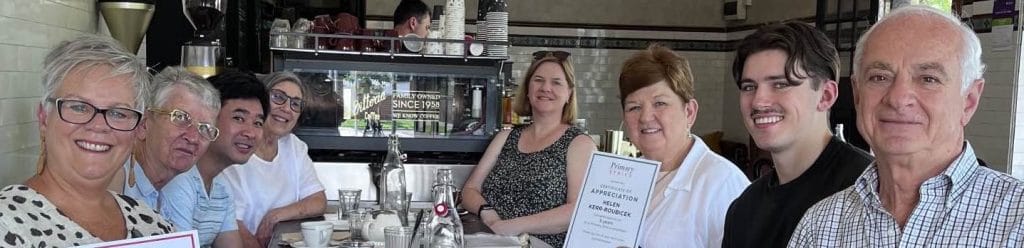
Helen third from right with other Drummoyne volunteers.

Our team is made up of a balance of retired older people who have a range of rich professional and community experiences, and keen parents of current students who keep us in touch with school news. We manage our team organisation through a Whatsapp group and look forward to catching up at our end of term dinners.

Over the past four years I have been through some tough times personally as I journeyed with my husband in his experience of serious illness until his recent death. The care and support from my team and the school-  from offering to take my classes or other tasks, to being available for ‘debrief’ coffees and messages – have made a real difference for me. And the regular classes with bright, lively faces each week ready for another discussion have provided a structure activity in my week that has also been helpful.

The camaraderie with my team and the wider PE community, including my regional manager, has been incredibly rewarding and uplifting. I realise as I look back over the eight years that this community building is at the heart of my PE experience and it is so good to feel that the lessons we provide are assisting students to do that in their own worlds.

Have I just been lucky with my school and team members? Would it be different somewhere else? There is no doubt that I have been fortunate and I know that there are many influences on how PE functions in different schools, including critical issues like when it is timetabled and how supportive the school executive is. But it is my belief now, that the community of enquiry approach as an underpinning of this program is right for this time and resonates with young people, parents, teachers and community members. Why else would we have growing numbers in our classes and more volunteers to teach in such a busy world?
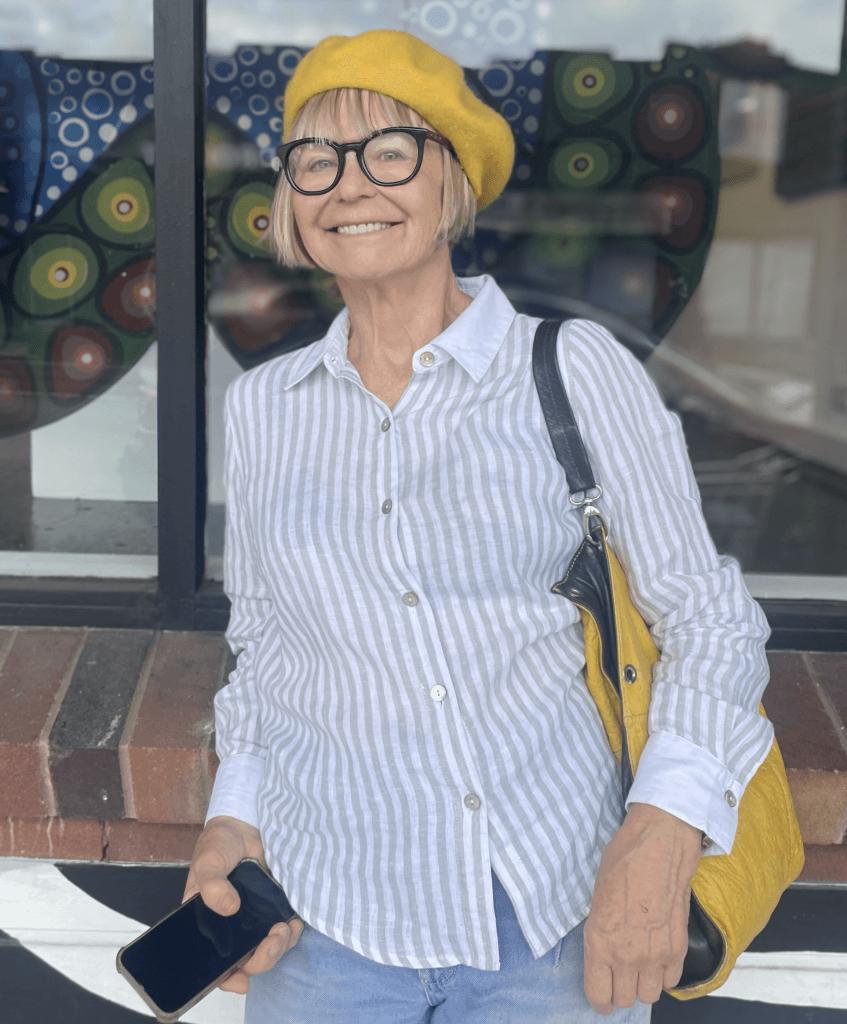
Diana: Investing in future generations

For Seniors Week 2026, we asked some of our over-70 volunteers to tell us about their experience as ethics volunteers. There is no age limit to ethics volunteering – our oldest volunteer is currently 88. In her mid-70s, Diana Dagg is in her seventh year of volunteering with Primary Ethics.

Diana’s experience

I was drawn to this role because teaching ethics offered the chance to teach my grandchildren. Over the years I’ve taught ethics to two grandchildren at Arncliffe Public School (they’re now at high school) and currently two grandchildren at Marrickville West Public. But I discovered early on that this is much more than simply having an opportunity to spend time with my grandchildren.

Before I list the many benefits, it must be noted that ethics teaching is not just a cushy volunteering job. Without being too dramatic, becoming an ethics teacher is an investment of our time, our expertise and our belief in the importance of contributing to future generations.

To do the job properly, we as volunteers need to commit to preparing well for lessons, taking the time to learn our students’ names and to understand any of their particular needs. We must also be willing to ask for and accept advice from trainers and schoolteachers. There are lots of opportunities for continuous learning within the ethics teaching technique.

We don’t need to have been teachers before becoming ethics teachers. In fact, friends of mine who were schoolteachers before becoming ethics volunteers say they had to ‘unlearn’ the traditional teaching practice of rewarding ‘correct’ answers. This ethics teaching role is about helping our young students develop approaches to thinking for themselves.

Above all, to be authentic, we as volunteer ethics teachers must value and want to understand children.

Spending this teaching time with my grandchildren each week is rich with potential, including:

  • Hearing their opinions about issues that affect them
  • Meeting and hearing the opinions of their classmates as a group
  • Providing an intersection point for conversations with them outside of ethics
  • Meeting their teachers and understanding the school ‘culture’.

My relationship with my grandchildren has been strengthened by my ethics teaching role because:

  • we confidentially discuss (and I get to hear) what questions matter to them in our ethics class
  • their friends like and respect me as an ethics teacher using our humanitarian rules in class – that earns me points as a nanny!

There are many great things about this role apart from the strengthened bond with my grandchildren:

  • I have the opportunity to meet and work with students with disabilities, to help them learn
  • I have greater insight into the challenges teachers face each day
  • I’ve enjoyed some fun lunches and morning teas, sharing war stories with other ethics teachers.
  • I’m proud to be investing in future generations through rigorous teaching practice and a thoroughly researched ethics curriculum which reflects values similar to my own.

Are there rewards/benefits that I wasn’t expecting?

Hmm, probably it’s the opportunity to understand the needs of students with disabilities and to be mightily impressed by the skilled teachers who work with them. Also, the satisfaction of managing challenging situations well.

Any concerns about dealing with technology (EVIE) or coping with things like hearing impairment?

It’s been fine to use the technology but if there are problems, I know I can turn to the very helpful Primary Ethics staff on the Helpdesk or my ethics coordinator and/or school admin or teaching staff. I already have hearing aids (yikes!) so no probs with hearing in my classes.

The secret weapon against polarisation – Osher Günsberg

Osher Günsberg, radio and television presenter and now popular podcaster, has joined the ranks of ethics volunteers at his son’s school. Osher says: “When I open my phone, it explodes in a cascade of fear, fury and furphies… leaving me spinning in a tizz of desperation and powerlessness. … I think I have found something that makes that feeling less intense and instead gives me the feeling that I am actually doing something that will make a difference.”  Thanks Osher for this lovely reflection, we wish you the best in your year of ethics volunteering ahead.

The thriving ethics community of Bondi Beach

Evelyn Levisohn is an ethics volunteer at Bondi Beach – a teacher and team coordinator. She writes here about their thriving ethics community, who help children look beneath the surface and have come together in firm solidarity after the recent tragedy on their doorstep.

Beyond the surface: Surfers, sunshine, run clubs and speedos: these might be the first things you think of when you think of Bondi Beach. It’s a place often associated with the ‘surface’: the tans, the activewear, the perfectly poured Instagrammable matcha latte. [Though tragically, it is also now known for the terrible shootings that took place in December 2025. More on that later.]

Look a little further, past the tourists on the promenade, and you’ll find there is a community engaged in something much deeper. At Bondi Beach Public School, just across the road from the beach, we have a thriving ethics program that is teaching the next generation how to look beneath the surface and question the status quo.

I’ve been part of this organisation for six years now, teaching two classes a week and serving as the ethics coordinator. We currently run 11 classes every week, from Kindergarten to Year 6, powered by a dedicated team of nine volunteers.

The Bondi Beach team at the beach, Evelyn on left.

Journey into the ethics classroom: My journey into the classroom actually started at my day job. I’m a Marketing Manager for Studiosity, a purpose-driven edtech company that believes in the power of education to change the world. Because they value social impact, my work is flexible enough to allow me to teach and coordinate each year. In fact, I first heard about Primary Ethics because my boss was a volunteer. Every Wednesday, she would come into the office and regale us with stories about how funny the kids were, how fascinating the topics were and how rewarding and challenging the role was.

It sounded incredible and I signed up to teach at Bondi Beach the year before my eldest son even started there. I still remember the nerves of that first day teaching Kindergarten. They were so sweet and charming, offering unselfconscious answers with brash honesty. But the moment that truly hooked me, the moment I felt that click of satisfaction, was when a child made a logical argument about a story that even I hadn’t considered. Watching a child learn to reason, think and find their own voice is incredibly gratifying.

Becoming a coordinator: Eventually, my passion for the program outweighed my fear of stepping into the team coordinator role. When our previous coordinator moved away, I realised I was too invested to let anyone else take the reins. I cared deeply about the program’s success, especially as we navigated the long road back from the COVID shutdowns. Our school was actually the last in the state to bring scripture and ethics back onsite, only resuming in 2023. During that break, I kept my skills sharp by doing relief teaching at other local schools. When we finally came back onsite, my mission was clear: I wanted to build back a sense of belonging and camaraderie within the team. I started ensuring we had termly coffee catch-ups and end-of-year dinners.

The team out for dinner, Evelyn second from left.

Depth and compassion: Today, we have a thriving team from all walks of life, parents and community members alike. Our catch-ups are no longer just an admin checkbox; they are filled with deep personal reflections and philosophical musings. We support each other, as does the whole Bondi Beach community who came together with steadfast compassion when the school had to close for a few days following the shootings, ensuring nobody was feeling alone and the kids had a sense of togetherness and normalcy.

In the darkest of times, our community shone in its solidarity.

Evelyn

The world beyond the beach: Despite recent events, Bondi will always have its sunshine and its tourists, but what happens inside our classrooms is what prepares these kids for the world beyond the beach. Considering what our community has been through, and in an era of AI and global upheaval, these lessons in critical thinking and logical reasoning are what will truly help our children navigate the changing world. We aren’t teaching them to follow a specific set of beliefs; we’re teaching them to think for themselves. And there is nothing more important than that.

Celebrating team achievements. Evelyn is centre.
Eco-ethics at an urban farm

Primary Ethics has collaborated with Pocket City Farm, in inner-urban Camperdown, to create a half day of education about the ethics of sustainability. The pilot has run on two days this month, with visits from Y3 and Y4 students from Campsie Public School in Sydney’s south.

Sessions for groups of children were run by Farm educators and Primary Ethics teachers. The children learnt about forests, feeding weeds to the chooks and how the web of life keeps us all connected. Then in specially written ethics lessons, they explored protecting their environment.

Both days were very hot but the students were highly engaged – especially in the chookyard!

Danya: Building strong foundations

Danya Webb, with an extensive background in marketing and sales, is the training operations manager for Primary Ethics. Her team delivers all the new teacher training sessions. They also create all the e-learning modules for new teacher/coordinator training, as well as the many short courses and handouts available to volunteers. And they run monthly information webinars and collaborate with Classroom Support colleagues on professional development workshops.

My own journey with Primary Ethics began as a volunteer ethics teacher in 2018 when my younger daughter started kindergarten (her older sister had already been in ethics for a few years). My involvement grew when I took on the additional role of volunteer ethics coordinator at my children’s new school in 2021 to launch their ethics program. We now have a team of 12 ethics teachers at this K-12 school, covering almost all the demand for ethics from K-8. My younger daughter is now in Year 7 and I still teach her Stage 4 ethics class!

The power of the program is personal to me. I’ve seen both my children’s critical thinking and empathetic reasoning skills develop over the years thanks to their involvement in ethics education.

Danya

As training manager, I work with a dedicated team to ensure our volunteer ethics teachers and coordinators are well-prepared for their roles. Our commitment to continuous improvement and a supportive learning environment is at the heart of everything we do.

Our team of 14 trainers deliver regular interactive new teacher training workshops face-to-face in Sydney and Wollongong and online via Zoom. The online option makes our training more accessible to regional volunteers, as well as those who prefer the convenience of training from home or in the evenings.

We train all sorts of people – barristers and psychologists, cleaners and librarians. Regardless of background, everyone is trained in the same way, equipping all with the skills to become capable ethics teachers or coordinators.

We also develop and manage digital learning resources, including:

  • E-learning modules for new teacher and new coordinator training.
  • Many short courses and handouts available in our Document Library.
  • Collaborative professional development.
Danya and Snowflake

Learning doesn’t stop after the initial training. We strongly believe that every ethics lesson offers a chance to hone technique. We collaborate closely with the Classroom Support team to offer ongoing professional development, including:

  • Engage-Reflect-Connect workshops for ethics teachers
  • Coordinator Essentials workshops for ethics coordinators
  • Information webinars about ethics for parents and the community.
  • Commitment to continuous improvement.

To ensure our program remains current and impactful, we also run an annual program review. This evaluation is vital, helping us modify our approach to address any gaps and drive quality improvement.

Our training methodology has evolved significantly over the years — we are now on Version 11 of our new teacher training manual! This is a testament to our focus on integrating feedback, keeping up with best practice in adult learning methodology and adapting to the needs of our volunteers and students.

Global Ethics Day 2025 – Spotlight on volunteer Alokita

During this week surrounding Global Ethics Day 2025 (Wednesday 15 October), we are turning the spotlight onto our volunteers to hear about the impact of ethics education in their own lives.

This global celebration highlights ethics as a process for finding solutions in the collaborative and respectful manner often missing in today’s world. It’s about how we learn to live together, respect our differences and together face our major global challenges.

Alokita Shankhar, ethics volunteer northern Sydney for seven years

I started teaching ethics when my daughter began Kindergarten at our local public school at Hornsby. At the time there weren’t enough volunteers, so I decided to train as an ethics teacher and taught my first Year 1 class. Since then, I’ve had the joy of teaching Kindergarten, Year 1, and Year 2 and yes, even the special experience of teaching both my children along the way.

Teaching ethics opens up a window into how children think about the world which is both humbling and enlightening. Hearing their perspectives reminds me to stay curious, patient and open-minded. It has given me so much. In addition to being a weekly circuit breaker to my job, it has helped me grow as a parent and member of the community, reinforcing the importance of listening to understand, not just to respond. And I can also say, there have been many funny and heart-warming moments with the children along the way too, which I also cherish!

Some people say Kindergarten is too early to start ethics, but I have seen firsthand that it’s never too early to nurture curiosity and respectful discussion. At our school, teachers can choose to move up with their cohort and I’ve done that for three years; from Kindergarten through to Year 2. Watching the children develop not only in confidence but also in their ability to listen, question,and consider others’ viewpoints is a benefit of the program.

Ethical decision-making is more important now than ever. The world is changing rapidly and that includes socially, environmentally and technologically, with developments like AI reshaping how we live and work. As technology moves faster than we can sometimes process, helping children develop curiosity, empathy and critical-thinking skills becomes essential. Through ethics, they learn that there is no right answer but that they can get to a good answer by asking thoughtful questions and weighing consequences and then make decisions that consider different perspectives.

Global Ethics Day 2025 – Volunteer spotlight on Rita

During this week surrounding Global Ethics Day 2025 (Wednesday 15 October), we are turning the spotlight onto our volunteers to hear about the impact of ethics education in their own lives.

This global celebration highlights ethics as a process for finding solutions in the collaborative and respectful manner often missing in today’s world. It’s about how we learn to live together, respect our differences and together face our major global challenges.

Rita Kusevskis-Hayes, Ethics volunteer beachside Sydney for three years

My first contact with the ethics program was when my son was in primary where they were running the initial trial. I was impressed and hopeful it would be taken up across NSW schools – which it has been!

I have always been the sort of person who thrives on a challenge and I love engaging with people especially in my local community. I have over 30 years in the education and equity sector, have a deep passion for people and innovation and a fascination with how opportunities or problems can be solved creatively – bringing together people, process and technology.

During the past couple of years I’ve been doing contract work so had time available for volunteering. I read a delightful piece on social media calling on volunteers to teach ethics at  Maroubra Junction Public School. As the time required each week is not onerous, it has fitted in well with my other commitments. For many years I’ve been involved with higher education and now am thoroughly enjoying working in primary education at my local school.

I have been teaching Stages 2 and 3 for three years now. I work with an incredible school co-ordinator and amazing students.  I have been so  impressed with the program that I wanted to share my teaching experience and knowledge further. So two years ago I began  volunteering with the dedicated Classroom Support Team, reaching out to support ethics volunteers across NSW as well as running workshops.

Every lesson brings new insights and completely different perspectives from the students. It is exciting as an adult and long term teacher to hear fresh views and reflections from primary children as they develop their views on the world. The structure is perfect for safe discussions, exploring issues with respect whilst building on each other’s ideas. Over the course of the year, and teaching across stages, I’ve observed the students work on their communication skills, especially in evaluating the shared ideas, forming deeper opinions based on evidence.

I strongly value the opportunity to spend time with these enquiring students each week, talking, listening, doing role plays, think-pair-shares and activities. Sometimes they come up with ideas I would never have thought of and often say the funniest, smartest things.

Teaching ethics has reminded me to take time in a busy life to reflect and to listen. Everyone should definitely volunteer to teach ethics at some point, no matter what your background, whether you’re a parent, grandparent, carer or just wanting to give back to your local area, like me.

Am loving the ethics program!

Global Ethics Day 2025 – Volunteer spotlight on Ken

It’s Global Ethics Day 2025 on Wednesday 15 October and to celebrate, we turn the spotlight onto some of our volunteers and hear about the impact of ethics education in their own lives.

This global celebration of the importance of ethical tools highlights ethics as a process for finding solutions in the collaborative and respectful manner often missing in today’s world. It’s about how we learn to live together, respect our differences and together face our major global challenges.

Ken Welsh, ethics volunteer southern Sydney for five years

For five years I’ve volunteered as the manager of two regions – Kogarah and Beverly Hills. In those regions the ethics program is taught in 12 schools to over 600 students by 32 ethics teachers.

I was a high school teacher and principal in NSW, Queensland and the ACT. Then for 15 years immediately prior to retirement I worked within the Australian Department of Defence assisting ADF members with the education of their children. These children frequently changed schools because of their parents being posted around Australia. Parents were sometimes absent due to overseas deployments or distant training. All this impacted on their children’s education.

Becoming a volunteer with Primary Ethics allowed me to continue to be involved in education more broadly and to make a contribution to my local community.

As manager of the two regions I have oversight of the program, work with ethics coordinators in some schools to promote Primary Ethics, advertise and recruit volunteers to teach in schools that do not have an ethics coordinator, allocate teachers to classes in those schools and liaise with appropriate Department of Education staff to ensure the successful implementation of the program. Because of my background I hope I also can provide support to all those 32 teachers and the coordinators if and when they need it.

‘Think critically, reason ethically and discuss respectfully’ are the three keystones of the ethics program. I can’t think of anything more important than developing those qualities in young people who live in a world that is so conflicted by differing ideas, powered by an influential social media environment and which doesn’t seem willing to listen to others. It’s a huge enough challenge for us as adults, so how important is it for us to do what we can to prepare young people to live in this future world. As adults we can become complacent in our attitudes and values – it is much easier than being challenged to examine what we hold so dear and possible re-evaluate that.

My major subject when I was a teacher was modern history. It doesn’t just require the ability to recall names, events and dates (Wikipedia can do that!) but rather the ability to examine why events occurred and how they impacted on people and societies. By questioning we learn and by learning we can change – ourselves and our societies – for the better. Primary Ethics provides opportunities for young people to do just that too. To consider how they think and feel about a particular topic. To listen to what others think and feel. To evaluate our thoughts and feelings. And maybe to change.

This old History teacher is thankful that besides the usual teachers working away in our schools there is also a group of volunteers offering their time and talents to develop enquiring minds. I’m very satisfied that I still play some part in that development.