Category: Uncategorised

The lesson that could change everything – The Educator, Australia

The Educator magazine has featured Primary Ethics and the growing evidence that classroom discussions about ethical dilemmas can help children recognise ethical issues, think more carefully and confidently share their ideas.
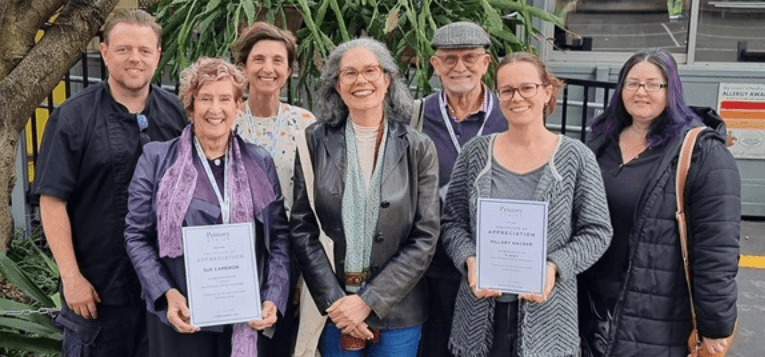
What happens when children are given the space to listen, question, respectfully disagree and build on one another’s ideas?

By Brett Henebery

Imagine a circle of eight-year-old children wrestling with a question most adults would prefer to dodge.

Is it ever okay to break a promise?

There’s no answer sheet. No lecture. Just young people listening, disagreeing and building on each other’s reasoning.

That’s the groundbreaking model behind Primary Ethics – the volunteer-run program now teaching more than 500 NSW primary schools every week.

New research from the Australian Catholic University, the largest study of its kind, found that programs that promote discussions of ethical challenges can help students recognise ethical issues and think more carefully about what to do.

“The Primary Ethics curriculum was designed to help students consider everyday ethical dilemmas using carefully developed lesson plans and pedagogy that equips volunteer teachers with practical skills to facilitate constructive discussion in the classroom,” Laura Ramos, Chief Operating Officer at Primary Ethics, told The Educator.

“The clearest sign that ethics lessons are making a difference comes straight from Primary Ethics volunteer ethics teachers – in what they share about how students are responding in the classroom and how this shows up in the playground.”

‘Students are feeding off each other’s ideas’

Petersham Public School, located in Sydney’s inner-west, is seeing the benefits of ethics education from Kindergarten right through to Year 6.

“We have wonderful volunteers who make Primary Ethics possible at Petersham Public School,” the school’s Principal, Lisa Sands, told The Educator.

“As principal, I work thoughtfully to manage organisation and supervision arrangements to ensure that all students can access the SRE/SEE offering of their choosing.”

Kindy teacher Nathan Grange, part of the volunteer ethics team at Petersham Public School, said he has noticed how his students are learning by speaking freely and asking questions within the structure of the ethics lesson.

“Students care about what is happening in the stories, they are listening and feeding off each other’s ideas,” Grange told The Educator.

Amy Butler, the school’s Year 3-4 ethics teacher, is an educator who has also seen the benefits of these lessons first hand.

“In the final reflective class last year one of the students said, ‘ethics class has made me more confident to share my ideas outside of ethics class.’”

Year 5-6 ethics teacher, Sue Cameron, the classes are having cut-through, even if some students are using what they’ve learned in a joking way.

“I have heard some kids just after the ethics class saying, ‘I respectfully disagree with you, because…’ They were making a joke of the phrase, but they have definitely taken it on board!”

Read the full article: https://lnkd.in/g26qkNpW
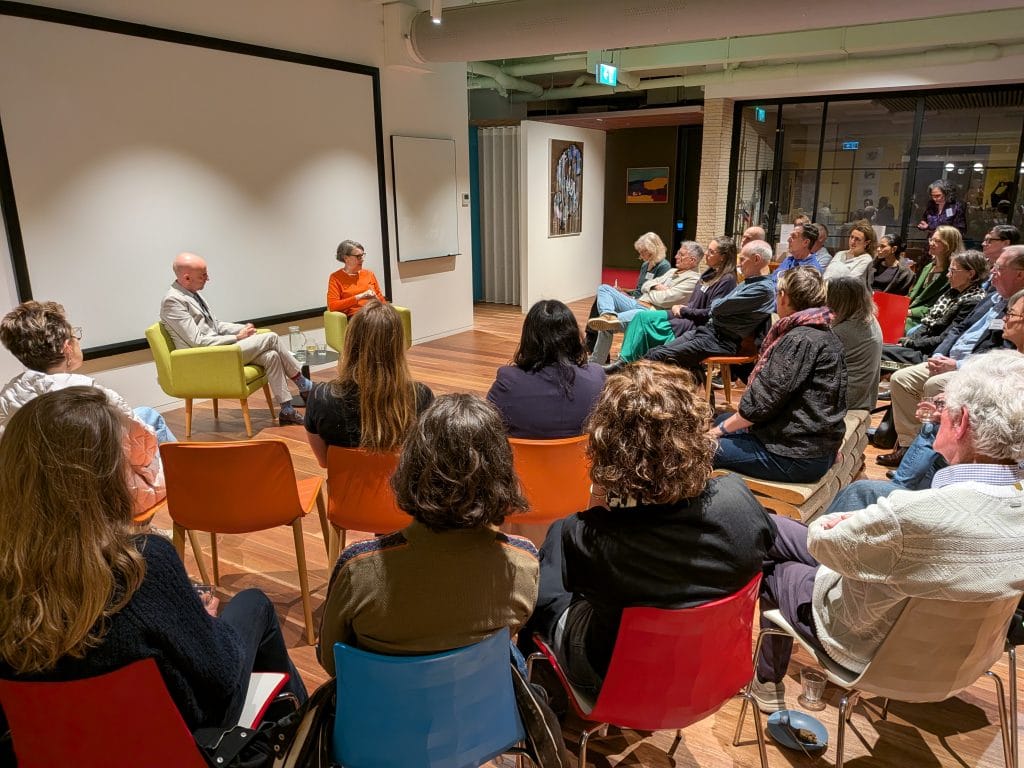
Who wants to live forever?

Primary Ethics’ latest event was – seriously – a matter of life and death.

By Rose-Anne Manns

Old people should have more control over deciding when they want to die, provocative author Lucinda Holdforth argued at our Big Questions. Better Conversations event in Sydney in September. But there’s a problem: we don’t like talking about death.

Lucinda, whose book Going On and On: Why our longevity threatens the future was published earlier this year, reflected on her experience as a former ethics teacher, where nine and 10-year-olds were capable of talking about tricky issues. ‘The process of dialogue is powerful and so important at a moment when information is coming at us from screens one-way.’

The dialogue she wants adults to have is how to avoid the many downsides of ageing – for individuals, their carers and society. ‘Australia is one of the top 10 countries in the world for longevity,’ Lucinda said. ‘And we’re second only to the US for the period we spend living with frailty and disease – an average of 12 years when care is required.’ These facts have implications for a groaning medical system, a squeezed sandwich generation and an economic burden on generations to come.

Or, as her interviewer Kelby Mason put it: ‘Getting old sucks’.

Lucinda says giving choice to old people is part of the solution: “We should be able to say ‘I’m done’. But in the name of kindness, the system takes away our agency.”

Everyone should know about advance care directives, which outlines what you want done in the event of a life-threatening injury or disease, she says, and doctors should follow them instead of ignoring them.

There’s no point waiting for politicians because they’re too slow. We need to rely on the community to push for these changes. It’s a citizen job.’

Lucinda Holdforth

What did the audience think?

An entertaining Think Pair Share exercise drawn from the Primary Ethics high school curriculum got participants talking between themselves about whether we might advance to the point where we can treat the body as an endlessly repairable machine that could last 1000 years. Is old age something that can be cured or prevented? Or should we accept it as a natural part of life?

Even if we could fix age-related damage like brittle bones and dementia, Lucinda still didn’t think living to 1000 was such a good idea: ‘Who are the people who want to live forever? [Biohack entrepreneur] Bryan Johnson, [longevity spruiker] Peter Attia … Putin and Xi have discussed organ harvesting. If that’s the company I’d be keeping, I’ll pass!’

What do the kids think?

My students also took a hard pass on super longevity when I taught the ‘Who wants to live forever’ topic at high school earlier this year, but for different reasons. Sustainability was a key concern. If old people take longer to die off, but fertility remains the same, population will grow, putting more pressure on the planet’s resources. Stagnation was another issue they raised. If old people are healthy enough to stay in their jobs for longer, fewer young people will take their place, meaning fewer fresh ideas and less innovation. Social inequity was yet another worry. They debated whether it would be unfair if only rich people got access to anti-ageing treatments.

Even after weighing up counter-arguments about the value of retaining the wisdom and experience of elders, my students were adamant: they don’t want to live forever and they don’t want us to either.

@Home bulletin for parents Term 2 2025

Welcome to @Home bulletin for Term 2 2025, where we let families know what your children, from kindergarten into secondary school, could be exploring in their ethics lessons this term.

Subscribe here to receive our @Home email bulletin once a term.

The topics we show below are based on classes which begin at the beginning of the year. Schools start at different times of the year, some lessons go faster or slower than others, some schools skip ethics for the first and last weeks of the term while others teach every single week – and so on. 

We hope the students talk about ethics with you at home – ask them questions about it!

If your child tells you they are discussing a topic you don’t see in this bulletin, you can also look at the Curriculum section of our website.

Kindergarten: Making things up and showing off 

Young children are learning to navigate social situations – and this term, they’ll explore why people sometimes make things up or show off. Is it wrong to invent a story to hide a mistake? Why do people brag when they win? Students will reflect on honesty, pride and how our words make others feel.

Stage 1 – Years 1 & 2: Different kinds of animals and different kinds of needs 

Most kids know pets need food and water – but what about play, space and freedom? Is it just as important to play with a fish as it is to play with a dog? And is it okay to keep a wild animal as a pet, as long as it has everything it needs? This term, Stage 1 students will explore the needs of different animals and think about how we care for living things – even when their needs are very different from our own.

Stage 2 – Years 3 & 4: Persuading 

Children are often natural persuaders – but not all persuasion is equal. This term, students will explore how we try to influence others and what makes persuasion fair or unfair. Is it okay to exaggerate a little? Or only tell part of the truth? And what about advertising – should companies be allowed to use tricks to make us want things? These conversations will help students think about honesty, fairness and how far to go when trying to persuade someone.

Stage 3 – Years 5 & 6: Being vain 

As children grow, appearance often starts to matter to them more – both how they see themselves and how they think others see them. This term, Stage 3 students will explore questions about vanity and appearance. Is it okay to want to look good – or better than others? Where do we draw the line between taking pride in how we look and caring too much? And how do our choices about appearance affect the people around us?

Stage 4 – Years 7 & 8: Giving and accepting apologies 

Every day, all around the world, people apologise – sometimes sincerely, sometimes awkwardly, sometimes because they have to. But what makes an apology genuine? Can you really apologise if you don’t understand what you did wrong? And do people always have to accept a good apology? This term, Stage 4 students will reflect on what it means to say sorry – and explore more complex questions about group responsibility and when, if ever, someone can apologise on behalf of others.

Each term brings new ideas and questions and we hope these topics spark interesting conversations at home as well!