“Primary Ethics’ latest event was – seriously – a matter of life and death.”
By Rose-Anne Manns
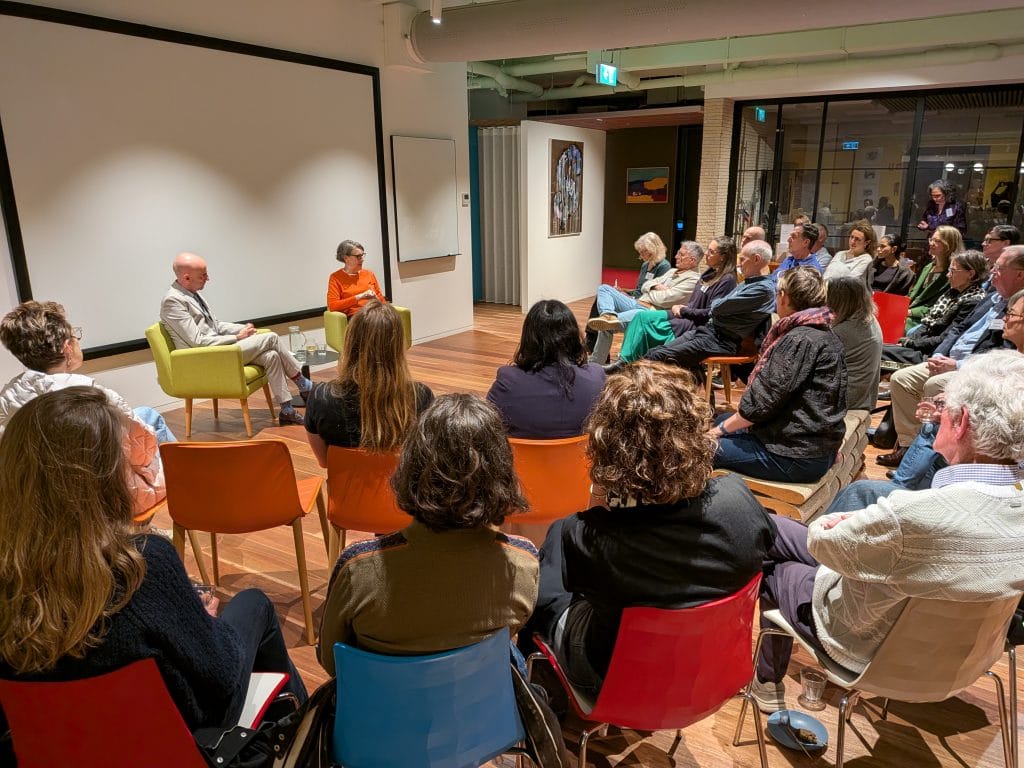
Old people should have more control over deciding when they want to die, provocative author Lucinda Holdforth argued at our ‘Big Questions. Better Conversations’ event in Sydney in September. But there’s a problem: we don’t like talking about death.
Lucinda, whose book Going On and On: Why our longevity threatens the future was published earlier this year, reflected on her experience as a former ethics teacher, where nine- and ten-year-olds were capable of talking about tricky issues. ‘The process of dialogue is powerful and so important at a moment when information is coming at us from screens one-way.’
The dialogue she wants adults to have is how to avoid the many downsides of ageing – for individuals, their carers and society. ‘Australia is one of the top 10 countries in the world for longevity,’ Lucinda said. ‘And we’re second only to the US for the period we spend living with frailty and disease – an average of 12 years when care is required.’ These facts have implications for a groaning medical system, a squeezed sandwich generation and an economic burden on generations to come.
Or, as her interviewer Kelby Mason put it: ‘Getting old sucks.’
Lucinda says giving choice to old people is part of the solution: ‘We should be able to say “I’m done.” But in the name of kindness, the system takes away our agency.’
Everyone should know about advance care directives, which outlines what you want done in the event of a life-threatening injury or disease, she says, and doctors should follow them instead of ignoring them.
There’s no point waiting for politicians because they’re too slow. We need to rely on the community to push for these changes. It’s a citizen job.’
Lucinda Holdforth
What did the audience think?
An entertaining ‘Think Pair Share’ exercise drawn from Primary Ethics’ high school curriculum got participants talking amongst themselves about whether we might advance to the point where we can treat the body as an endlessly repairable machine that could last 1000 years. Is old age something that can be cured or prevented? Or should we accept it as a natural part of life?
Even if we could fix age-related damage like brittle bones and dementia, Lucinda still didn’t think living to 1000 was such a good idea: ‘Who are the people who want to live forever? [Biohack entrepreneur] Bryan Johnson, [longevity spruiker] Peter Attia … Putin and Xi have discussed organ harvesting. If that’s the company I’d be keeping, I’ll pass!’
What do the kids think?
My students also took a hard pass when I taught the ‘Who wants to live forever’ topic at high school earlier this year, but for different reasons. Sustainability was a key concern. If old people take longer to die off, but fertility remains the same, population will grow, putting more pressure on the planet’s resources. Stagnation was another issue they raised. If old people are healthy enough to stay in their jobs for longer, fewer young people will take their place, meaning fewer fresh ideas and less innovation. Social inequity was yet another worry. They debated whether it would be unfair if only rich people got access to anti-ageing treatments.
Even after weighing up counter-arguments about the value of retaining the wisdom and experience of elders, my students were adamant: they don’t want to live forever and they don’t want us to either.