Category: Education

Empathy – an ethics class on Insight SBS-TV

What is empathy? Do we need to learn to be more empathetic? Can empathy be taught? The SBS program Insight dedicated an episode to this question, which aired on 16 May 2023.

Insight visited a public school in Sydney and filmed a wonderful Stage 2 ethics class on empathy taught by Primary Ethics volunteer Shing Ka, where students learn to consider other children’s feelings and motivations. It’s just a snippet of the whole 30-minute lesson but is a strong illustration of an ethics community of inquiry in action.
Ethics @Home bulletin for parents Term 2 2023

Our @Home bulletin for parents aims to let you know what your children are discussing in their ethics lessons this term. We hope they’re talking about it with you at home too!

Bear in mind that schools start their ethics programs at different times of the year, basically when they have enough volunteer teachers. The topics we show you below are based on classes which began at the beginning of the year. If your child’s class only commenced this term, you can also take a look at the Curriculum section of our website to see what they’ll be discussing.

Please contact us if you have any questions about your child and ethics.

Here’s a brief look at what your children could be exploring in their ethics lessons this term. 

Kindergarten: Doing harm without meaning to  
This kindergarten topic explores the ethics of accidentally hurting someone. Students think about and discuss: is it worse to do something bad on purpose or by accident? Should we be punished for harm we cause by accident? Does it matter if it was the result of carelessness or thoughtlessness?
Later in the year, students will consider questions about making things up and showing off.

Stage 1 – Years 1 & 2: When is it fair?  
This Stage 1 topic explores the concept of fairness. Students think about and discuss: How can we divide things fairly? Does being fair mean everyone gets an equal share? When you make something, should you still share it with someone who didn’t help?
Later in the year, students will consider how we should treat pet animals.

Stage 2 – Years 3 & 4: Persuading 

This Stage 2 topic explores the ethics of persuasion. Students think about and discuss: Is it okay to exaggerate or only share part of the truth when trying to persuade someone? And is it fair for advertisers to use tricks to persuade people to buy their products?
Later in the year, students will consider the ethics of getting even – does one bad turn deserve another?

Stage 3 – Years 5 & 6: Being vain 

This Stage 3 topic explores the ethics of wanting to be better than others. Students think about and discuss: is it okay to want to look good and to want to look better than other people? How can one person’s vanity impact on the wellbeing of others? And how do you draw the line between reasonable and excessive concern for how we appear to others?
Later in the year, students will consider how to balance the needs of people they know and strangers in need.

Stage 4 – Years 7 & 8: Giving and accepting apologies 

This Stage 4 topic explores the ethics of apologising. Students think about and discuss: What makes something a good apology? Do you have to accept a good apology? And is it ever important for a group (like a class of students) to collectively apologise for the actions of one of its members?
Later in the year, students will consider if being happy is all that matters in life.

‘I’m a Primary Ethics teacher’: Emily’s MamaMia story
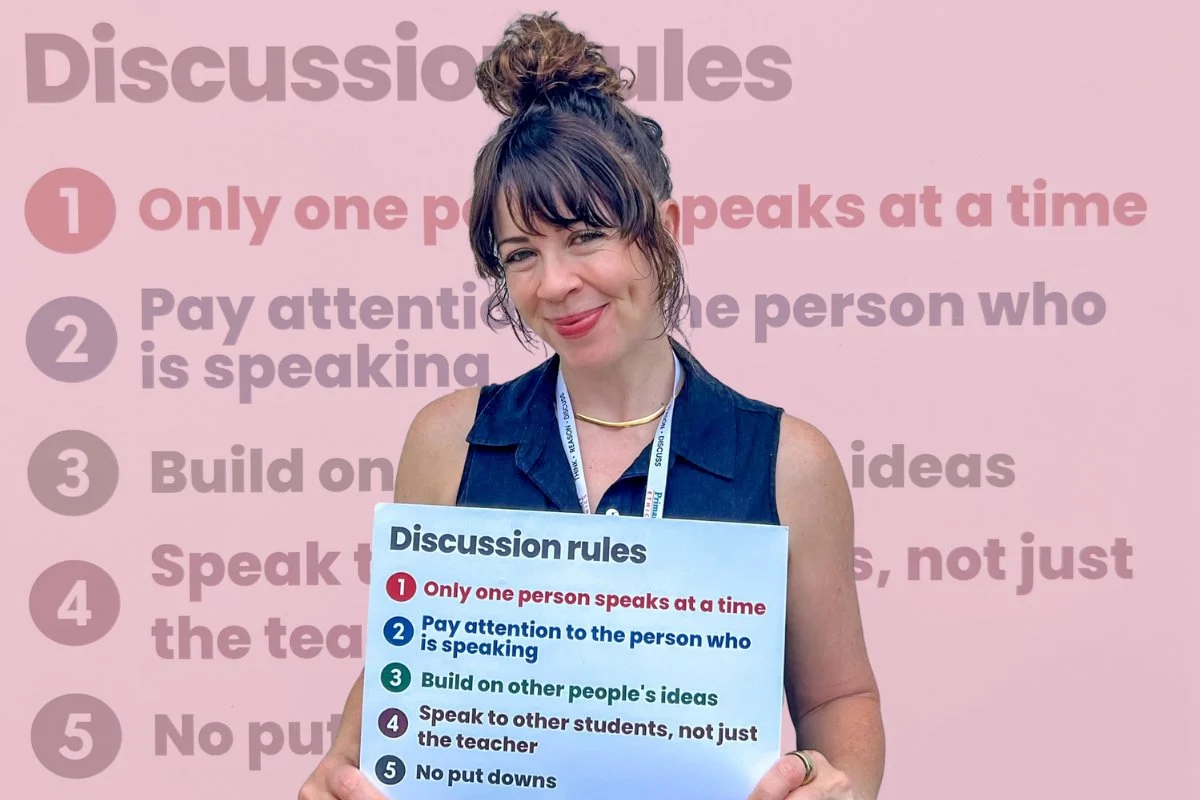
Emily McGrorey with the Primary Ethics discussion rules.

Newcastle ethics teacher Emily McGrorey has written about her journey to become an ethics teacher for the MamaMia website.

“[My daughter’s] teacher explained there weren’t any ethics classes running in her year level because they needed someone to volunteer to teach them. It was at that point that I thought, well, I’m someone.”

“To be honest though, I was quite nervous about the prospect of teaching. Until I had my own kids, I had very little experience with children and heading into a classroom to be the actual teacher all seemed a bit daunting. What if I couldn’t control the children and they revolted against me like some kind of chaotic scene from Matilda?”

Emily began teaching ethics during the lockdown year of 2021, so it was an on-again, off-again venture. She finally taught for a full year in 2022 – “and I’m pleased to report that the children haven’t staged a coup against me, yet.”

Read Emily’s full account, ‘I’m a primary ethics teacher. Here are the 5 biggest things it teaches kids.’

‘We need to do better for our children’s future’
Shane Arthurson with the ethics discussion rules

My first class of ethics for the year takes place this week. Reading the rules before this first lesson reminded me of some thoughts I had last year when I was visiting Parliament in Canberra.

By Shane Arthurson

I’m a volunteer ethics teacher at a school on Sydney’s northern beaches. My daughter is in Year 1 and I teach her class.

I am very proud and very happy to teach ethics. It’s a beautiful program tackling ethical dilemmas and teaching the children to stay curious and respectful as we debate, reason and talk to others about complex issues. It is right that we teach our young children ethics and with discussion rules such as these.

As a sad observation though, I was in Canberra last year with my wife who was part of a group petitioning for increased parental leave. Inside the Parliament, I couldn’t help but notice that question time violated all our ethics rules in the first few seconds. It was a horrific display of heckling, put downs, talking over one another… There was no orderly debate and no intelligent discussion about the matter, nor any progress or resolve.

Furthermore, I looked up and saw school children observing the leaders of our country behaving in such a manner. It didn’t shock me but it did disappoint me.

The leaders of our country are role models for our children, amongst other things, we need them to do better and to demonstrate behaviour we would be proud to see in our children. If we want a better society we have to act better. These children are tomorrow’s leaders and decision makers.

This behaviour does not add to social progress and actually takes us backwards.

All the more motivation for me to keep teaching ethics!

Ethics @Home bulletin for parents Term 1 2023

Our @Home bulletin aims to let you know what your children are discussing in their ethics lessons this term. We hope they’re talking about it with you at home too!

Subscribe here to our @Home email bulletin.

Schools can take weeks to get organised and start their ethics programs for the year, so some won’t have commenced yet. However, we expect all schools which have enough volunteers to provide ethics to be underway by mid-March. Please contact us if you have any questions about your child and ethics.

Ethics Term 1 2023

Kindergarten: Questions and what is okay 

The first topic of the year introduces students to asking questions. They think about and discuss: Why do we ask questions? Why might someone feel reluctant to ask questions? Is it okay to say that someone’s answer is silly or bad?

Later in the year, kindy students will consider topics on sharing, including others and causing harm without meaning to.

Stage 1 – Years 1 & 2: Empathy
The first topic of the year invites students to consider the importance of empathy. Students think about and discuss: Is it important to reflect on how others are feeling? How do you work out how someone else might be feeling? And is it possible to imagine how someone else feels if you’ve never been in a similar situation?

Later in the year, Stage 1 students will consider whether being fair means giving everyone an equal share and whether it’s okay to treat people differently because they are your friends.

Stage 2 – Years 3 & 4: Being greedy 
The first topic of the year invites students to consider being greedy. Students think about and discuss: What does it mean to be greedy? Is there anything wrong with wanting more money or toys than you can use? Is it okay to want to be the richest person in the world?

Later in the year, Stage 2 students will consider whether lying is always wrong and whether it’s okay for advertisers to use tricks to persuade people to buy their products.

Stage 3 – Years 5 & 6: Voting 
The first topic of the year invites students to consider voting. Students think about and discuss: Is it okay to vote for someone just because they’re your friend? How should we balance self-interest and the needs of others when choosing who to vote for? For example, is it okay to vote for someone whose policies would benefit me but are not in the best interests of everyone? Should voting be compulsory or voluntary?

Later in the year, Stage 3 students will consider whether punishment is necessary to stop people from doing wrong and whether it’s okay to be vain.

Stage 4 – Years 7 & 8: You’re not the boss of me 
The first topic of the year invites students to consider how much control they should have over their own lives. Students think about and discuss: What right do parents, adults and governments have to limit teenagers’ freedoms? Why do we have age limits in Australia? And is it okay to stop people from doing things because they might get hurt?

Later in the year, Stage 4 students will consider whether hoarding food and medical supplies is wrong and what makes a good apology.

Primary Ethics discussion rules

This year, the six ethics class rules have been replaced by five discussion rules. In this short video, trainer, ethics teacher and curriculum author Kelby Mason talks us through those rules.

First some important context: these discussion rules are for stages 1, 2 and 3 (which is Years 1- 6). They aren’t for Kindy or secondary students (who have separate rules and guidelines).

Why have we updated the rules?

  1. We now call them discussion rules as they are primarily a roadmap for the type of discussion we want to see in all ethics lessons. This name will help students see how they’re different to the school rules and any classroom behaviour rules you might have.
  2. We’ve reduced them to five to help students focus on what’s most important.
  3. We’ve clarified the language to make it as meaningful as possible to today’s children.

The rules are displayed in every class and referred to regularly throughout the lesson.Why’s that?The rules are our important grounding tool and roadmap for helping create a genuine community of inquiry.

When teachers notice a student – or the entire class – veering off course, they can point their attention to the relevant rule and remind them to follow it. If necessary at any point, teachers can start a discussion about a particular rule and our reasons for following it.

What are the ethics discussion rules?

  1.  Only one person speaks at a time.
  2.  Pay attention to the person who is speaking.
  3.  Build on other people’s ideas.
  4.  Speak to other students, not just to the teacher.
  5.  No put downs.

Read more about how ethics classes work.

Kate’s story: Providing life skills to our children
Kate Sawtschuk
Kate Sawtschuk

Kate Sawtschuk writes: When I decided to volunteer to be an ethics teacher at our school almost four years ago, I received a serious and foreboding warning from my then eight-year-old daughter: “Teaching kids is tough.” Luckily, I was not discouraged!

Since then, I have taught ethics classes across all ages at Denistone East Public School and am now the ethics coordinator. I could never have imagined how much I would learn and how many rewarding moments it would bring.

Previously, when I had seen Ethics listed on our school Scripture form, I thought it sounded like a class that taught kids about what was right and wrong and what they should think. When a friend of mine became an ethics teacher and actually described it, I found out this could not be further from the truth!

Ethics classes give children a chance to practise skills like taking turns to speak, listening carefully to other students and forming and expressing their own ideas. Lessons are designed to enhance critical thinking and ethical reasoning skills, helping children make decisions based on logic and evidence rather than out of habit or due to peer pressure.

Upon first hearing this, I had two thoughts. The first: I want my own kids to be in ethics classes! The second: I wonder if I could become a volunteer ethics teacher and be involved in teaching them and other kids? I felt it would be the perfect way for me to contribute to the school community, given my limited availability, and would also allow me to become more engaged in the education my children are experiencing.

I enjoy teaching ethics because I find the topics fascinating; the lesson materials really make me think (as well as the children). Over the years, topics I’ve taught include empathy, fairness, being similar and different, good reasons, voting, punishment and vanity. It is incredible to be in a role where I can be around children and hear what they think. Their insights and thought processes can be impressive, surprising and often hilarious!

For example, this year my Stage 3 class began considering the concept of a fair society. They thought critically about discrimination, equality of opportunity and the moral responsibilities of society. There was a lot of lively discussion and many moments when their depth of understanding and innate compassion made me feel very reassured that the future is in their hands.

My Stage 1 class have looked at the concept of pride: what it means, when it is okay and if we can be too proud. They love providing examples to explore the topics and building upon the ideas of their classmates. We have moved on to talk about what makes a good reason and the concept of laziness.

It’s not always easy, as my daughter warned, but I also love the challenge of engaging the kids and encouraging them to think more deeply about certain topics.

The classes provide a safe and friendly environment in which kids can express themselves and question ideas they may just normally take for granted – to think about the reasons they hold certain views or opinions and to listen and build upon the often differing views of their classmates. It’s skills for life, really!

The ethics classes are quite a different experience for kids because there is no right or wrong answer. I think they really enjoy being heard and feeling that what they think is important.

I cannot recommend volunteering to be an ethics teacher highly enough! It’s a fantastic and practical way to not only to contribute to and support the school but to also develop your own skills in facilitation, communication and active listening – and as a bonus, in the process you get to witness the next generation mature in confidence and wisdom. What more could you ask for?

So I encourage those who can to seize the opportunity that is literally a life changing experience for all those involved – parents and kids alike. Kate Sawtschuk

@Home bulletin for parents Term 4 2022

Our @Home bulletin aims to let you know what your children are discussing in their ethics lessons this term. We hope they’re talking about it with you at home too!

You can subscribe to our @Home email bulletin here.

Below we outline the topics that classes would be up to if they started at the beginning of the year. However, not every school started their ethics program then – some started in Term 2, some in Term 3, even some this term!

So if your child says they aren’t talking about the topics below, please take a look for what they are discussing in the Curriculum section of our website.

What they’re talking about in ethics – Term 4

Here’s a brief look at what your children are exploring in their ethics lessons this term.

Kindergarten: Owning up
Is it important to own up to a mistake if we do something wrong – like breaking a window? Why can it be difficult to own up? Why might we feel reluctant to own up? Can avoiding owning up mean we lose an opportunity to reflect and learn – and does that matter?

Stage 1 – Years 1 & 2: Ownership
What sorts of things can we own? Can we own a shell we find on the beach or a sandcastle? Can we own a picture of someone else? Can we own animals – like pets and wild lizards? If we make something, do we own it? And what about the smell of food – can we own that too?

Stage 2 – Years 3 & 4: Breaking a promise
What is a promise – and is it different from simply saying you’ll do something? Is it ever okay to break a promise? How important is trust in friendships?

Stage 3 – Years 5 & 6: Are some things just wrong?
How important is it to have consistent moral values? Are some things just wrong (regardless of whether some cultures think they’re okay)? If so, how can we tell what’s right or wrong in a way that’s independent of culture?

Stage 4 – Years 7 & 8: From moon trash to migrant horses
Is it always wrong to litter? What about leaving rubbish on the moon – is there anything wrong with that? Should we always try to remove introduced species like wild horses? Does it matter how long ago they were introduced? What does it mean to be a custodian of the land – and is it compatible with owning land?

A mother-daughter ethics-teaching duo
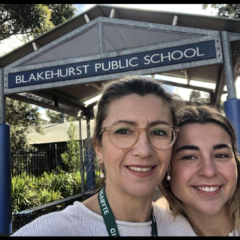
Ima Mia Blakehurst

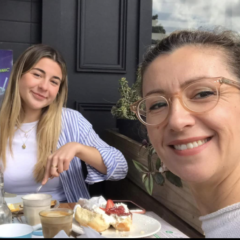
Ima and Mia Strkljevic are a mother-daughter ethics-teaching duo. Mia is only 18  and was inspired to become an ethics teacher herself having seen her mother in action over the years.

Here are their stories and a photo from the compulsory post-class staff meeting at the local café.

Ima’s story: It all started in early 2017 when a friend posted on Facebook about how rewarding teaching ethics at her children’s school was. I immediately got in touch with her, got informed about the induction process and within several weeks had finished all requirements and was negotiating classes with my children’s school, successfully overcoming the school’s initial inertia. So that is when I introduced ethics to Blakehurst Public School. I also took on the role of ethics coordinator. My daughter had just started high school and I had a younger son in year 4.

Being a health clinician and public health researcher, I’d known the importance and power of critical reasoning and ethical thinking. In the past five years I have enjoyed teaching children of all ages and was able to see what wonderfully inquisitive, imaginative, capable and open-minded people primary school children are.

Although my daughter just missed out on ethics in primary school, she became actively involved in my preparation of teaching materials every week as well as our family discussions following my son’s weekly lessons. She expressed a desire to become involved with Primary Ethics as soon as she could, after realising how wonderful it would be to give back to the community where she’d once achieved so much.

I took on the role of regional manager in 2019 and was also coordinating and teaching in another school to keep their ethics program alive, but then was unable to continue in multiple schools due to the COVID-19 pandemic and family-related issues.

I have dedicated myself to the Primary Ethics program even though I am no longer teaching my own children as my motivation is not to teach my children, but to ensure that my local school continues to offer and provide this invaluable curriculum to new generations. I have also realised the power of volunteering – the multi-faceted benefits for both volunteers and the recipients. I have been inspired by my involvement with Primary Ethics to research and promote volunteering of professional skills by health professionals to develop interventions for healthy ageing and health promotion in older adults.

Mia Ima Cafe

Mia’s story: When my mother started teaching ethics when I was in high school, I became interested in the content of the lessons and loved the concept of group discussion and building on each other’s ideas as a way of learning. As a successful debater and public speaker and currently a medical science student, I believe inquiry is an integral part of learning and a healthy, argument-based discussion is the only way to progress and develop.

I also admire the volunteering aspect of Primary Ethics. I’ve been involved in multiple projects as a high school student in teaching, community and charitable volunteering activities. I felt the need to support this valuable program and where better to do it but at my own primary school. Blakehurst Public School is my local primary school where my brother and I, together with our friends and neighbours, created lifelong memories and achievements. This is where I will always feel like part of the family, always welcomed and accepted with warmth and gratitude.

I hope that my example will serve as an inspiration to many more young ethics teachers to come.