Someone ruins something you love.
You’re upset. They haven’t apologised.
You find yourself thinking: How would they like it if I did that to them?
Children know this feeling. Adults do too. And if someone tells us to leave it alone, there’s an obvious objection: Why should they get away with it?
It’s a question worth taking seriously. Would doing the same thing back be fair? Would it help the other person understand? Would it matter whether they meant to cause the damage?
Underneath the urge to get even is a question about what people owe each other. That question comes up when someone does something kind for us, too.
Someone invites you to their birthday party. A few months later, you’re planning your own. You aren’t particularly close, and there’s only room for a handful of friends.
Do you have to invite them?
Does accepting an invitation mean you owe one in return? Can you be grateful without returning the favour? What do you owe your closer friends, who might miss out?
Children encounter these dilemmas in classrooms, playgrounds and friendships, long before anyone introduces words such as obligation, reciprocity or retaliation. Taking their questions seriously means making room to explore the reasons behind them – and to discover where those reasons lead.
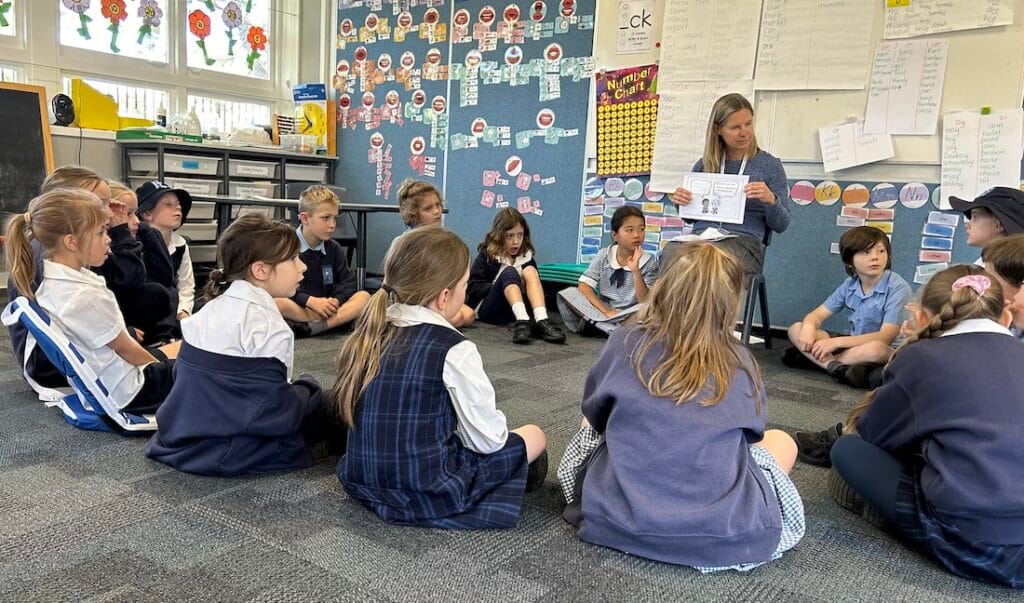
Are we even?
Our topic Getting even, developed for Year 3 and Year 4 students, begins with a familiar idea: one good turn deserves another.
It sounds reasonable. When someone helps us, helping them back can show gratitude and strengthen a friendship. But follow the idea a little further and it becomes less straightforward.
If I help you, have I earned the right to expect your help? What if you can’t help me back? What if I only helped you so that you would owe me something?
There’s a difference between appreciating someone’s kindness and keeping an account of favours. Philosophically, this is a question about the relationship between gratitude and obligation. We can feel thankful without believing someone has a claim on us. Yet refusing ever to help someone who has helped us can seem unfair too.
Motives complicate things further. Does helping count as generous if we do it only to secure a favour later? And does a good deed become any less good because we hope it will be returned? These questions reach into adult friendships, family responsibilities and working relationships as readily as birthday invitations.
Aristotle explored a related distinction in his account of friendship: valuing someone because they are useful to us is different from wishing them well for their own sake. This doesn’t mean friends should never benefit from helping each other. It raises a question about what the friendship is based on. Do we care about the person, or mainly about what they can do for us? A birthday invitation can bring that ancient philosophical question surprisingly close to home.
Consider the fable of The Lion and the Mouse. A lion catches a mouse who accidentally wakes him, then lets her go. Later, the mouse finds him trapped in a net and chews through the ropes to free him.
Are they even now?
Perhaps. But before we can answer, there’s another question: did the mouse owe the lion anything? Letting her go might have been generous. Or perhaps choosing not to hurt someone who accidentally disturbed you is simply what you should do.
A familiar fable suddenly offers more than a familiar moral. Students can consider whether the mouse helps because she made a promise, because she owes the lion, or because someone needs help. Those reasons might lead to the same action this time, but they might lead to different answers if the lion needs help again.
“Now you know how it feels”
Getting even takes on a different character when someone has hurt us.
In The Fox and the Stork, a fox invites a stork to dinner and serves soup in a shallow dish. He can lap it up, but her long beak makes eating impossible. The stork later invites him back and serves food in a narrow jar. She can reach inside; he cannot.
There is a satisfying symmetry to the story. The fox gets a taste of his own medicine. But does that make the stork’s response right?
The thought that someone should understand the hurt they caused deserves serious attention. So does the wish to stand up for ourselves. Simply telling children that retaliation is wrong can leave an important objection unanswered: Why should the person who hurt me get away with it?
Discussion gives that argument room to be examined. Will the fox understand how the stork felt? Will he think her response was fair? Or will he feel wronged and plan another trick?
Part of the difficulty is that we can judge the same response in different ways. We might ask whether the fox deserves it, whether it will prevent another trick, or whether deliberately humiliating someone is wrong even when they have behaved badly. What someone deserves, what an action achieves and how we should treat people are distinct questions. Their answers may pull us in different directions.
Two ruined things
A damaged possession brings the question closer to home. A child, Sasha, has a favourite book knocked into a puddle by another child, Reese. Sasha doesn’t know whether Reese did it deliberately.
Sasha’s sister suggests getting even: damage something of Reese’s so she knows what it feels like. Later, a conversation with her dad raises other questions. Would that make Sasha feel better? What might Reese do next? Would Sasha feel proud of her response?
And beneath all of these sits a practical problem: her book would still be ruined.
Damaging something of Reese’s might feel like balancing the score, but it would leave two ruined things. That opens up a distinction worth thinking about at any age: is getting even the same as putting things right?
Reese eventually apologises and replaces the book. Yet even this resolution leaves questions open. What if she couldn’t afford a replacement? Would an apology be enough? Could Sasha accept it and still feel upset? If the damage was an accident, does Reese still have a responsibility to help?
Here, different ideas of justice come into view. A retributive view asks what response someone deserves because of their wrongdoing. A restorative approach focuses on the harm caused, the needs of those affected and the responsibilities involved in putting things right. Restorative justice gives those affected a part in deciding how the harm should be addressed; accountability involves acknowledging harm and making amends.
These approaches need not disagree about every response. Replacing the book could be both something Reese owes Sasha and a practical way to repair the damage. Nor is retribution simply another word for revenge: believing that wrongdoing deserves a proportionate response does not automatically justify personal retaliation. When we demand that someone “take responsibility”, what exactly are we asking them to do?
Giving children something worth thinking about
A child asking “Why should they get away with it?” is raising a question about accountability. A child asking “Do I have to invite them?” is wondering what they owe another person. These questions deserve attention because the competing considerations are real. Gratitude can conflict with freedom to choose. Standing up for ourselves can conflict with avoiding further harm.
Our Getting even topic gives Year 3 and Year 4 students space to explore these tensions. They can consider what makes a response fair, explain their views and encounter reasons they may not have considered.
For teachers, these conversations offer opportunities to hear what matters to children. Two students might agree that the mouse should help the lion, but disagree about why: one points to her promise; another to his need. That difference opens up questions about what each thinks we owe other people.
Children do not need to settle every issue to make progress. They might recognise that wanting to do something is different from having a good reason to do it. They might distinguish an accident from deliberate harm, or accepting an apology from no longer feeling hurt. They might reconsider a view – or find a clearer reason for holding it.
Adults have plenty to think about here too. We keep track of favours, struggle with apologies and sometimes want someone to know exactly how they made us feel. The questions children explore remain live questions in our own relationships.
Where do you draw the line between getting even and putting things right? And if you volunteer in a classroom, have these conversations ever made you reconsider your own answer?